I don't know about you all, but my household was all over that Complete Kubrick collection from Criterion when it was announced. And it is beautiful. All of Stanley Kubrick in gorgeous 4K? Say less.
But now we're getting even more Kubrick in the form of TCM's podcast, The Plot Thickens, which is wholly focused on the auteur this season. The newest episode came out this week and focuses on Dr. Strangelove, but the whole season has been a delight so far (including stories of Kirk Douglas and Kubrick clashing over Spartacus).
In February 1959, Kubrick is in the middle of a poker hand with $3,000 on the table when Kirk Douglas calls to offer him the sword-and-sandal epic. Douglas has just fired Anthony Mann and is offering $150,000. It became a fraught production from there. Douglas ignored Kubrick's script notes and sided with Dalton Trumbo, so the finished film basically belonged to Douglas. They even fought on set.
Dr. Strangelove was Kubrick's first studio film as both director and sole producer. It also grew out of his nuclear fear, which was strong enough that he nearly moved his family to Australia.
Actor Sterling Hayden is quoted on the episode.
"I remember Stanley said to me in London, he said, with that little twinkle he gets in his eye, with a cigarette drooping in one corner of his mouth, he said, 'For the first time,' he said, 'I'm doing precisely what I want to do with nobody else, nobody.'"
You can listen in full below, but we've also pulled our favorite lessons, which include what writers and directors can learn from how Kubrick made decisions once he had full control, from the script to the set to the edit.
- YouTube youtu.be
Keep Rewriting, and You Don't Have to Do It Alone
Make Every Choice Justify Itself
Production designer Ken Adam's first War Room design had two levels, with extras on the upper tier. Kubrick approved it, then reversed himself weeks into the build.
Christopher Frayling, Adam's biographer, told the podcast, "There was something about the relentless logic of Kubrick where everything had to be justified. 'Why is the War Room that shape?' 'Why is it triangular?' 'Why is it made of concrete?' 'Why have we got a shot?' 'Why, why, why?' And Ken said, 'Hang on, hang on, slow down. It looks great and let's stay with it.' Intellectually, Kubrick had to justify absolutely everything."
Looking good is a reason, but it wasn't a good enough reason for Kubrick.
Adam later admitted that Kubrick's objection was right. He recalled Kubrick asking what 60 people on the upper level were supposed to do. By the end, Adam swore he'd never work with Kubrick again.
The takeaway is to question your choices hard, but remember that constant questioning can wear on your collaborators.
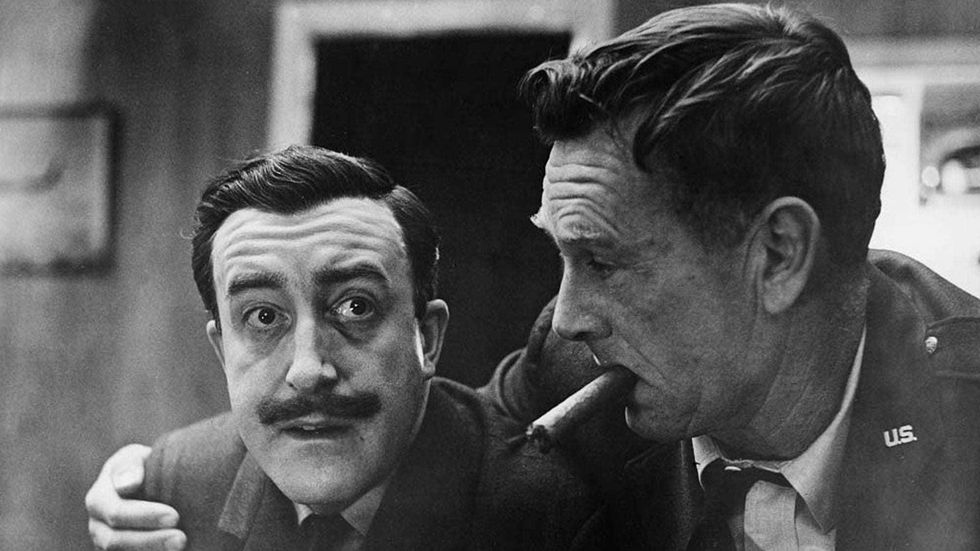 'Dr. Strangelove' Credit: Columbia Pictures
Be Your Actor's Audience
Columbia required Kubrick to cast Peter Sellers in several roles as a condition of financing, and thank goodness they did. Sellers was a powerhouse performer who could surprise at the drop of a hat.
Christiane Kubrick told TCM:
"Stanley was actually Peter’s audience. He always said, 'I’m your audience, not your director.' And he was very clever in that he knew that when Peter was really going strong, he would set up several cameras and be ready for him, because he knew that these moments were priceless. And he had to sometimes sit with a fist in his mouth, not just ruin the shot by laughing, because he thought he was that good."
If you have the resources, set up your coverage and let your actors fly free.
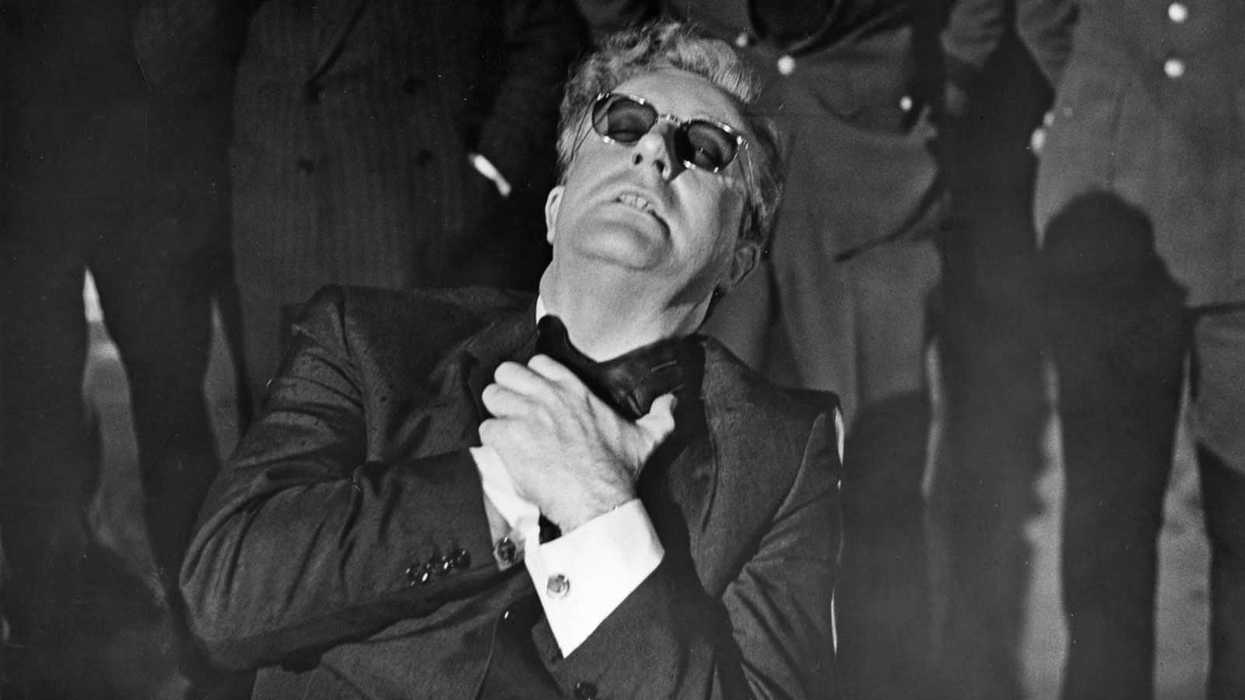
One of Sellers' characters was the titular Dr. Strangelove, an ex-Nazi. Kubrick suggested the black glove because he thought it would look sinister. Sellers took it further and turned the hand into a Nazi limb with a mind of its own. Give an actor a starting point and let them run with it.
Sellers first played President Muffley as a weak man with a bad head cold, complete with an inhaler. The crew laughed on set, but the dailies bothered Kubrick.
"When I'm not sure, if I have doubt, about something, or if something isn't good, I have a very unbearable feeling," Kubrick said. So they reworked the character.
Direct the Person in Front of You
Kubrick handled each actor differently. On his first day, Hayden blew his lines through 48 takes. He's quoted from an archival interview:
“I finally got up. I couldn’t take it anymore. And I walked up to him, and I said, 'Stanley, I apologize to you.' And he said this to me, one of the loveliest things any man has ever said to me in my life. He said, 'Sterling, I know you can’t help what’s going on, and you know I can’t help you.' He said, 'But the terror in your eyes, on your face, may just be the quality...' and now he said, he said, 'the quality that we want in this jackass General Jack Ripper.'"
Kubrick took Hayden's panic and used it as part of the character. Afterward, Kubrick sent him on a break, which Hayden spent on a few double shots of Black Label at a pub before going back and getting it.
Similarly, whenever Slim Pickens stumbled on a line, Kubrick asked how he'd say it at home, and Pickens' own phrasing went into the script.
He also famously butted heads with George C. Scott, and pushed him to go bigger and bigger, using games of chess.
There is a ton more to mine from the episode, so be sure to listen to the whole thing!