“For Me, It Was Tuesday”: Why M. Bison is the Coldest Villain in Cinema History
Bison’s infamous line from Street Fighter (1994) reveals a darker truth: to truly heartless power, your tragedy barely registers.
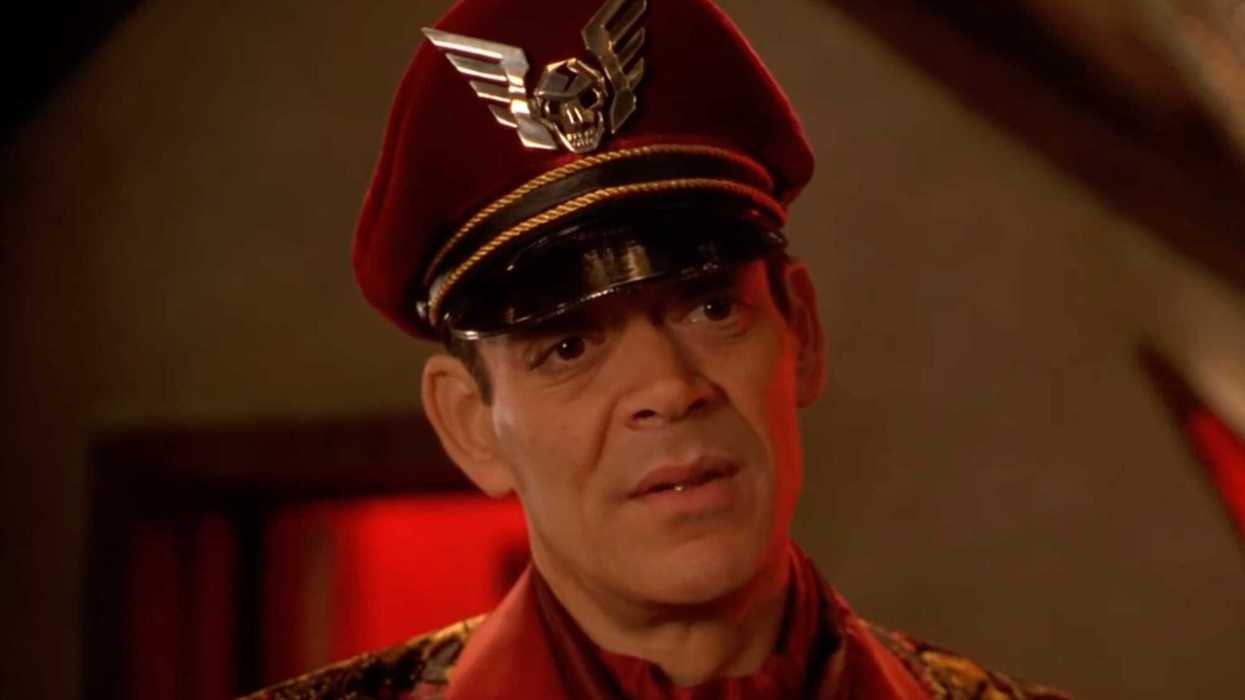
‘Street Fighter’ (1994)
Imagine an alternate reality where someone who narrowly escaped the Holocaust, but not their family, gets a chance to confront Hitler. The person recounts the horrible day of the arrest when the Gestapo raided their house, dragged everyone out, and sent them off to a concentration camp where they eventually died. Hitler looks into a void and replies, “So? Sounds like just another day.”
Referencing Hitler when explaining a villain is a total cliché, but he remains the gold standard for pure cruelty. Also, knowing Hitler, he is more likely to launch into a hateful tirade to explain his reasoning. Our villain, here, is different. While Hitler’s evil was fueled by a very specific, obsessive, and hateful ideology, Street Fighter’s villain is terrifying because his cruelty is casual and indifferent.
He treats a life-altering act of war like a mundane administrative task.
That’s what this is about. Ultimate flex of indifference.
The Scene
General M. Bison (Raúl Juliá) is a drug lord turned self-appointed general in Thailand. He is currently in a civil war with the Allied Nations, led by Colonel William F. Guile (Jean-Claude Van Damme). He has many civil and military prisoners. He demands a $20 billion ransom to release the civil prisoners and has different plans for the military ones: to mutate them into supersoldiers through a painful and disfiguring procedure. His chief scientist is also his prisoner.
Guile recruits two skilled fighters to help him find Bison. A news reporter, Chun-Li Zhang (Ming-Na Wen), and her crew find out about this plan. Chun-Li has a personal vendetta against Bison. Twenty years ago, her village-magistrate father and a few villagers fought off Bison (then just a drug lord) and his goons. Bison ran away, but not before having Chun-Li’s father killed.
In the present, Chun-Li suggests an assassination plan to Guile, which he rejects. However, driven by revenge, Chun-Li and her crew still go through with it and try to assassinate Bison at a party. The plan fails. Bison imprisons the crew and has Chun-Li taken to his quarters.
At his quarters, Chun-Li disdainfully recounts the day when Bison killed her father. Bison says he doesn’t remember a thing. Seeing Chun-Li is offended, he adds, “For you, the day Bison graced your village was the most important day of your life. But for me, it was Tuesday.”
Why Indifference is Scarier Than Hatred
The Horror of Being a Statistic
Hate is a negative feeling, but it’s a feeling nevertheless. A feeling, both positive and negative, indicates an acknowledgment of your existence. Cruelty implies awareness. But when Chun-Li narrates her tragic history and her contempt for him, Bison is unmoved. He has no memory of the incident, let alone an emotional reaction. And, by not remembering and not having any emotion, he erases Chun-Li’s humanity. What Chun-Li sees as a life-altering massacre, Bison sees it as a mundane Tuesday. He removes all the pain, all the suffering, all the meaning from Chun-Li’s struggle.
That shows that the power doesn’t have to be cruel to be devastating; it just needs to be busy elsewhere.
Power and Perspective
What’s important and what’s not—who decides it? It’s the power. Power decides what matters. Who Chun-Li is today, her beliefs, her goals, her desires, her outlook—everything is a product of her painful past. Her past defines her. But all that is disposable for Bison. To put it into perspective, consider this. A rat is a living being, and every rat has some nuances of personality. How each rat reacts to various situations differs from others. But what is it to us, humans? We see a rat; we kill it.
This pattern highlights a brutal hierarchy. The bigger and more powerful you are, the less personal everything else becomes. Bison is not dismissing her pain. He just never registered it.
Conclusion
This scene should tell you which kind of leader is more dangerous. Is it the one who hates you? Or is it the one who doesn’t even take your existence into consideration? Bison gives a new dimension to a revenge plot by simply refusing to participate in the drama. Most evils, like our “esteemed” Hitler, take to writing manifestos and narcissistic autobiographies, where they fluff out their deviant views and contempt. And then there are Bisons; they simply check their watches and throw your trauma somewhere between 9-to5. In my opinion, that kind of coldness is way more dangerous than red-hot hatred.
- 11 Movies Where the Villain is the Main Character ›
- Lawless Malice: The 10 Scariest Villains in Westerns, Ranked ›
- The 10 Coldest Characters in 'The Godfather' Saga ›
- What Is a Static Character in a Story? Definition & Examples ›
- Static vs. Dynamic Character: Stability vs. Transformation ›
- 11 Funniest Villains in Movie History ›
- How the New 'Street Fighter' Trailer Turned Game Melodrama into Pure Fun | No Film School ›