The Line That Reveals Blanche’s Fantasy and Her Doom
Blanche DuBois’ iconic plea reveals her tragic war with reality and her longing for illusion.
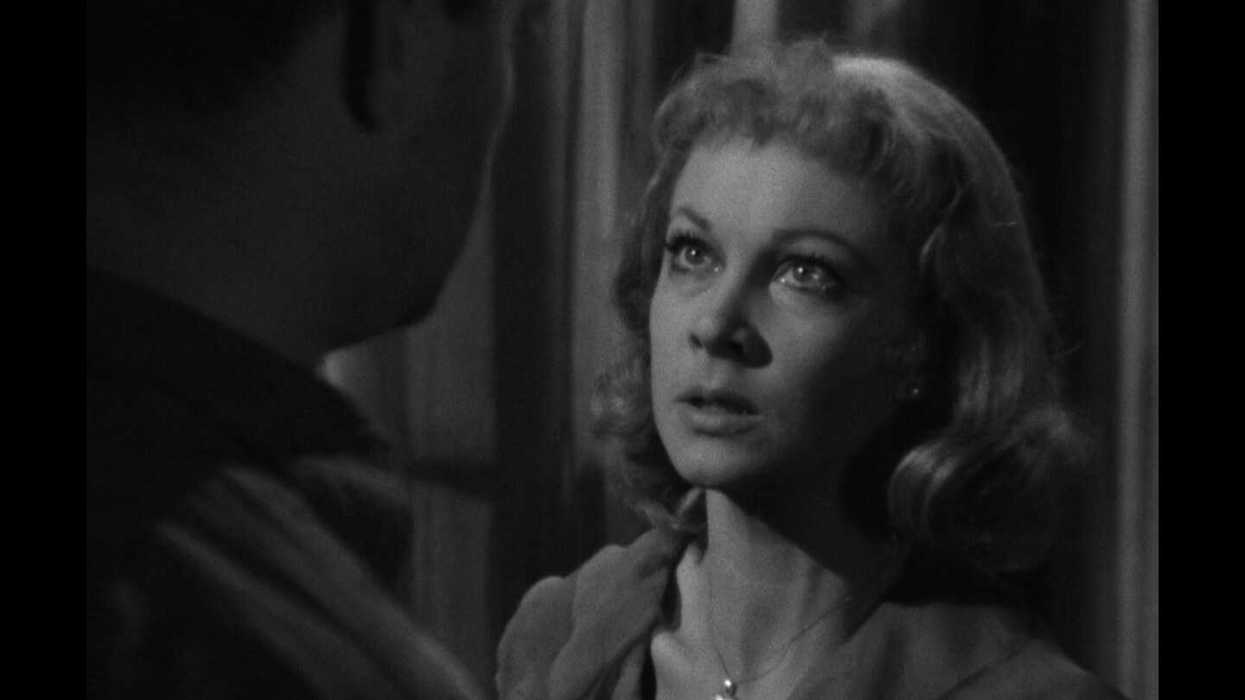
Vivian Leigh in a still from A Streetcar Named Desire (1951)
Elia Kazan’s A Streetcar Named Desire (1951) adapts Tennessee Williams’ stage classic to the screen with raw emotional force. At its center is a fading Southern belle, Blanche DuBois (Vivien Leigh), a woman trying to hold on to grace long after the world has stopped offering it to her. Her life unravels piece by piece, pulled apart by memories she cannot outrun, dreams that no longer shield her, and a truth that she could not bear.
When Mitch (Karl Malden), her suitor, complains of never getting to see her properly because she insists on living in the dark, Blanche says darkness comforts her. Mitch, sensing her insecurity about her fading looks, asks her to accept reality. This is where Blanche snaps and says:
“I don’t want realism; I want magic.”
The line condenses the central conflict of her character, as well as the conflict that drives the story. The line is everything—her confession, her defense, and a suicide note from her weakened mind. This almost biographical line is the key to understanding her insidious descent.
The Scene in the Context
The Background and the Scene Dynamics
Blanche, a high school teacher in Mississippi, comes to New Orleans to live with her sister, Stella (Kim Hunter), and her husband, Stanley (Marlon Brando). She has lost her family estate to creditors, her husband committed suicide, and she was fired from her job for sleeping with a student. The beginning of her fall started in Mississippi itself. Unable to let go of her glory days, she resorts to adding layers of lies to her no-longer-attractive life and creates a semblance of poise and control.
She is hopeful about her relationship with Mitch, yet she cannot undo her dubious past or stop the present from ruining her prospects. She hides her face and body in the shadow as much as she hides her past in it. Mitch, however, wants an honest relationship and is tired of living in the shadows with her. This conflict surfaces during their argument, and Blanche finally lets out her frustration. She insists that her deception is not malice; it’s a necessity.
What Blanche Means by “Magic”
Where Blanche comes from, the time as well as the place, i.e., the old South, beauty, art, romance, and refinement are the building blocks of respectability. She has lost it all, yet clings to it. That’s water and air for her. Her desperation is rooted in how things should be rather than how they are. In her current state, this quote is about more than just what she wishes for; it’s her foundational reality. The magic she is referring to is not a fairy tale; it’s the coping mechanism she needs to survive.
Illusion She Wants and the Reality She Gets
Different Faces of Illusion
Blanche is trying to “create magic” constantly. When she covers the naked light bulb with a paper lantern, she is literally attempting to dim the harsh truth. Every time she makes up a lie about her past, her wealthy suitors, or her immaculate morals, she is trying to reconstruct the identity and gracefulness that she lost because of her domestic tragedies and scandal. Everything from her demure mannerisms, air of refinement, and her select wardrobe functions as a brick in her house of illusions.
Stanley Kowalski: Her Reality
Stanley is the human embodiment of everything that Blanche is running away from. He is 100% pure reality. While she desires grace, respect, and gentility, Stanley offers primal instincts, contempt, and unkindness. He deals with facts and papers and sees Blanche’s illusions as an insult to what he has to offer—his real, masculine existence. Blanche and Stanley are the two opposing forces that create the central conflict of the story: magic vs. realism.
Conclusion
The world, to some extent, is grey for all of us. Each of us wants to paint it in colors that soothe us. This universality of the sentiment is what makes Blanche’s plea for magic hit us hard. Because we, too, have, from time to time, tried to cover bulbs with paper lanterns. We, too, have edited our painful memories to make our lives bearable.
The real tragedy of Blanche DuBois is not that she doesn’t have the magic; it’s the fact that she needs it to survive. Despite her desire to have an exemplary identity, she ends up being an exemplary tale about the feebleness of mind when the line between what is and what should be is blurred beyond repair.
At the beginning of the movie, immediately after getting off her train at the New Orleans station, Blanche tells a porter that she needs to take a streetcar named Desire and then transfer to one called Cemeteries. That travel plan was indeed quietly signaling where her journey would take her. And her “magic” was no match for the destination.
- 8 Movies That Prove Character is King ›
- When a Kiss Changed Cinema: 11 Iconic Moments ›
- The 10 Best Movies of Hollywood's Golden Age | No Film School ›
- What Are the Best Marlon Brando Movies? | No Film School ›
- This Goodbye Line Remains One of Cinema’s Greatest Mic Drops ›
- Decoding The Line That Turned Defeat Into Defiance in 'Gone With ... ›
- A Brief Look at the History of Hollywood | No Film School ›
- 10 Best Film Adaptations of Classic Stage Plays | No Film School ›
- Acting Tips and Basics for Beginners | No Film School ›