‘The Seven Year Itch’ and the "Public" Accident That Made Marilyn Monroe Immortal
How a single, accidental subway-grate moment turned Marilyn Monroe into an eternal pop culture icon—and art.
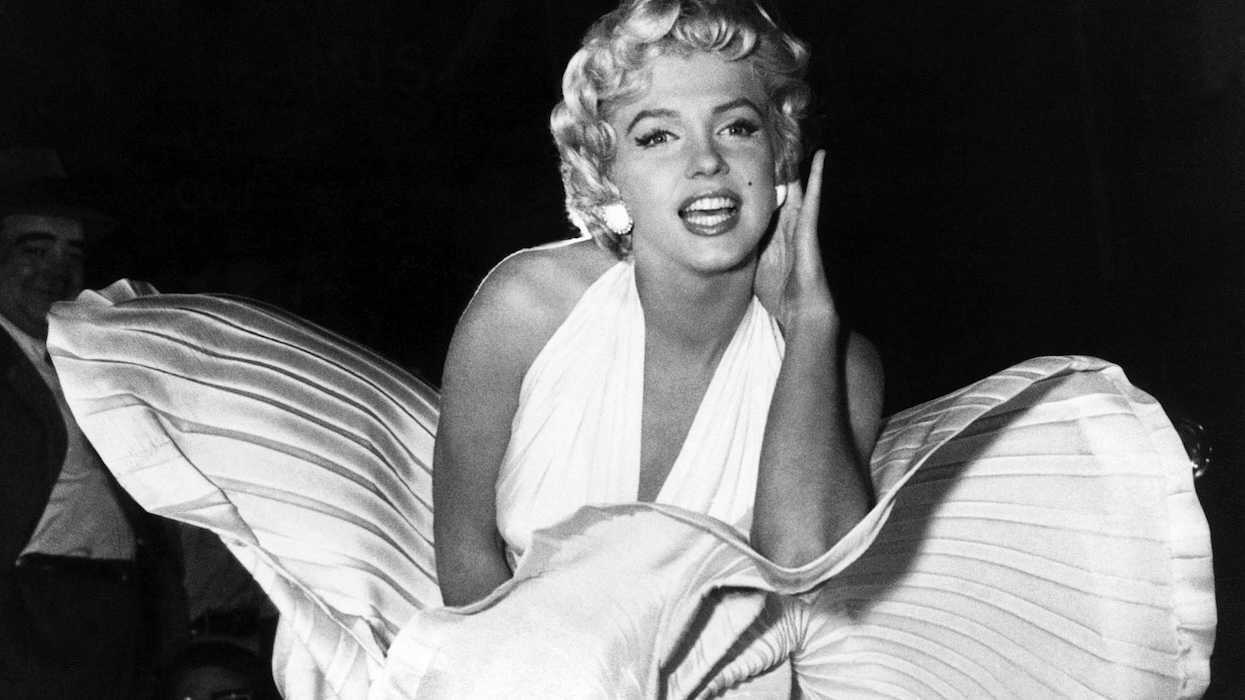
The Seven Year Itch (1955)
Marilyn Monroe, coyly holding down the hem of her ethereal, shimmering white dress as it blows up in the air, her smile caught between playfulness and calculation.
Can you think of someone who may not recognize this image? The chances are you can’t. And there is a reason why: It’s not a photo; it’s a cultural memory.
People may not know which movie it is from (hell, today’s kids may not even know the photo is from a movie to begin with), but they do know the image. It’s permanently engraved on everyone’s mind.
But did you know this moment wasn’t planned? It wasn’t meant to be or orchestrated to be iconic. Nobody thought the moment was any more special than it had to be on a regular night of shooting—I mean, on the Monroe scale, of course; she was never not special. But something slipped out of control that night, and what was meant to be a brief gag, or a standard promotional stunt at max, blew up into a cultural earthquake.
This was the moment when a dress didn’t remain a dress; it became a star, and the star didn’t remain a star; she became an immortal silhouette.
The Night the Image Was Born
The Subway Grate Shoot: Real Circumstances
The scene’s on-location shoot was planned for night, outside a Trans-Lux movie theater at Lexington and 52nd in Manhattan. Billy Wilder, seeing this as an opportunity to score some promotion for the film, informed the press about the shoot and its location. As expected, several reporters and photographers assembled at the location. What went beyond expectations was the massive presence of the general public; they came in thousands.
The shoot proved to be troublesome. Many times the dress wouldn’t blow up as expected, and sometimes it would blow up beautifully, but higher than the censors would tolerate—it was a Hays Code era movie.
Sometimes, everything would go right, but there was another problem: the public. Every time Monroe’s dress blew up, the public went wild and screamed excitedly, their noise ruining several perfect shots.
All this left a substantial amount of footage unusable. Finally, to get the dialogue right, this whole sequence was later re-shot on a soundstage at the 20th Century Fox studio lot in California. The bits and pieces from both the shoots were later used for the scene.
The Incidental Photoshoot
At the time, nobody realized this, but the actual shoot for the scene was sidetracked (overshadowed) by the planned and unplanned photography. Monroe, in part playfully and in part out of marketing obligation, posed for the photographs. The sequence she was shooting for was quite appealing, so, even for the photos, she posed over the subway grate, letting her dress fly.
Why the Image Spreads Faster Than the Movie
You gotta admit, the image is like nothing that came before. The pose is ingenious and playfully seductive, and the one giving it (the pose) is the goddess herself. The circumstances had all the meat.
What fueled it was the fact that the photographers captured the moment from every angle, and these images moved fast. (Imagine how nuclear a similar situation of this calibre would go in today’s social media age.) Newspapers ran these images way before the film was released. Posters followed—the momentum made sure these were the images that dominated the posters.
The images were meant to have a certain narrative purpose: promote the film, but quickly, they became self-contained. Suddenly, and quite ironically, you didn’t need to know what the movie was about, what was funny about it, who directed it, or what Monroe’s character was; nothing mattered. What remained was this image. This image had its own narrative purpose, its own personality, and its own story. And everything it had to say was a lot closer to what the audience liked and wanted to believe. It was that clean and simple.
The Dress
Despite the attention it got and the status it achieved, the white dress wasn’t among the favorites of its creator, William Travilla. He called it “that silly little dress.” He made this white dress (which is actually not white but ivory; Debbie Reynolds described it as having ecru hues) with silk georgette. He chose it only because it was light enough to catch air and flow up, which was the scene’s requirement.
After Monroe’s passing, he kept the dress locked up with many of his other creations. After his death, it was included in Debbie Reynolds’ private collection of Hollywood memorabilia. When she put up the whole collection at an auction, this dress was sold for $5.6 million. I am sure Travilla would have turned in his grave at the sound of “sold.” Not bad for a “silly” dress.
Marilyn Monroe: Between Control and Chaos
Performance, Persona, and the Myth of Innocence
Monroe may not have been the greatest actor, but she was a true star, and she understood the power “being a star” gave her. She knew what she had, and she knew how to sell it.
In each of these images, you can see her understanding of which pose to hold and how to hold it, or how to sell vulnerability without looking submissive. You can see a perfect balance of intention and exposure on display here. She is playful, never passive. And this is exactly the persona she had been cultivating for years; it’s just that this was the moment she had the chance to put it out there in all its glory.
You may see only a beautiful woman being playful, but this whole “dream” is built on charm, timing, and a very astute grasp of how she wanted to be seen.
The Personal Cost of the Public Moment
The insecurity of having the most beautiful woman in the world as your wife is understandable—not justifiable. And if one is already suspicious, controlling, and abusive by nature, then this trait is downright heinous. That was the issue here.
Monroe, at the time, was in a tumultuous marriage with professional baseball player Joe DiMaggio. He was already known to have physically and verbally mistreated her. The day after the night of this shoot, when the photos blew up everywhere, DiMaggio couldn’t handle his jealousy. He didn’t approve of the “dress-blowing” visual of his wife. He thought it objectified her and turned her into “public property.” He couldn’t see his beautiful wife; all he saw was a public spectacle that everyone was endlessly going to comment on and circulate. He wanted the visuals gone. It really wasn’t up to him, but a fight broke out between the couple anyway, which quickly turned into a physical altercation.
Not surprisingly, but at great emotional cost to herself, Monroe filed for divorce just a few days later.
Still in the Air…
In a business where everything is meticulously planned to the last minutest detail, this moment somehow got out of hand, and in a good way, for a change. It slipped through the cracks of intention, censorship, and narrative logic. And once it got out, it wafted through the air to its freedom.
It’s been over 70 years, but the dress is still blowing upward in our collective imagination. What could be a better candidate than this “silly, little dress” to remind us that the best parts of movie history happen when the wind blows in the right direction?
- What Are Some Iconic Movie Scenes That Impacted Pop Culture? | No Film School ›
- 25 Timeless Classics from the 1950s That Shaped Cinema ›
- AI Chatbot Is Used to Resurrect Marilyn Monroe | No Film School ›
- What Are the 10 Best Billy Wilder Movies? | No Film School ›
- Why Marilyn Monroe's Last Completed Movie Is Still Relevant Today ›
- The Marilyn Monroe Movie Everyone Should Watch at Least Once ›