25 Timeless Classics from the 1950s That Shaped Cinema
A definitive guide to the films that turned the 1950s into a cinematic turning point.
North by Northwest (1959)
History is riddled with two alternating phases: the times when revolutions take place and the times that freewheel across the landscapes created by those revolutions. The 1950s fall into the first category, especially concerning cinema.
The era was influenced by two significant events, namely World War II and the advent of television. The post-war anxieties and ideologies, along with the lingering fear of a nuclear breakout, significantly shaped the stories and storytelling of the 50s. On the other hand, the rising influence and threat of television forced movies to go bigger, louder, and more colorful.
At the same time, artistic movements, such as the French New Wave, inspired filmmakers to challenge the studio norms championing the Auteur Theory. It introduced raw, personal filmmaking via techniques like jump cuts, handheld cameras, and natural lights.
It’s technically a bygone era, but if you think the 1950s cinema is an old relic, think again. Because every trope, every camera angle, and movement that you love and have gotten used to today has its roots in the cinema of the 50s.
So, without any further ado, let’s dive into the essential watchlist of the 1950s cinema.
25 Classics From the 1950s
1. Sunset Boulevard (1950)
Written by: Charles Brackett, Billy Wilder, D.M. Marshman Jr. | Directed by: Billy Wilder
A faded silent movie star, Norma Desmond (Gloria Swanson), lures a struggling screenwriter, Joe Gillis (William Holden), into her delusional world. Sunset Boulevard exposed the dark underbelly of Hollywood fame. To date, it remains the definitive commentary on the industry’s cruelty towards its aging icons.
2. Rashomon (1950)
Written by: Akira Kurosawa, Shinobu Hashimoto | Directed by: Akira Kurosawa
- YouTube www.youtube.com
A crime takes place in a forest, and four people—the suspect, two victims, and an eyewitness—have four different and conflicting accounts of it. Rashomon introduced the concept of an unreliable narrator to the global audience. It is also known for altering how stories are structured by questioning the very nature of objective truth.
3. All About Eve (1950)
Written by: Joseph L. Mankiewicz | Directed by: Joseph L. Mankiewicz
- YouTube www.youtube.com
A seemingly innocent but ambitious and manipulative young fan, Eve Harrington (Anne Baxter), manipulates her way into the life of a celebrated Broadway star, Margo Channing (Bette Davis), ultimately usurping her fame and glory. The film provides a witty and biting look at female rivalry and the theater world. The movie is known for its sharp dialogue and cynical view of ambition.
4. A Streetcar Named Desire (1951)
Written by: Tennessee Williams | Directed by: Elia Kazan
- YouTube www.youtube.com
A faded Southern belle, Blanche DuBois (Vivian Leigh), tries to evade her past by moving in with her sister, where her illusions violently clash with her aggressive brother-in-law, Stanley Kowalski’s (Marlon Brando), raw reality. The movie brought a completely new level of psychological intensity and Method Acting to the forefront. Today, it remains a raw exploration of crumbling social classes and mental instability.
5. On the Waterfront (1954)
Written by: Budd Schulberg | Directed by: Elia Kazan
- YouTube www.youtube.com
A dockworker, Terry Malloy (Marlon Brando), struggles with his conscience after witnessing a murder by a corrupt union boss. This film redefined acting through its gritty, naturalistic performances. It remains a powerful exploration of moral courage and the high price of speaking out.
6. Godzila (1954)
Written by: Takeo Murata, Ishirō Honda | Directed by: Ishirō Honda
- YouTube www.youtube.com
A prehistoric sea-monster is resurrected and empowered by nuclear radiation, laying waste to Tokyo. This adventure film is the definitive metaphor for post-war nuclear anxiety. It birthed the giant monster genre and remains a somber, cautionary tale about human hubris.
7. Singin’ in the Rain (1952)
Written by: Betty Comden, Adolph Green | Directed by: Gene Kelly, Stanley Donen
- YouTube www.youtube.com
While struggling to transition to the talkies, a silent movie star, Don Lockwood (Gene Kelly), falls for an aspiring actress, Kathy Selden (Debbie Reynolds). Widely considered the greatest musical ever made, the movie is pure joy and technical brilliance, and celebrates the magic and chaos of filmmaking itself.
8. The Night of the Hunter (1955)
Written by: James Agee | Directed by: Charles Laughton
- YouTube www.youtube.com
A religious fanatic chases two children to steal hidden money left by their late father. This chilling thriller uses expressionistic shadows to create a dark fairytale atmosphere. It is widely praised for its unique visual style and its terrifying portrayal of corruption.
9. Gentlemen Prefer Blondes (1953)
Written by: Charles Lederer | Directed by: Howard Hawks
- YouTube www.youtube.com
Gold-digging showgirls, Lorelei Lee (Marilyn Monroe) and Dorothy Shaw (Jane Russell), travel to Paris on a cruise, as Lorelei’s would-be father-in-law sends a private detective after her. This is one of the earliest films that solidified Monroe’s status as a cultural icon. The movie is a satirical look at materialism.
10. Roman Holiday (1953)
Written by: Dalton Trumbo | Directed by: William Wyler
- YouTube www.youtube.com
Princess Ann (Audrey Hepburn), suffocated by her royal duties and atmosphere, escapes and enjoys a day of freedom in Rome with an American reporter, Joe Bradley (Gregory Peck). The movie is most notable for giving us ever-so-charming Audrey Hepburn, but also for redefining the rom-com genre. Its bittersweet ending also stands out among the happy fairytale endings of the time.
11. Tokyo Story (1953)
Written by: Yasujirō Ozu, Kōgo Noda | Directed by: Yasujirō Ozu
- YouTube www.youtube.com
An aging couple from rural Japan travels to Tokyo to meet their children, but their self-absorbed offspring meet them with cold indifference. The film portrays the collapse of traditional family bonds in post-war Japan. The movie was instrumental in making the minimalist style popular.
12. Seven Samurai (1954)
Written by: Akira Kurosawa, Shinobu Hashimoto, Hideo Oguni | Directed by: Akira Kurosawa
- YouTube www.youtube.com
Desperate villagers from a farming village hire a group of seven samurai to protect them from bandits. This movie originated the “gathering the team” trope, which was later used in multiple movies. The film’s epic scale and innovative editing techniques became the benchmark for action films.
13. Rear Window (1954)
Written by: John Michael Hayes | Directed by: Alfred Hitchcock
- YouTube www.youtube.com
While confined to a wheelchair because of an injury, a photojournalist, L.B. Jefferies (James Stewart), begins to spy on his neighbors from his apartment window and soon becomes convinced that one of them is a murderer. The film initiated a suspense-thriller storytelling based on voyeurism. It is also a masterclass in how to turn a single-room setting into cinematic tension.
14. La Strada (1954)
Written by: Federico Fellini, Tullio Pinelli | Directed by: Federico Fellini
- YouTube www.youtube.com
A boorish circus strongman buys a gentle-spirited young woman to assist him as he travels across Italy. The movie explores the clash of her naivety and his cruelty in post-war Italy. The movie heartbreakingly scrutinizes human nature and loneliness. La Strada is believed to have established Italian Neorealism as a powerful force in global cinema.
15. Pather Panchali (1955)
Written by: Bibhutibhushan Bandopadhyay, Satyajit Ray | Directed by: Satyajit Ray
- YouTube www.youtube.com
Pather Panchali follows the impoverished family of a priest in rural Bengal. His children, Apu and Durga, navigate life as they experience poverty, encounter fleeting moments of joy, and face inevitable tragedies. This was Satyajit Ray’s debut film, and it put him and Indian cinema on the global map. Today, the film is admired for its lyrical, poignant beauty and honest portrayal of poverty.
16. Rebel Without a Cause (1955)
Written by: Stewart Stern | Directed by: Nicholas Ray
- YouTube www.youtube.com
Jim Stark (James Dean), a troubled, misunderstood teenager, moves to a new town in hopes of a fresh start, but finds himself in conflict with his weak, conformist parents and local bullies. This coming-of-age film is a definitive portrayal of mid-century youth angst, and its legacy lies in its raw emotional honesty.
17. The Ten Commandments (1956)
Written by: Aeneas MacKenzie, Jesse L. Lasky Jr. | Directed by: Cecil B. DeMille
- YouTube www.youtube.com
The film follows the life of Moses (Charlton Heston), from his birth to the leading of the Israelites out of slavery in Egypt to the promised land. The film features groundbreaking special effects and was considered a technical marvel at the time. It’s a quintessential example of a mid-century Biblical epic.
18. 12 Angry Men (1957)
Written by: Reginald Rose | Directed by: Sidney Lumet
- YouTube www.youtube.com
A single dissenting juror (Henry Fonda) in a murder trial forces the other 11 jurors, who are prejudiced in some or the other way, to reconsider their otherwise unanimous verdict. Like Rear Window, this film is set almost entirely in one single room and is a master study of dialogue and character. To date, it remains one of the most powerful explorations of prejudice and justice.
19. The Bridge of the River Kwai (1957)
Written by: Carl Foreman, Michael Wilson | Directed by: David Lean
- YouTube www.youtube.com
During World War II, British POWs in Japanese captivity are forced to build a strategic railway bridge, while an Allied commando team plans to destroy it. The movie is a complex study of duty, pride, and the absurdity of war. David Lean masterfully infuses psychological depth into his grand-scale action.
20. The Seventh Seal (1957)
Written by: Ingmar Bergman | Directed by: Ingmar Bergman
- YouTube www.youtube.com
A knight returns from the Crusades and challenges Death to a game of chess to delay his demise. This allegorical masterpiece is a profound meditation on faith, mortality, and the Silence of God. It solidified European art cinema as a space for deep philosophical inquiry.
21. Vertigo (1958)
Written by: Alec Coppel, Samuel A. Taylor | Directed by: Alfred Hitchcock
- YouTube www.youtube.com
John Ferguson (James Stewert), a retired detective with a debilitating vertigo, is hired by his friend to investigate his wife’s suspicious behavior. As his investigation proceeds, so does his obsession with her. The film is a haunting exploration of obsession and identity. Although initially dismissed, the movie has aged extremely well and is often considered one of the best films ever made.
22. Some Like It Hot (1959)
Written by: Billy Wilder, I.A.L. Diamond | Directed by: Billy Wilder
- YouTube www.youtube.com
Two musicians, Joe (Tony Curtis) and Jerry (Jack Lemmon), witness a mob hit, and to protect themselves from the goons, disguise themselves as women in an all-women band, leading to hilarious consequences. Often considered the perfect comedy in movie history, the film is also known for pushing boundaries of gender roles and censorship.
23. The 400 Blows (1959)
Written by: François Truffaut, Marcel Moussy | Directed by: François Truffaut
- YouTube www.youtube.com
Antoine Doinel (Jean-Pierre Léaud), misunderstood by his neglectful parents and harsh teachers, turns to petty crimes and runs away to seek freedom. It was the first commercially and critically successful film to launch the French New Wave movement. It also pioneered the handheld camera movement.
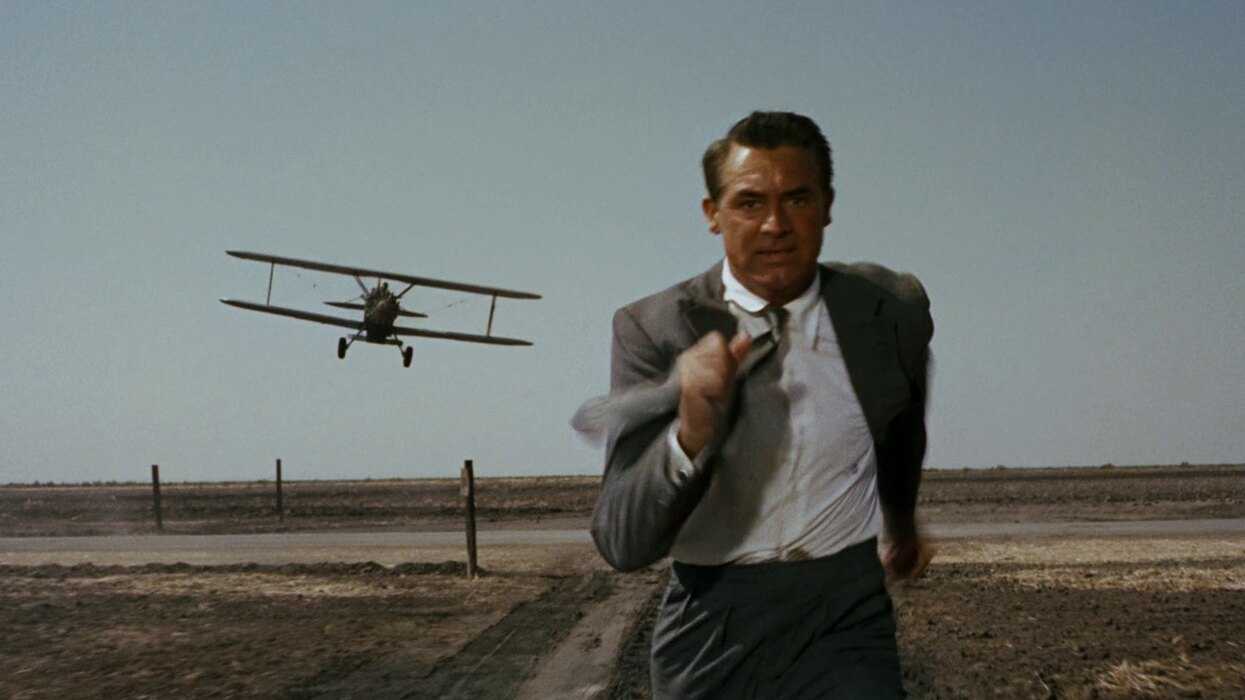
24. North by Northwest (1959)
Written by: Ernest Lehman | Directed by: Alfred Hitchcock
- YouTube www.youtube.com
Roger Thornhill (Cary Grant), an advertising executive, is mistaken for a government spy, framed for a murder, and forced to go on the run across America. This is a typical “man on the run” thriller, which perfected the blend of sophisticated humor, romance, and iconic set pieces.
25. Ben-Hur (1959)
Written by: Karl Tunberg | Directed by: William Wyler
- YouTube www.youtube.com
Judah Ben-Hur (Charlton Heston), a Jewish prince, is betrayed into enslavement by his Roman childhood friend, who seeks vengeance through epic sea battles and an iconic chariot race. The movie made history by winning an unprecedented 11 Oscars and, to date, remains the pinnacle of cinematic excellence.
- Avant-Garde Cinema: What Is It and Why It Matters ›
- The First Oscars Were Nothing Like You Imagine ›
- Origins of the Hollywood Sign: It Was Never Meant for the Movies ›
- How Hollywood Survived the Great Depression ›
- How Are Classic Films Restored to Their Former Glory? ›
- 11 Classic Claymation Christmas Movies | No Film School ›
- ‘The Seven Year Itch’ and the "Public" Accident That Made Marilyn Monroe Immortal ›
- Why Marilyn Monroe's Last Completed Movie Is Still Relevant Today ›
- The Marilyn Monroe Movie Everyone Should Watch at Least Once ›