Yorgos Mavropsaridis Has One Editing Rule: Don't
The two-time Oscar-nominated editor of every Yorgos Lanthimos film on why he doesn't cut when he doesn't have to.
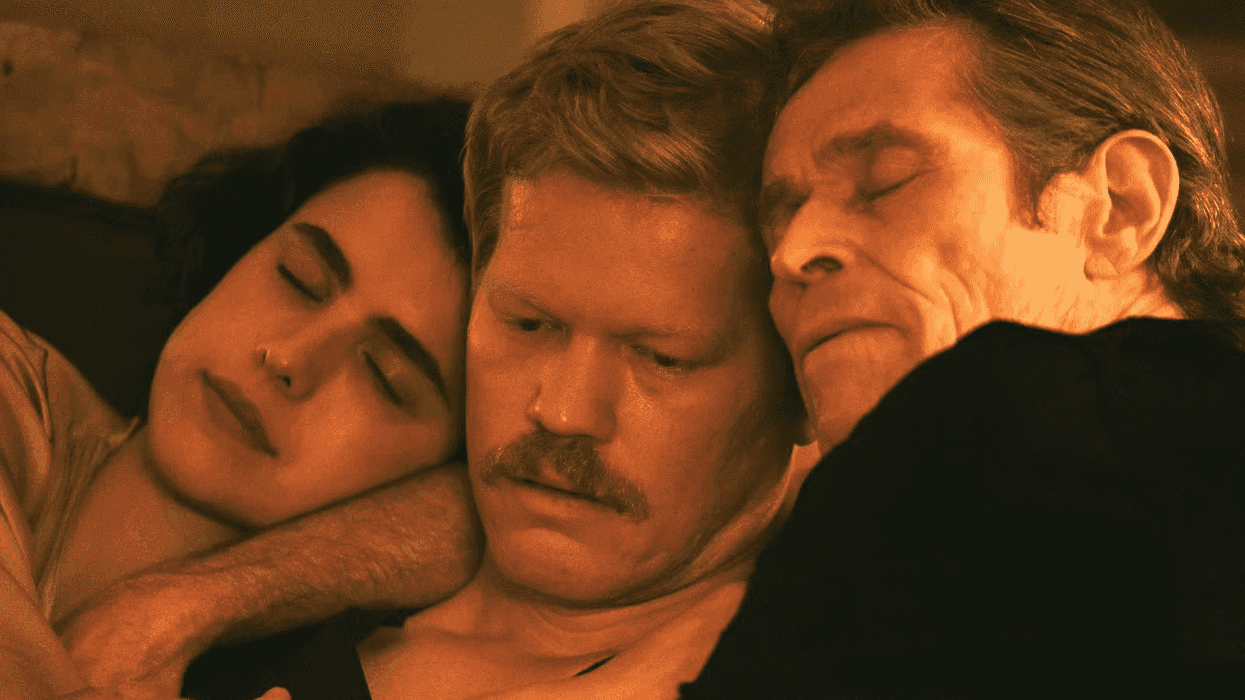
'Kinds of Kindness'
Two-time Oscar-nominated editor Yorgos Mavropsaridis has cut every Yorgos Lanthimos feature since 2005's Kinetta. It's a roster that includes Dogtooth, The Lobster, The Killing of a Sacred Deer, The Favourite, Poor Things, Kinds of Kindness, and Bugonia.
On a recent episode of The Editing Podcast with host Hayden Hillier-Smith, Mavropsaridis walked through the editing philosophy behind Lanthimos' Kinds of Kindness, a triptych of typically oddball stories, including the film's most-talked-about beat… the scene where a character chops off her own finger to prove her identity.
His one big piece of advice for editors might surprise you. Have a listen below.
- YouTube www.youtube.com
What's His One Rule?
In the second segment of the film, "R.M.F. is Flying," Daniel's (Jesse Plemons) wife returns home after being lost at sea, but he becomes convinced that she is an imposter.
When he comes home from the grocery store with those "wonderful tomatoes and some beef tenderloin," the conversation turns into a dark, surreal test of devotion. He wants her to cut off a finger and cook it for him.
The scene starts on a wide, with the kitchen lit on Liz (Emma Stone). Daniel steps into frame, in darkness. It holds.
He is framed as a threat, standing in the dark. Mavropsaridis holds on that wide shot as Sophie unpacks groceries and Robert says a series of increasingly menacing lines, building to his request that she chop off one of her fingers and cook it for him.
"It's a non-edit situation," Mavropsaridis says. "And let the code of the scene be transmitted. No, you don't need to cut."
He is concerned with "the code of the shot." The code here involves a menace, doubt, a husband who has become a danger to his wife. If it had been usual coverage, intercutting between them, we probably could have still felt that dread depending on the cinematography, but it wouldn't have the same uncanny feeling. The framing here is pretty normal, but it turns to horror because we don't get any break. It's a case of the long take controlling the audience.
They joke about how some editors might think they're paid by the cut. Not true, so maybe hold that shot a little longer.
So When Do You Cut?
The finger-chopping scene itself is in segment two. Mavropsaridis said he and Lanthimos originally put it together as a rapid intercut. Face, cut on finger, face, end of finger.
Stone, in Athens to watch the assembly cut, reportedly pushed back. She suggested staying longer on the close-up of the face and revealing the actual… uh, cut later. So we see her, the emotion and pain, and then the thumb coming off.
"As a matter of fact, she was absolutely right," he says. "When we did this cut, we were both amazed, because you see that happen or you imagine it happening on your face. And then when you don't expect it, actually, it comes."
He means the shot of the severed thumb. Mavropsaridis says a member of the audience was so shocked, they fainted.
Music Supports the Cuts
Jerskin Fendrix's piano-heavy score supports Mavropsaridis in his rhythmic cuts. After Robert asks Sophie to chop her finger, the music signals that the scene is over, and it's time to shift to Sophie's decision-making. We get a couple of jump cuts where she's thinking about her situation, then we return to the kitchen.
The emotional register of the score also changes to darker chords as she completes the action.
Typically, the score is written once you've got a locked edit, though there might be some tweaking as you realize what tone needs to be conveyed. Editors usually edit to a temp track before the bespoke or licensed song is added later.
It's a back-and-forth process my creative partner just went through, too. Our composer totally understood our storytelling goals but ended the last scene on a bit more of an anticipatory note. So we asked for a song that gave our project a bit more closure and actually changed our edit around that.
Learn more about editing and music.
Motifs as Connective Tissue
The film's three segments seem disconnected on first watch, but Mavropsaridis credits Dziga Vertov's idea of motifs as the connective tissue that ties them together. Vertov was a Soviet-era documentarian.
Here, radical actions as proof of love appear as a motif across all three stories. In segment one, Robert facilitates his wife's abortion out of love for Raymond. In segment two, Stone's character cuts her own finger to prove her love. In segment three, one of the sisters jumps into a pool, willing to die to show her devotion.
Mavropsaridis says, "Although it is the same motif, it is expanded in the second situation, and it's expanded more in the third situation."
The piano-as-metronome also repeats throughout the three segments. Learn more about that in our piece on leitmotifs.
The audience doesn't consciously track the motif, but it accumulates emotional weight. Lanthimos is incredibly good at weaving imagery and conveying story and emotion through it.
What Good Editing Feels Like
Editing is one of those things that you shouldn't notice. It's an invisible framework for the audience that guides their experience. When it's jittery or jumpy or doesn't show the audience what they need or expect, it can feel off.
Mavropsaridis wants it to be invisible, but he also wants the audience to get something from his choices.
"I don't expect a viewer to understand all this consciously when he watches it, but I know that when he watches he will go through an experience. This is the aim."
This is why the choice not to cut matters. Every cut is a piece of information the audience registers even when they can't put their finger on why. Restraint accumulates and emotion builds.
Mavropsaridis' prior NFS interview about The Favourite makes the same case in a different cinematic language. The editor's job is to protect the specific language of the film, not to demonstrate his own presence in it.
If you'd like to dive in further, check out our interview with DP Robbie Ryan about his work on Kinds of Kindness for another angle on how the film came together.
- Who is R.M.F. in 'Kinds of Kindness'? ›
- The Secret Tricks Behind 'Bugonia's' Stunning Look, Straight from DP Robbie Ryan ›
- 'Kinds of Kindness' DP Robbie Ryan Shares Set Life With Yorgos ›
- Editor Yorgos Mavropsaridis on Crafting a Different Kind of Period Piece in 'The Favourite' ›