‘Den of Thieves’ Ending Explained: The Real Mastermind
The ending of Den of Thieves (2018) exposes a long con that was unfolding all along.
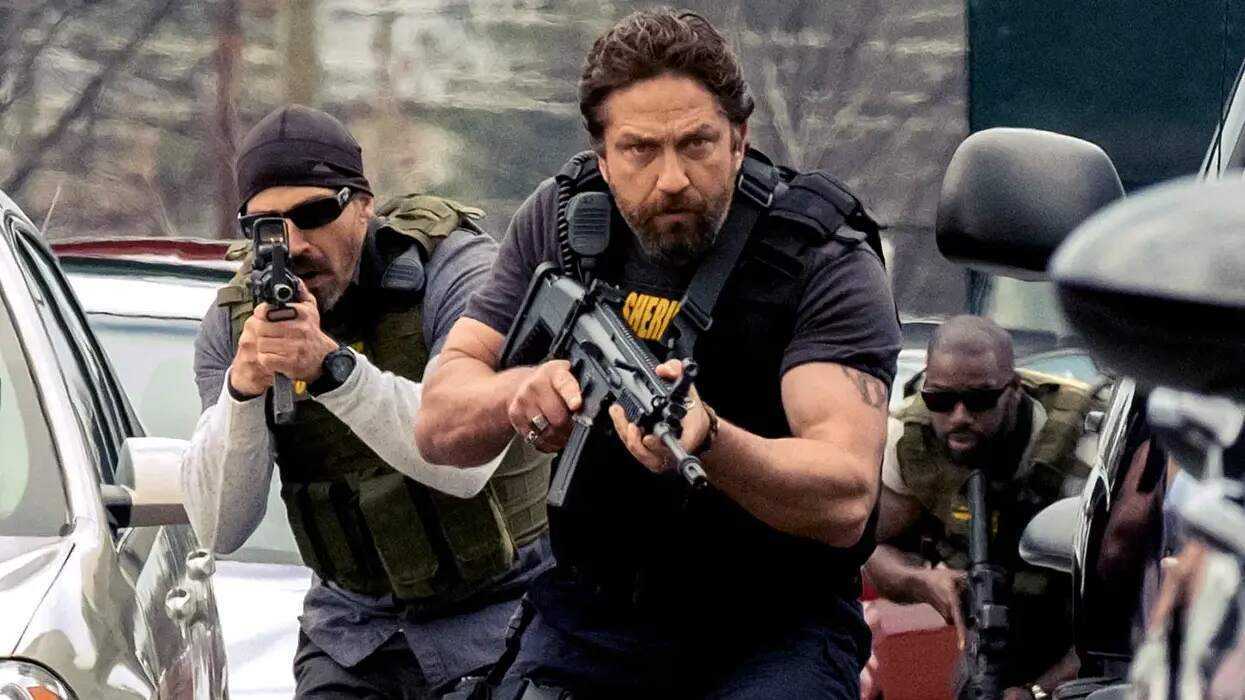
Den of Thieves (2018)
Den of Thieves takes you on a testosterone-fuelled journey in a “cops vs. robbers” setup. The journey is gritty, sweaty, muscley, loud, full of bullets and bravado, but most importantly, it clearly marks two dominant territories: Ray Merrimen (Pablo Schreiber), the relentless robber, and Detective Nick O’Brien (Gerard Butler), the determined police officer.
It’s your regular action movie premise. You know how it goes. And even if there is a wiggle room, you can always rely on the timeless logic: the character played by the bigger star usually wins.
The movie exploits this lax attitude and your confidence in the narrative tropes. During the final showdown, Merrimen is fatally shot, and Nick is inching closer to victory. You think everything has happened as you expected.
And suddenly, it begins to unfurl again. This time, it quietly rearranges the power structure that you relied on until now. And, after the newly emerged truth is revealed, the story doesn’t remain the same.
This is a classic example of a character pulling strings from the shadows. We explore this further, find out who that “man in the shadows” is, and how he manages to outplay the elite law enforcement unit.
The Great Deception
What You See
Merrimen learns that Donnie Wilson (O’Shea Jackson Jr.), his getaway driver and a bartender, has been compromised as a police informant. He changes the plan and leads Nick to believe the next target is a bank in Pico Rivera. Merrimen stages a real, violent robbery with hostages, ransom demands, and negotiations, drawing a heavy police presence.
Pico Rivera functions as a diversion, while the real objective shifts to the Federal Reserve. As Nick waits outside, the crew blows a hole in the floor to access the sewer system. It leads them to the Federal Reserve through the underground.
- YouTube www.youtube.com
Once inside the Federal Reserve, the crew uses a garbage truck to smuggle out currency notes that the bank is planning to remove from circulation. The plan goes smoothly until a brutal shootout erupts at the gateway. It leads to a chase, where most of the crew, including Merrimen, dies. Nick believes he has won.
What Really Happens
After Nick intercepts the money bags Merrimen stole, he finds out that they were filled with shredded paper. He assumes the money was removed by someone, somewhere between the shootout and the escape (which failed).
Then he notices that Donnie is missing; he is neither dead nor arrested for questioning.
So, Nick visits the local bar where Donnie works. He finds out he has left the job. He then observes that a lot of Federal Reserve employees frequent this bar. He also spots Donnie’s photo on the wall where he is with his friends—Nick identifies some of them. A garbage truck driver, a Federal Reserve employee who frequently ordered food from Donnie’s bar, and Mack, the communications/inside-access expert who helps with the money swap.It becomes clear to Nick that Donnie was the real mastermind. He used his job as a bartender to gather intel. He then manipulated both the thieves and the cops.
Donnie, from the very beginning, let Merrimen believe that he was the boss and that it was he who was calling the shots. At the same time, he maintained his separate crew and executed his own plan.
In short, while Merrimen was thinking he was using Pico Rivera as a decoy, Donnie was using Merrimen (and his main Federal Reserve act) as a decoy. Merrimen was fooled only on one level; Nick was fooled on two.
Recontextualizing the Evidence
Donnie, throughout the film, appears as a nervous insider, a mere patsy for both Merrimen and Nick. It turns out that he wasn’t it. He was not a hostage in any situation, and he definitely wasn’t a scapegoat. He was playing everybody.
Every piece of information he fed to the police was calculated to put the pieces where he wanted them to go exactly. While Nick and Merrimen were entangling themselves in their alpha-male rivalry, Donnie was getting his way. Unknown to Nick, he managed to slip away to London with the actual cash and already started on his next heist.
In Retrospect
Nick operates like he is the apex predator. That’s why he is called “Big Nick.” The discovery of Donnie’s empty apartment and the hidden map proves that the direction in which Nick’s “detective skills” went was, in fact, scripted by Donnie. This is where he realizes that he was played by someone whom he underestimated the most. (And even that underestimation was planned out for him.) Ultimately, Nick comes out looking remarkably foolish.
Conclusion
All this masterminding seems complex and such hard work. But in truth, the only thing truly driving Donnie’s plans is the ego and conceit of the men around him, especially Merrimen and Nick. He worked within the circle of the “bad guys,” and he knew the “good guys” would be too busy fighting for dominance to notice a guy serving them drinks. Donnie is a world-class opportunist and a very perceptive planner.
This highlights the fact that has already been driving the game of this world for a very long time: In high-stakes situations, the person with the loudest voice is rarely the one in control. True power works in the shadows.
- Learn Directing from Michael Mann's 'Heat' Heist Commentary | No ... ›
- Heist Movies: The 11 Greatest of All Time ›
- 7 Museum Heist Films to Watch After the Louvre Robbery | No Film ... ›
- Unpacking the "Buff Clown" Trope in Hollywood | No Film School ›
- How '300' Gave Us the Internet’s Fiercest Battle Cry ›