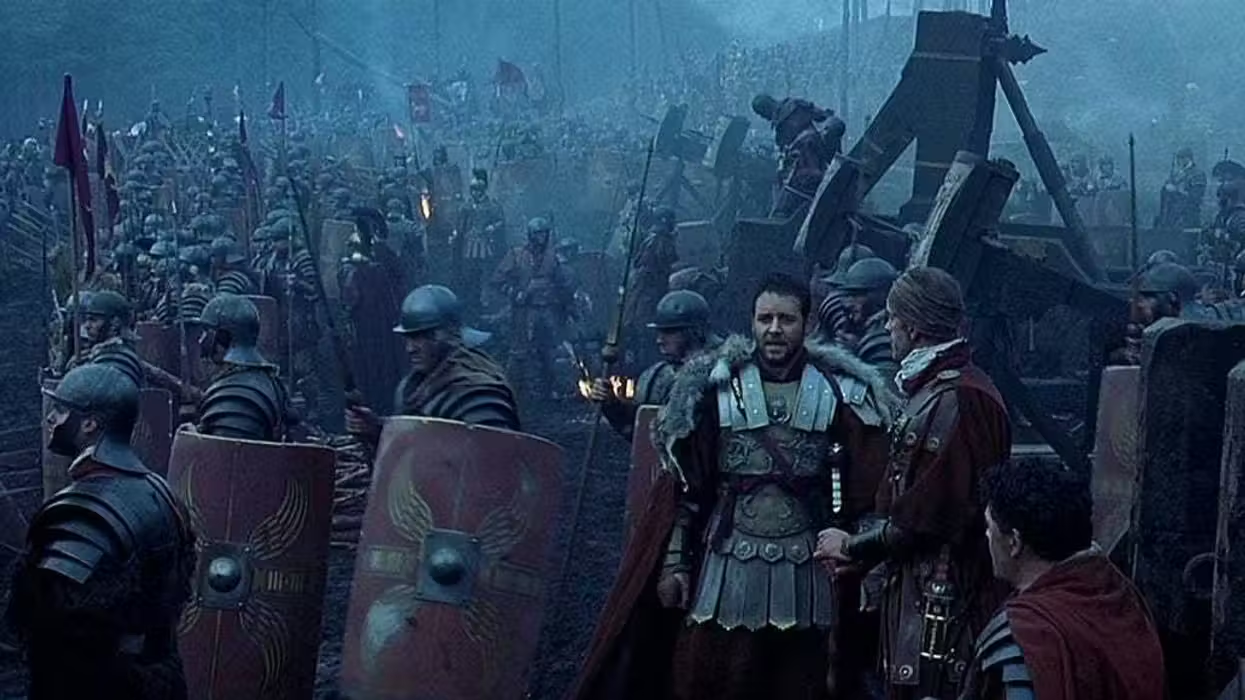
If you've been craving more Odysseus-style adventures after this summer, Gladiator is definitely a historical epic that can sate your cravings for action, epic drama, and old-school political intrigue.
The film was released in 2000. It stars Russell Crowe, Joaquin Phoenix, and Connie Nielsen, and was directed by Ridley Scott from a script by David Franzoni, John Logan, and William Nicholson. Franzoni was the original writer who received an Oscar nomination for this work, while Logan and Nicholson were brought on at various stages to do polishes.
The story is a fairly simple one. Maximus Decimus Meridius (Crowe) is a celebrated Roman general beloved by Caesar Marcus Aurelius (Richard Harris). So beloved, in fact, that the ruler decides to give Maximus the kingdom to lead as a democracy, overlooking his own troubled son Commodus (Phoenix). When Commodus learns of this, he murders his father and tries to have Maximus killed too. Maximus escapes, but learns his family has been murdered, and he is later captured as a slave.
"The hero builds up against the impossible machine," Franzoni told Creative Screenwriting. "You have two choices. You can be like Jack Nicholson in Five Easy Pieces where you go hitchhiking and prevail against the inevitable, or you can be like him in One Flew Over the Cuckoo's Nest where you go up against Nurse Ratched, you can't possibly win, and are destroyed."
One early scene, before the tragedy begins, lays out the film's theme, which is what we're looking at today.
Gladiator. Do what I have to do.#gladiator #maximus #cicero #honour #loyalty #dignity #duty youtube.com
The Scene
The film opens with an epic battle in which Maximus delivers Germania to Aurelius. Caesar arrives and makes camp with the armies. A dying Marcus Aurelius asks Maximus to become protector of Rome, and Maximus answers, "With all my heart, no," because what he wants is his farm, his wife, his son.
Commodus and his sister Lucilla (Nielsen) are also at the camp. Maximus passes Lucilla, and their conversation hints at a romantic past.
In his own tent, Maximus prays at his altar. "Ancestors, I ask for your guidance. Blessed Mother, come to me with the gods' desire for my future. Blessed Father, watch over my wife and son with a ready sword. Whisper to them I live only to hold them again."
His servant, Cicero (Tommy Flanagan), is with him. Maximus calls him over.
"You don't find it hard to do your duty?" he asks.
Cicero responds, "Sometimes I do what I want to do. The rest of the time I do what I have to."
Maximus sits with this.
"We may not be able to go home after all."
What the Line Reveals about Cicero
"Sometimes I do what I want to do. The rest of the time I do what I have to."
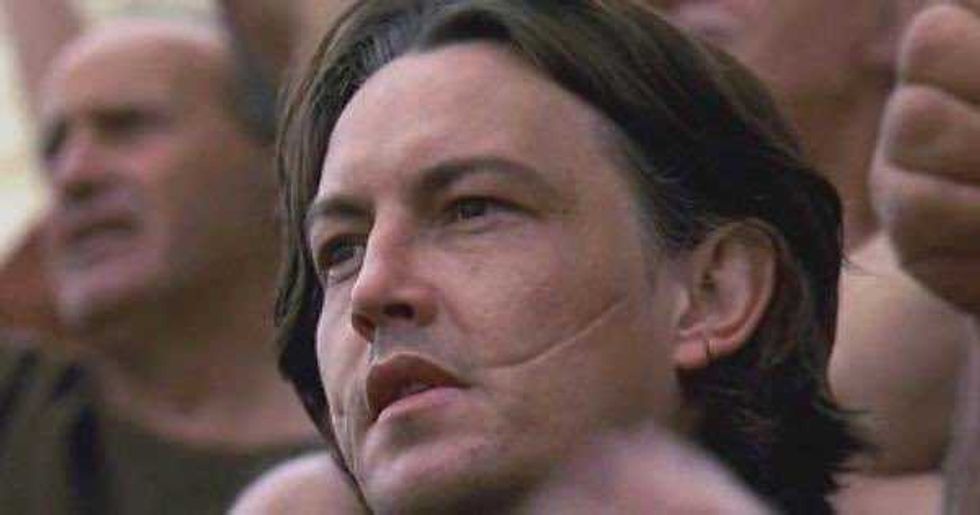
Cicero does not get a ton of screen time in this film, but he's vital, and he's always been one of my favorite characters. A moment later, when Commodus' men come for Maximus, Cicero is at the ready with his sword. His master waves him off with a subtle nod and allows himself to be taken.
Cicero is all about duty over desire, which is expressed by this line. He does what he wants to do sometimes. The rest of the time, he does what he must. And staying loyal to Maximus until death, regardless of his master's standing as general or slave, is what he feels he must do. There is familiarity and love here, but there's also obligation he chooses to follow.
Cicero is the humble version of the code the film puts forward: honor, duty, loyalty, and sacrifice.
 'Gladiator' Credit: Dreamworks Distribution LLC
The Line Is Really About Maximus
In Franzoni's original script, Cicero does not exist, nor does this scene. It's a quiet beat to make Maximus' desire clear and to give him a moment to grapple with the decision in front of him.
Maximus asks whether Cicero finds duty hard because duty is tearing him apart. It's clear he's about to choose Rome over home, and the button on the scene betrays this.
Cicero, his plainspoken confidant, provides the stoic ideal Maximus is straining to reach. Maximus just doesn't yet know the decision has been made for him, and he's about to lose everything.
If you want to externalize your protagonist's internal drama or conflict, you might give them a sounding board. Their dialogue can articulate a theme openly without self-narration.
Here, the servant answers, but the hero is the one being characterized. The line does double duty on speaker and listener. The question runs on subtext, not small talk. The balanced "sometimes I do X/the rest of the time I do Y" is antithesis that gives it rhythm and weight.
Loyalty to the End
The line predicts Cicero's actions. Near the end of the film, Maximus has gathered enough underground support as a gladiator to plan a rebellion and escape. Cicero, by then, has found him and helped put his plan in action. He is Maximus' link to his army at Ostia, and he waits with the horses to help take him away, and finally he gives his life when the plot unravels.
Cicero did not have to do any of that. He could have recognized his old master fighting in the arenas, and done nothing, and lived another life. But he goes to Maximus anyway. He's a hero of another kind.
Maximus is captured and fights for his life in a final battle, where he kills Commodus but gives his own life in the process. Lucilla is left to rebuild Rome in the way her father wanted all along.
Franzoni told Creative Screenwriting that he had to fight to give the characters their darker endings, with most of the "good guys" perishing in the end.
"Gladiator had to be Maximus' journey, not the studio executives' journey."
He added that writers should watch classic cinema and focus on telling stories about characters with lived lives.
"Then you understand why living a life gives you something to talk about rather than just mocking other stories. Our job as artists is to add to the wealth of humanity."