In the DC universe, Gotham has never been a peaceful city. The crime has always been up, criminals are always on the loose, and the chaos is omnipresent. And yet, everything becomes more sinister, more chaotic when the Joker walks in. When it comes to unpredictable mayhem, he is a force to be reckoned with. And his quote from The Dark Knight (2008) perfectly captures this force:
“Do I really look like a guy with a plan?”
We live in a world of meticulous planning. Procedures, training, vision boards, five-year strategies, productivity hacks, deadlines—there is no end to planning. Planning is life. Joker disrupts that way of life. He laughs at it. He calls himself “a dog chasing cars” and insists that he doesn’t care what happens next.
But is that true? Since when did Joker become the guy who says what he means? He is the guy who puts a knife to your throat and asks, “Why so serious?” Unpredictability is in his bones, and manipulation runs in his blood. He sounds nihilistic, but if you scratch his painted white surface, you will see nothing but method, patience, and a keen eye for human weaknesses.
The Quote: Horseplay or Philosophy
The Context
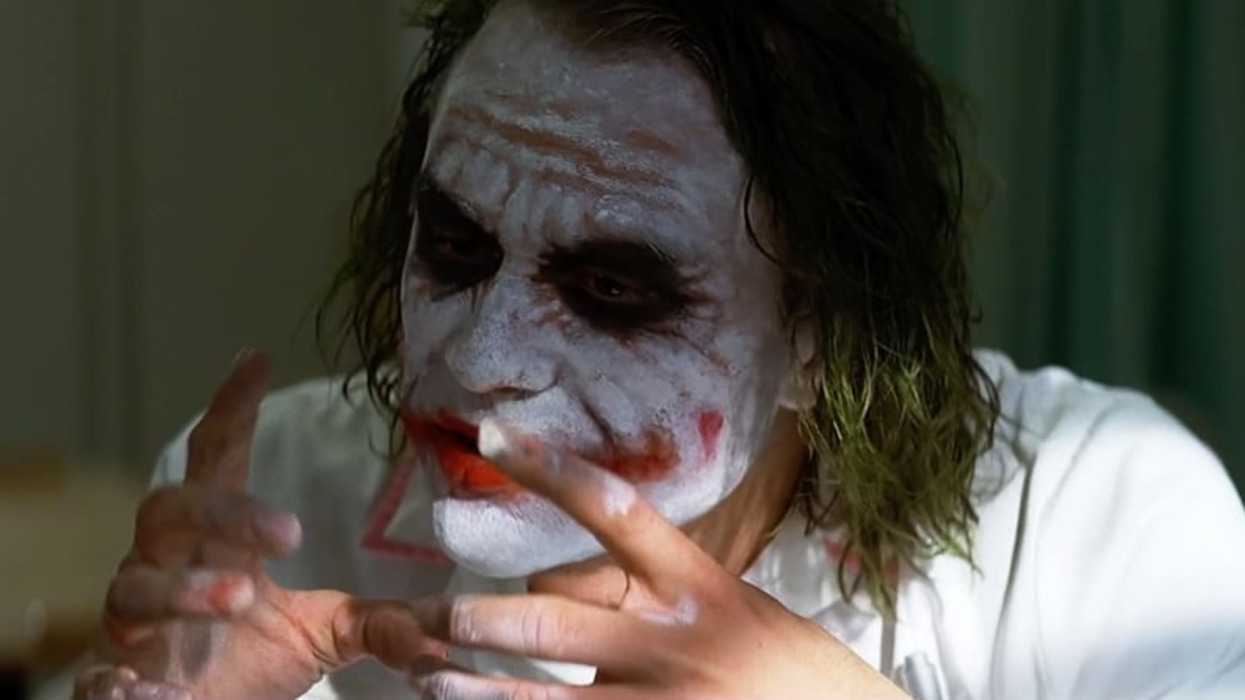
After orchestrating two separate explosions (see…he is not exactly winging it), which kill Rachel Dawes (Maggie Gyllenhaal) and disfigure Harvey Dent (Aaron Eckhart), Joker (Heath Ledger) goes to visit Harvey at the hospital. He tells Harvey he had nothing to do with it since he was locked up. When Harvey points out that his henchmen may have carried out his plan for him, Joker casually asks if he looks like a guy with a plan.
He is mocking the idea of planning. He says he only “reacts,” never plans. This stands out because, when the city is breaking into pieces, and people want logic, Joker says logic is a joke.
Joker’s Claims vs. Joker’s Actions
Aside from painting his own face, he also paints a picture of himself: an anarchist who works through spontaneity. He takes every opportunity to convey that he works on instinct. But even doing that is his strategy. He wants people to think he is unpredictable because he knows unpredictability is scary, and spreading fear is one of his primary objectives. Everything he does—timed explosions, timed entries and escapes, even his own disguises—he does with careful planning. His denial of it is a strategic performance; he pretends to be disorganized and then uses the element of surprise like a weapon.
The Line’s Appeal
On the surface, the line sounds cool: a careless spirit, subtly mocking himself. It also sounds rebellious; it smirks at planning in the world that functions on it. And it taps into our fear, the fear of the world falling apart.
Chaos: Joker’s Operating System
Chaos as Truth-Telling
Joker “plans” chaos to extract what he thinks is the truth about people. He believes that “mutual peaceful existence” is just a play people are playing, so he tries to rip off the veil of civility from their faces. How does he do it? By burning money, blowing up a hospital, and flipping the city against itself. In short, chaos. That’s how he wants to prove his point: civilization is an absolute humbug.
Chaos as the Social Mirror
His “social experiment” of two ferries is a clear example of this. He sets two rescue ferries, one carrying civilians and one carrying criminals, against each other. He gives them detonators and sets a time: either blow the other ferry before time runs out or be blown by them. He has put them in a situation that will prove his point that people will embrace violence for self-preservation.
Manipulating Systems of Control
None of his “chaotic reactions” happens by chance or through spontaneity. Joker studies the patterns in which police respond to emergencies, he studies media behavior, and he studies mass mentality. His insistence that he is not a planner is a ploy to keep people guessing and earn himself the freedom to improvise within the structure of his own making.
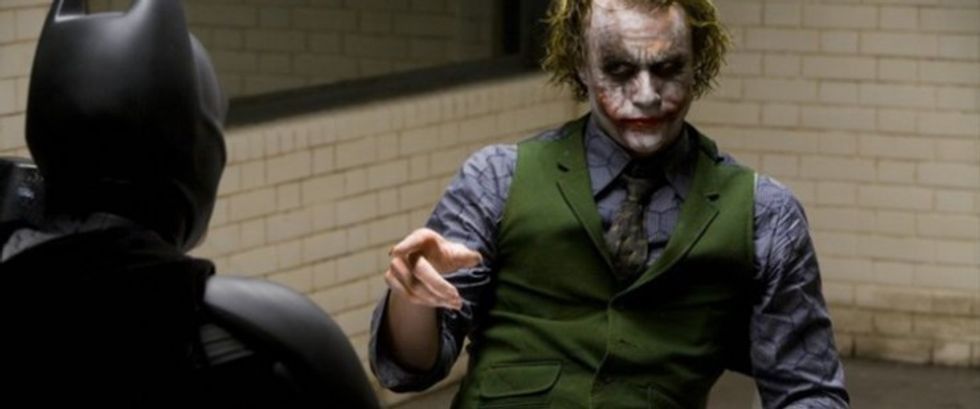 ' The Dark Knight' Credit: Warner Bros.
The Lie Behind the Chaos
Joker says that chaos is natural and you can’t avoid it. Of course, he would say that. Again, it’s a piece in his strategy. While his (usually unsuspecting) opponent takes his word for it, he premeditates his next action. He structures his plans to work out with the domino effect. For example, the bank heist at the beginning. His henchmen don’t kill each other because of the chaos; it is because Joker has layered the heist in such a way that each of his henchmen is set up to kill the next. Similarly, the social experiment with the two ferries. It’s not a random act of violence. It takes meticulous planning, timing, explosives, surveillance, and a deep understanding of fear. He even plans his own arrests and escapes.
If he really had no plan, it would take just one single trick to diminish his effect. Because true chaos is rooted in the person, and such chaotic actions leave a pattern behind. He is careful enough to never let it develop. You can wake up a person who is sleeping; you can’t wake up someone who is just pretending.
Conclusion
Joker’s quote has life in it because it ridicules, even challenges, a comforting idea. We like to believe the world functions and is in order because of planning, discipline, and structure. To see someone shred this idea into pieces makes us uncomfortable. It forces us to tackle the possibility that uncertainty and chaos might not be by fluke; it could be a well-programmed design.
Joker is a maniacal sadist who weaponizes doubt, turns chaos into strategy, and uses unpredictability to establish his control. When he asks if he looks like a guy with a plan, that question becomes a cultural wake-up moment.
The order is effective and in control only until someone laughs at it. After that, it’s you who has to decide if the joke was funny or not.
- 5 Times the Joker Outshone Batman in Nolan’s Masterpiece ›
- The Joker Line That Changed Movie Villains Forever ›
- The Most Heartbreaking Line from ‘Brokeback Mountain’ ›
- The Artist Behind the Celebrity: 5 Surprising Facts From 'I Am Heath ... ›
- The 'Dark Knight' Quote That Plagues Nolan—and the Secret Writing ... ›
- Listen to Tarantino's Thoughts on a Masterful Sequence in 'Joker ... ›
- Joker’s Iconic Bathroom Dance Wasn’t in the Script ›
- 5 Tips on How Christopher Nolan Wrote the Joker and 'The Dark ... ›
- How Did 'Heat' Inspire Nolan to Make Gotham a Character in 'The ... ›