9 Movies Told Through Multiple Perspectives
The power of multiple perspectives only works when clarity survives at the end.
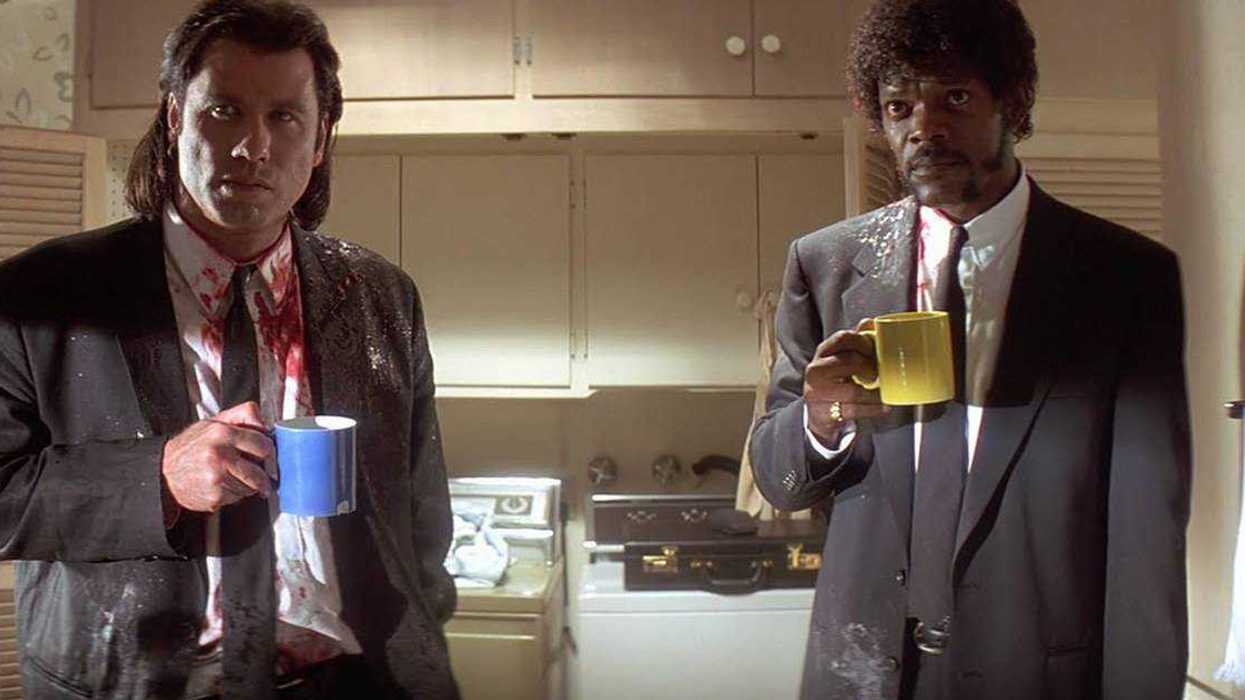
'Pulp Fiction' (1994)
The absolute truth is rare in cinema.
When one breaks a story into different parts, storytelling itself becomes a high-stakes situation. One misstep can collapse the whole structure, leaving viewers confused.
Films told through multiple perspectives need special handling. The motivations, backgrounds, and relationships must be so precisely written and tied together that every perspective should reveal new information and conflict without falling into the trap of repetition. It will either confuse your audience or bore them to death. Instead, it should challenge them. Their expectations must be flipped upside down, and they should question everything they thought they knew a moment before.
Below is a list of the nine best movies that misdirect you from every possible angle until the film pieces everything together.
9 Movies That Show the Same Story Through Different Lenses
1. Rashomon (1950)
When it comes to telling a story from multiple perspectives, nothing beats Akira Kurosawa’s Rashomon. Kurosawa’s film actually became the first Japanese film to receive international attention and acclaim.
Its incredible plot sees different characters, the bandit, the wife, the samurai himself, and the woodcutter, providing their own perspectives on the murder of the samurai. Everyone has their own beliefs and their own motivations, and the film serves as an allegory about truth and subjectivity. Kurosawa’s revolutionary style of storytelling was so well executed that he unknowingly coined the technique for others called the “Rashomon effect.”
2. Pulp Fiction (1994)
When Quentin Tarantino arrived in Hollywood, his films were all about non-linear narratives and different perspectives. Both Reservoir Dogs and Jackie Brown employed this technique, but the one that excelled the most in substance and style is Pulp Fiction.
Starring a stellar cast—from Samuel L. Jackson, John Travolta, Bruce Willis, and Tim Roth—Pulp Fiction tells the interweaving stories of various gangsters. The perspective keeps bouncing between hitmen, their boss, a boxer, and two robbers. In addition, a non-linear framework allows the movie to start and end in the same diner, giving the movie perfect packaging.
3. The Last Duel (2021)
Directed by Ridley Scott, The Last Duel finds American cinema’s dynamic duo, Matt Damon and Ben Affleck, writing a thrilling, compelling drama about honor and justice, featuring the last legal judicial duel in Medieval France.
Scott tells the story through three different perspectives of the husband (Matt Damon), the accused (Adam Driver), and the wife (Jodie Comer). Like the Rashomon effect, all the perspectives alter the truth, with the last one being emotionally definitive, and deeming the accused a rapist, eventually leading to the last duel between him and Matt Damon.
4. Citizen Kane (1941)
Often regarded as the greatest film ever made, Orson Welles’s Citizen Kane enormously influenced cinema with its bold camera work and story structure.
As everyone knows, the film opens with Kane’s iconic single-word dialogue, Rosebud, and his death. Following this, Journalist Jerry Thompson (voiced by William Alland) interviews Kane’s various associates with different takes on Kane’s life and legacy. Each character’s story is told through non-linear flashbacks. In addition, this innovative story structure won the writers Herman J. Mankiewicz and Orson Welles the Academy Award for Best Original Screenplay.
5. Magnolia (1999)
Paul Thomas Anderson is another acclaimed screenwriter who continues to deliver the most ambitious and unique story structures in cinema. Magnolia, in its astounding three-hour runtime, presents interweaving individual stories throughout the course of one day in Los Angeles. Each character is trying to find some concrete idea of happiness and life.
All the intersecting lives are brought together in the movie’s visually surreal climax, where frogs begin to fall from the sky. It is probably one of the greatest endings in movie history, which shows the power of multiple-perspective stories when executed well.
6. Dunkirk (2017)
Christopher Nolan’s World War II reimagination lands the viewer directly in the middle of the action, told through different perspectives and time periods.
The film follows Tommy (Fionn Whitehead), a soldier wandering and waiting for evacuation, a sailor, Mr. Dawson (Mark Rylance), who rides his personal boat into Dunkirk, and an air force pilot (Tom Hardy) fighting the enemy to defend the evacuation process. Moreover, Nolan’s story structure is unique, as we see Tommy’s perspective spanning a week, Dawson’s for one week, and Tom Hardy’s character, Farrier’s, for just one hour before the tense evacuation.
7. Knives Out (2019)
Written and directed by Rian Johnson, Knives Out revived the detective mystery genre with its exceptionally executed multiple-perspective story structure. Knives Out begins with the murder of 85-year-old Harlan Thrombey (Christopher Plummer), and private detective Benoit Blanc (Daniel Craig) arrives to investigate the family.
Throughout the explanations from Harlan’s family on the night of the murder, the audience is presented with different warped flashbacks, which often intersect with each other. The different perspectives make Blanc’s job much harder and satisfying at the end when he unravels the mystery in the most enigmatic way.
8. Gone Girl (2014)
David Fincher’s Gone Girl, written by Gillian Flynn, is a unique fusion of psychological thriller, true crime, and domestic drama. The first half of the film is told from Nicholas Dunne’s perspective, who is also accused of killing his wife, Amy Dunne (Rosamund Pike). All evidence somehow points in Nic’s direction.
The second half of the movie turns the audience’s expectations upside down; it’s revealed that Amy is alive and on the run. She is the unreliable narrator in the movie. The latter half of the movie is all Amy’s perspective as we learn that she framed her husband.
9. The Handmaiden (2016)
Park Chan-wook’s South Korean erotic, psychological thriller The Handmaiden is full of different perspectives and plot twists. Set in the 1930s during Japan’s invasion of Korea, a pickpocket named Sook-hee (Kim Tae-ri) is hired by a con man to steal the wealth of the heiress, Lady Hideko (Kim Min-hee). But things change when Sook-hee falls in love with Hideko.
The story is told in three parts; each section of the film portrays a vital shift in perspective, changing how the audience understands the characters and their motivations. First, the story is largely told through Sook-hee’s perspective, followed by Hideko’s outlook, while the third part of the movie sees Sook-hee and Hideko joining forces as the con man’s plan collapses.
Summing It Up
These were the best among many movies, which excel in multiple-perspective storytelling. Which movie do you think effectively achieves the goal? Excluding Rashomon, because we all know that’s a classic.- What Is Third-Person Point of View in Writing? Definition & Examples ›
- Second Person Point of View: A Bold Choice or a Risky Gamble ›
- How to Shoot a Killer POV Shot ›
- First Person POV Explained: Why Writers Rely on It ›
- What Are the 4 Kinds of POV Shots? ›
- 5 Essential Matt Damon Movies to Watch Before 'The Odyssey' ›