The Wolf’s Goodbye in 'Pulp Fiction': One of The Coolest Exits Ever Written
Winston Wolfe, a.k.a. The Wolf, had a 12-word mic drop in Pulp Fiction that shows that true character goes beyond quirks and style.
Pulp Fiction (1994)
The finest ingredients of a well-made movie are well-crafted characters that coalesce to create an unforgettable cinematic experience. Quentin Tarantino’s masterpiece Pulp Fiction (1994) has stood the test of time in large part due to its characters with big personalities.
They all live and breathe their own big personalities and own distinct brand of cool. There’s a Bible-quoting hitman with a philosophical edge, a twist-dancing mob wife, and a dirty boxer with a strong code of honor. They all have distinct styles, unpredictable sides, and snappy dialogue, all of which make them very memorable. Some are poised; some are just playing at it.
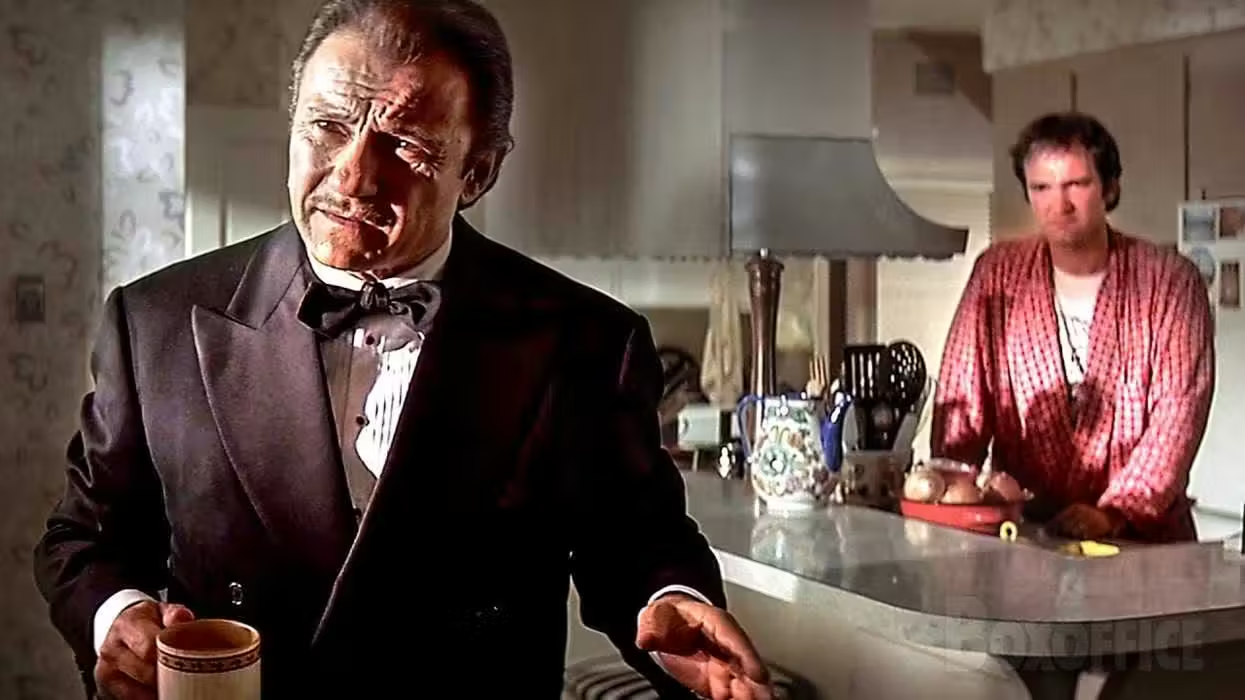
In this mash-up of brazen eccentricity, it’s quite possible to overlook someone who is understated. The Wolf (Harvey Keitel) is that person in Pulp Fiction. He is a “cleaner” for the mafia, someone who scrubs crime scenes of the evidence and the mess. And, while doing so, he exposes the film’s central conflict—performing a role vs. having substance—in one single, deep line.
“Of course, you are a character; it doesn’t mean that you have character.”
Vincent and Jules: A Stylish Facade
Before we are introduced to The Wolf’s organized and dignified way of working, the narrative builds the film’s chaotic world, in which Vincent and Jules are the centerpieces.
The Charming: A Cinematic Archetype
Vincent Vega (John Travolta) and Jules Winnfield (Samuel L. Jackson) are the poster children of cinematic snazz. They go around Los Angeles on their “hits” with a loosened-up attitude of regular office workers. They discuss foot massages and French names for McDonald’s burgers, do the hit jobs, and then they throw some Bible lines—just because. Their banter is iconic; their laid-back attitude in the face of bloody violence is captivating. They have everything that goes into a cool character—a defined aesthetic, unique diction, and an air of immense confidence.
Style Meets Chaos
But all this magnetic charm is based on predictability. At the first sign of something either of these two didn’t expect, their composure crumbles. Vincent accidentally shoots Marvin in the face, and the very next second, their suave personas dissolve into panic and bickering. Their spotless car becomes a bloody mess; they become frenzied and confused. They have style, but it has no function other than looking cool; it doesn’t offer any solutions. Their wordy banter is interesting but provides no answers. They play a role that quickly disintegrates at the touch of reality.
Enter, The Wolf: A Study in Competence
Arrival of a Problem-Solver
You can sense the film’s energy changing the moment The Wolf arrives. He shows up at eight in the morning, in a tuxedo. He starts off by saying, “I am Winston Wolfe. I solve problems.” No pleasantries, no philosophical musings, no swagger throwing. He is not there to play a role. He is there to work.
How The Wolf Operates
Immediately after reporting at the crime scene, The Wolf begins to assess the situation: a bloodied car and panicked hitmen. Expert at crisis management, he quickly takes command and starts issuing clear, concise instructions: “clean the car,” “scoop up brain and skull,” “take blankets and camouflage the car seats.” And just like that, the messy, bloody situation starts to turn into a structured, step-by-step process. His brand of authority is not a threat of violence; it’s absolute competence.
The “Pretty Please” Face-Off
The Wolf works in a field that is a breeding ground for easily bruised egos and quick-flaring confrontations. So, when Vincent mistakes his no-nonsense proficiency as “being ordered around” and demands a “please”, and when The Wolf doesn’t let his ego interfere, he immediately stands out. He firmly but respectfully imputes his curtness to time being a factor. “I think fast, I talk fast, and I need you guys to act fast,” he says. When Vincent, although visibly subdued by The Wolf’s authority, perseveres, The Wolf doesn’t waste a moment and offers a “pretty please—with sugar on top. Now clean the fucking car.” Here, his unshakable control stands in stark contrast to Vincent’s childish petulance.
The Exit Line
The Context
After the car is cleaned, the body is disposed of, and Jules and Vincent are hosed down, the crisis is averted, and The Wolf’s job is done. As he leaves, Jules and Vincent courteously thank him. The Wolf taunts his girlfriend, saying that respect for your elders shows character. When she protests that she, too, has character, he says this iconic final line:
Breaking Down the 12 Words
“Being a Character” in the World of Pulp Fiction
“Being a character” in Tarantino’s world means being flamboyant, memorable, and eccentric. Over the top, Jules, Vincent, Mia, and Butch (Bruce Willis)—they are all qualified as one. They function through their style, bravado, and peculiarities.
“Having Character,” According to The Wolf
The Wolf values integrity, discipline, and competence. According to him, your work and the results you give speak for your character. If you have character, you don’t need theatrics, style, or showmanship to prove your worth. By this logic, The Wolf himself embodies the true character.
The Real Recipients of the Line
He says this line to his girlfriend, but it is truly aimed at Jules and Vincent. As a part of his trade, The Wolf has keen observation. He has worked with hitmen like them, and he has correctly assessed them. Jules and Vincent may have distinctive personalities and styles, but they don’t have substance. The Wolf has witnessed that under their cool facade, they are clueless and inefficient, and that defines their true character.
The Echo of a Principle
If Pulp Fiction is the turbulent sea of stylish chaos, The Wolf is the only sturdy, unsinkable raft floating on it. In his very short screen time, he reminds us that suits, quotes, and confident postures are just window dressing—simply traits of “being a character.” True character is what emerges when the script is thrown out, when the plan goes wrong, when something unexpected happens. It’s this substance that tells you exactly what you need to do and how.
And that’s how, in this one simple line, The Wolf becomes the film’s one true character.
- How Pulp Fiction Hacks the Three-Act Structure ›
- Everyone Misunderstands the Hand-Drawn Joke in 'Pulp Fiction' ›
- How Did Fellini's Influences Directly Inspire Tarantino's 'Pulp Fiction ... ›
- Tarantino Explains Nonlinear Storytelling in this 'Pulp Fiction' Video ... ›
- 'Pulp Fiction' Gets Deconstructed in This Full-Length Film Analysis ... ›
- What’s in Pulp Fiction’s Briefcase? Nothing and Everything ›
- 10 Coldest “Before I Kill You” Lines in Cinema ›
- The Secret Behind the Iconic “Walken Pause” in ‘Pulp Fiction’ ›
- The Iconic 'Pulp Fiction' Scene That Survived the Chopping Block ›
- The Foot Massage Power Play: Why Jules and Vincent’s Debate in Pulp Fiction Was Never About Feet ›
- ‘Pulp Fiction’: The “5-Dollar Shake” Scene’s Secret Weapon ›