What’s common among filmmakers, like Orson Welles, François Truffaut, David Lynch, Quentin Tarantino, Sam Mendes, and Greta Gerwig?
These are the filmmakers who walked onto the set of their first movie with a fully formed artistic voice right from day one. If you compare their filmographies that followed, you will know there was no “debut” hesitation as such in their first film. No warm-up. Just a clear, defined vision.
Michael Mann’s debut, Thief (1981), feels like that kind of arrival. It doesn’t seem like he is trying to ease into his style. You don’t see the unsteady, wobbling precursors to his future movies. He is more known for Heat (1995), in which you can see his obsession with the process, his control, and the isolation. It’s all already there in Thief, front and center.
It may, at first, seem like just another heist film; clean jobs, sharp suits, late nights. Then you see the neo-noir elements chiming in: a lone-wolf professional criminal, rain-soaked streets, high-contrast, neon-lit cinematography. And when you let this unique merger of genres settle, you discover Mann’s distinctive filmmaking traits: professionals over personalities, the “code,” process as cinematic tension, the isolated urban protagonist, sonic atmosphere, and coded language.
And there it is! Fully formed Mann experience, right in the first movie.
Years later, Heat expanded this experience into something even bigger. But Thief is where it started, and it started fully in control.
‘Thief’
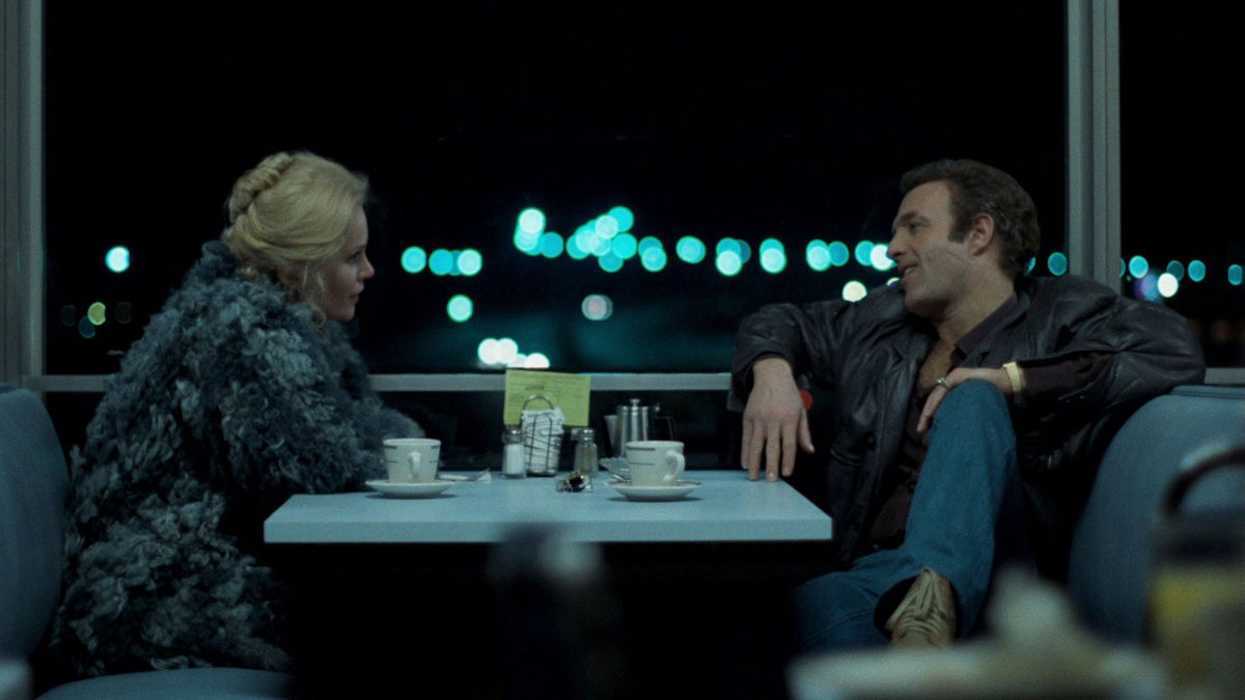
Frank (James Caan) is an ex-convict and a highly skilled jewel thief based in Chicago. However, he now wants nothing but to settle down with Jessie (Tuesday Weld), whom he is dating, and start a family.
After his moving man (fence), Joe Gags (Hal Frank), is killed by Attaglia (Tom Signorelli), Frank comes into contact with Attaglia’s employer, Leo (Robert Prosky), a high-level moving man. Leo reveals that Joe was helping him skim off the top of Frank’s share of money. Under the guise of “making amends,” Leo offers to give Frank’s money back to him if he agrees to work for him. Frank is unwilling, but when Jessie agrees to start a family with him, he decides to pull one last heist, make some money, and retire from the life of crime.
Leo plans a big heist at a high-security wholesale diamond exchange facility in Los Angeles. From the unmounted diamonds worth $4 million, Leo agrees to pay Frank $830,000.
However, when he completes the job, Leo gives him only $100,000. He says he invested the rest of Frank’s share in shopping centers, something that Frank had already refused to do. Angry, Frank gives Leo 24 hours to return his money. Later, Leo sends his henchmen to ambush Frank and contain him. Leo promises Frank “consequences” for his family if he doesn’t continue working for him.
Knowing Leo will make good on his threat, Frank breaks up with Jessie, gives her $410,000 in cash, and sends her somewhere Leo cannot find her. Then he blows up his own house and business establishments (which he uses as a front for his illegal activities), and goes out for retribution. In the ensuing gunfight, he kills Attaglia, Leo, and their henchmen, but he himself is unhurt due to the bulletproof vest he is wearing. Having settled the score, Frank walks away into the night.
The Mechanics of the Modern Heist
Professionalism as a Personality Trait
If you hadn’t already noticed, the criminals in the ‘70s, both protagonists and villains, were more charismatic crooks. They shone with their opulence, literal opulence as well as relating to their psyche. Frank breaks away from that stereotype. He values craft over ego. He would rather be inclined to call him a “technician who happens to steal diamonds,” rather than a straight-out “jewel thief.” It’s not “what” he does, but “how” he does it, that raises the stakes.
This professionalism wasn’t restricted to Frank. It seeped into every filmmaking decision, too. Mann hired real-life thieves as consultants to film the heist scenes. So, naturally, every spark you see coming from the thermal lance, every aspect of the high-level heist feels authentic.
 ‘Thief’ (1981)Credit: United Artists
The Visual Language of the Night
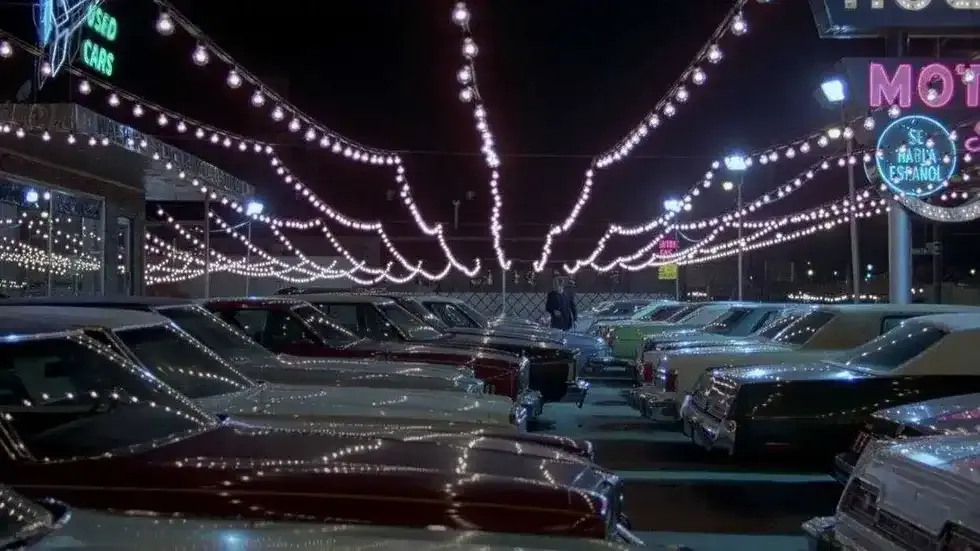
The neon-lit cinematography that uses high-contrast lighting and deep blue hues gives Chicago a distinctive personality. Every puddle and every dark corner comes alive. In my opinion, the film indeed presents Chicago as a silent character that keeps closing in on Frank as his world starts to unravel.
This magic didn’t remain confined within the film. In addition to inventing the neo-noir heist genre, the film also invented the neo-noir aesthetic of the ‘80s as a whole.
A New Breed of Neo-Noir
Breaking the “Good vs. Evil” Binary
There has always been a specific staple of neo-noir: the protagonist’s definitive personal and moral code vs. the lack of it around him. You will often see that the cops are more corrupt and terrifying than the criminals. That aligns perfectly with Thief. In its cynical world, Frank is squeezed between a predatory mob and the police, which functions like a gang.
The Tangerine Dream Soundscape
Usually, neo-noir depended on orchestral arrangements. In Thief, that is replaced by an electronic score. To match the industrial feel of the heist equipment, this score provides a pulsing, synthetic heartbeat. It definitely sets the right mood, but it also reinforces the image of Frank as a man who is caught in a mechanical, uncaring, exploitative world that insists that there is nothing more real than the hustle.
From the Solo of ‘Thief’ to the Symphony of ‘Heat’
Scaling the Heist Concept
In Thief, Frank is an isolated specialist, while in Heat, that singularity expands into an ensemble but still maintains the same professional DNA. The core of both films balances on the idea (or code) of meticulous planning and deep-seated reverence for the tools of the trade. If you trace the Thief-to-Heat evolution, you can see the solitary street-level struggle expanding into a massive, urban warfare strategy.
The Price of “the Life”
Thief and Heat both tell the same moral of the story: it’s not possible to have a normal family if you live as a high-stakes thief. When you see (and remember) Neil McCauley (Robert De Niro) expressing his philosophy of being detached enough to be able to walk away from anything in thirty seconds, you trace its roots back to Frank’s “collage” of a family life that he so passionately dreams about. Be it Frank or Neil, both men are not willing to be on the payroll of anyone else, even if it costs them their own happiness. And it does.
Aesthetic and Technical Continuity
Another aspect you can find in both Thief and Heat is the way Mann depicts the cities at night. His focus on reflections, cold steel, and blue hues remains remarkably consistent across both films. Obviously, Heat’s bigger budget and more moving parts make it a grander spectacle, but at their core is the same thing: Mann’s obvious obsession with professional men in lonely places. What blew up phenomenally on the streets of L.A. in Heat was started in the alleys of Chicago in Thief.
Conclusion
Thief may have been Michael Mann’s debut film, but it still stands resolute on its own. It has its own ecosystem, its own philosophy, and its own process. It doesn’t need Heat to justify how great it is. Even back in 1981, it was precise, confident, and clear about what it was and what it wanted to be. If anything, it built the foundation on which not only Heat but his entire filmography stands with a definitive artistic vision.
When the movie ends, and if you have been attentive, it will dawn upon you that Mann had already finetuned his signature style in his very first movie. And if you still haven’t watched it, please do. It will show you where the modern thrillers found their pulse.
- 10 Writing and Directing Tips From Michael Mann | No Film School ›
- 10 Filmmaking Lessons Inspired by Michael Mann Movies | No Film School ›
- Watch: Michael Mann Brings the 'Heat' for His Expansive Master Class | No Film School ›
- Heists Aren’t the Point — This Line Says What 'Heat' Is Really About ›
- The Story Behind Al Pacino’s Wildest Improvised Moment in ‘Heat’ ›
- The Heist Movie Ingredients Every Screenwriter Should Know | No Film School ›