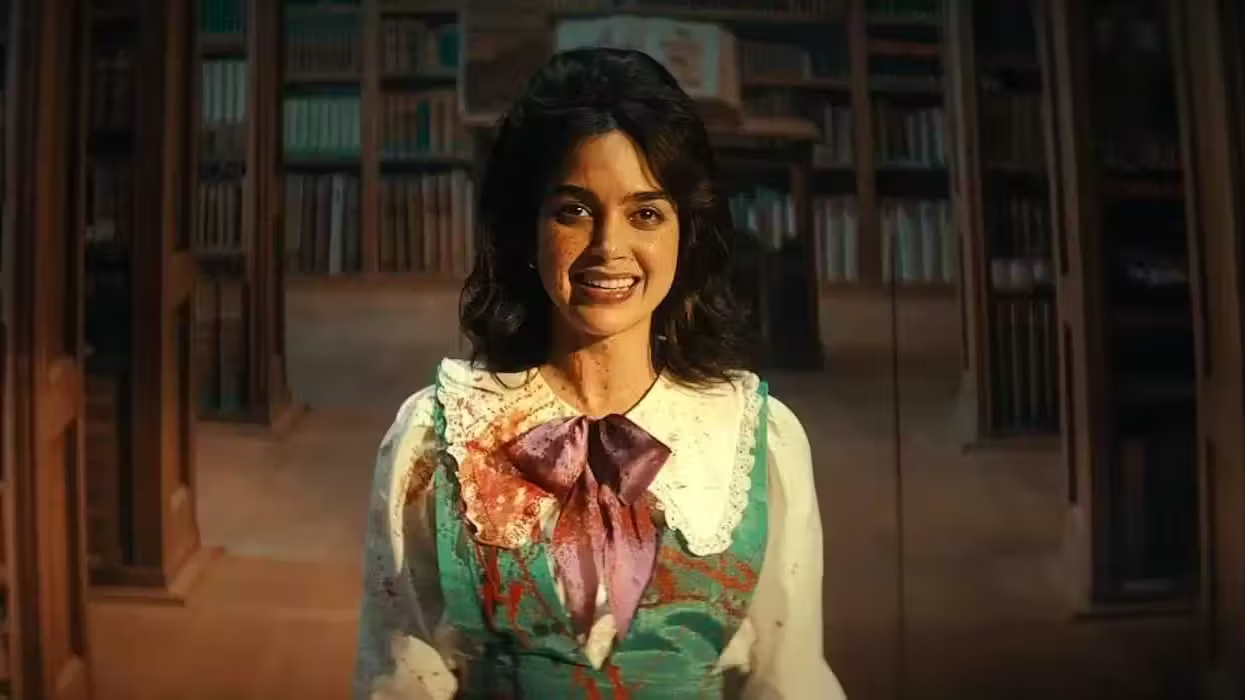
Lighting can be beautiful, but it often comes down to a formula that you can copy yourself in your own cinematography. Lighting tutorials love a formula. Key here, fill there, neg here. Done!
However, anyone who's worked on a real set knows the formula falls apart the moment you walk into a cramped apartment or an awkward kitchen, a set with only one good window, or a city street at night with no room for a condor. If you're a professional, one formula won't fit every setting, so you need a way of thinking creatively to problem-solve in these weirder locations.
LA-based cinematographer Will Stone shot the features Your Monster, King Ivory, and Destroy All Neighbors, plus commercials for DieHard batteries and Sony. He walks through his scene-by-scene approach in a new video from DOP Camp.
- YouTube www.youtube.com
Start with Nature's Best Natural Light
Why would you spend time and money on set-ups if you can just use… the sun? Free and easy, as long as you know how to use it!
Before Stone reaches for a single fixture, he looks at the clock or an app like Sun Seeker. For a wide shot in a prison, his team scheduled the shot so the real sun would stream through the window, then they matched the close-ups with their own lights once they turned around. The best key light you'll ever have is free. You just have to be there when it shows up.
"The main thing with natural light is trying to time it out to the right time of day," he said. "That's the best thing you can do. And then from there you can make concessions."
When the sun won't cooperate, Stone builds his own, and he builds it big. "I always want to have a big source because it's going to feel more natural," he said.
For that big source when he needs it, he fires an ARRI M40 HMI into a 12x12 frame, spreading hard light into something soft and wide. Don't forget the math and distance if you're doing something similar.
"The fall-off of the light is always going to be more pleasing the further away the light is from the subject, and it also is going to help with your exposure because as the light falls off, it becomes more even, for lack of a better way of explaining it."
Bounce, Bounce Light
Of course, "put a big light far away" assumes you have some "far away" to work with. On one film, Stone's apartment set was built so big for the stage that its window sat right up against the fire lane. There was no room to back up a light. So his team improvised.
"So, what we did is we put the light up against the wall, all the way against the set wall, and then we taped muslin up on the wall there and bounced it off of that."
Muslin bounce is one of his favorite tools, and he has a trick to get more out of it.
"If I'm lighting from outside, I do like to bounce if I can. It just feels so nice and natural. I love bouncing off a muslin if I can. And sometimes I'll back it with ULTRABOUNCE so whatever light that might pass through the muslin still will reflect back."
In one hallway scene, his team lit a muslin outside the window so it read as daylight, then hid a harder fixture behind it to cut a shaft of light through.
"We mixed qualities of light because outside you're not always getting one quality of light that's coming in through the window. You're getting bounce light. You might get direct light and reflected light."
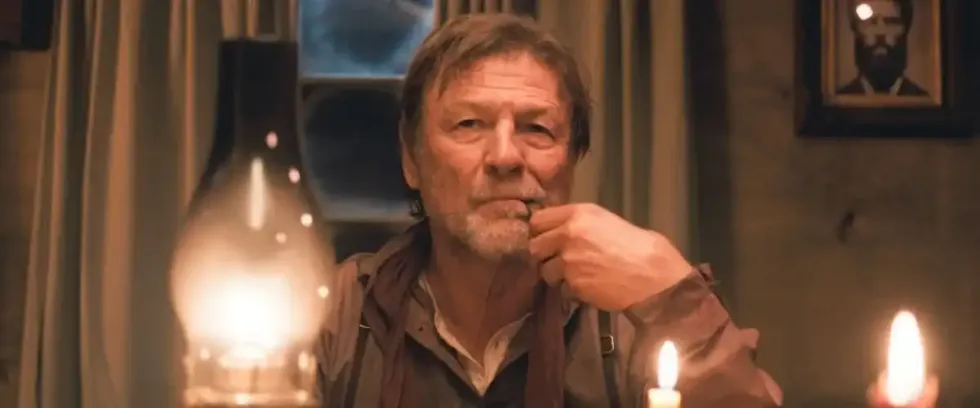 'The Isolate Thief' Credit: Radial Entertainment
Practicals and Night Cinematography
Night exteriors are where a lot of budgets show. Did you see the new Resident Evil? Those were all night shoots, sometimes in snow. And if it had looked bad, it would have looked really bad.
If you have the money, Stone likes a big soft source up in the air. If you don't, he lets the world in the frame carry the visuals. He likes a moonbox for a big soft source.
"But if you can't do that, then I try to utilize as many practicals as possible within the frame to allow your eye to feel the motivation of whatever I do end up putting in."
On Your Monster, he matched a Creamsource Vortex to the color of the background practicals and used it as a back three-quarter light. An electrician walked a low, cool fill alongside the actors to catch their eyes.
"So sometimes it can be as simple as that. Like you have practical lights, and maybe you're following something that's just filling in their face, and it works for that. It works for a night."
Sometimes the prettiest choice is the wrong one for the scene. In one night interior, a character is hiding and doesn't want anyone to know he's there. Stone's instinct was to add a practical lamp for a little glow.
"The director wanted the lights to be off in the room. So, that's kind of the thought process, because normally I'd be like, 'Oh, it'd be cool to put a little lamp there or practical.' But they didn't want it to look like he had a light on in there that the guy could notice under the door or something."
Instead, he worked with the art department on warm curtains he could shoot through. A Vortex outside supplied warm ambient light, and a LiteMat inside, with muslin clipped over it, filled the actor's eyes in a matching color.
Be Flexible
Stone used to have a signature move. Every key light was a book light. He still loves the look, but he's learned that fast-moving sets don't always leave room for it. His priority is getting the set ready to shoot, and then refining.
"I do like to collaborate with the gaffer, too. If they have a better idea or something that still will achieve what I am wanting to achieve, then I'm happy to do that."
He gets to set early and get the lights set. If he's ready before everyone else, he'll "keep tweaking."