This Deleted Yoda Line About Obi-Wan’s Lie Would Have Changed the Jedi Order Forever
A confession that could drastically alter how we see the Jedi.
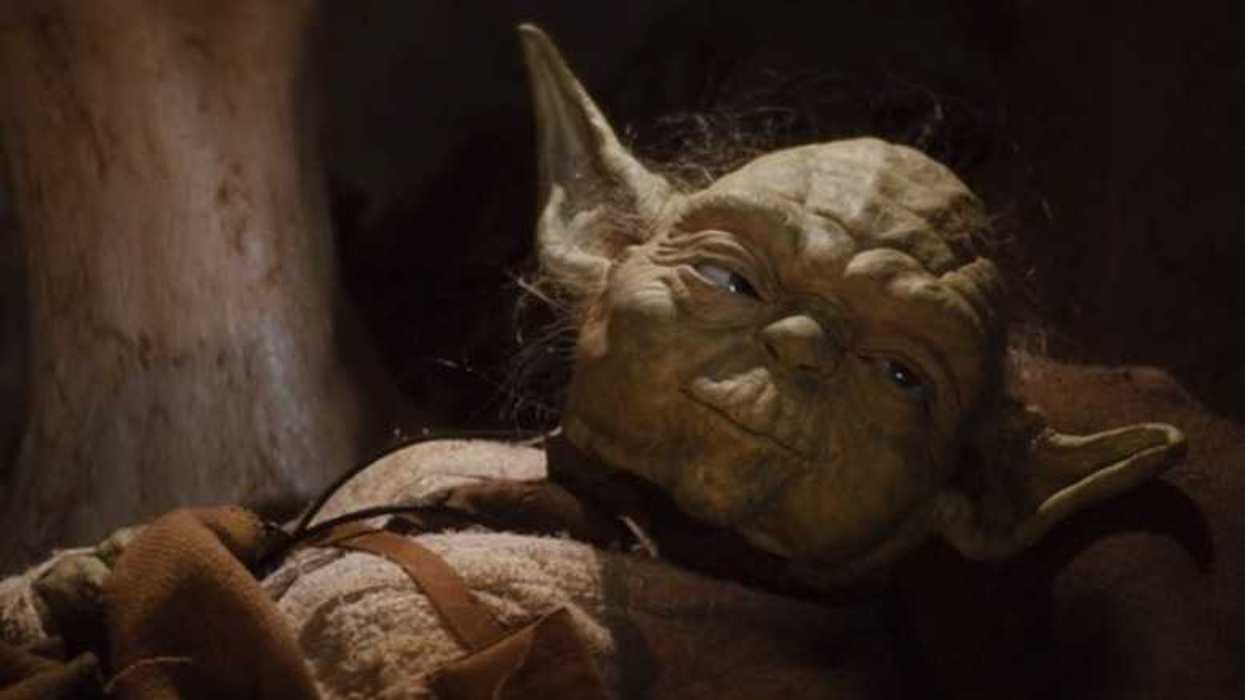
'Star Wars: Episode VI - The Return of the Jedi' (1983)
When it comes to epic, larger-than-life sagas such as Star Wars, fan theories are already moving around in overdrive. However, when fans learned about a very specific deleted scene from Return of the Jedi (1983) theatrical cut, they quickly realized that Yoda’s revelation would have changed the Jedi Order forever.
In a scene that was deleted, Yoda admits he prevented Obi-Wan Kenobi (Alec Guinness) from telling Luke Skywalker (Mark Hamill) the full truth about Darth Vader being his father, Anakin Skywalker.
The scrapped dialogue, preserved in laserdisc extras and fan-digitized clips, adds serious tension and moral dilemma to the Jedi choices. Obi-Wan Kenobi had told Luke that Vader had murdered Anakin Skywalker, a claim that, from a certain point of view, would be debatably true. However, the deleted Yoda clip leaned directly into acknowledging the deception and would have drastically changed the saga in retrospect.
What did Yoda’s deleted line actually reveal? What can this teach us about difficult editorial choices in a vastly popular saga such as Star Wars?
Let’s jump right in and explore.
What Yoda’s Deleted Line Actually Revealed
The deleted line is exceptionally clear and loaded with serious intent. Yoda says to Luke, “Obi-Wan would have told you long ago, had I let him. Now, a great weakness you carry. Fear for you, I do.” Let’s try to break this down piece by piece.
The initial part of this line is perhaps a lot more damning than the latter because in those first few words, Yoda acknowledges that Obi-Wan would have told Luke the darkest truth about his father had he “let him”. Not only does Yoda speak of his involvement in the matter, but he also goes further by saying that the decision not to tell Luke was essentially his own. If Yoda had “let” Obi-Wan tell Skywalker the truth, he would have.
The line portrays Yoda as the decisive force behind the secrecy, not a passive participant. This critical nuance obviously carries a huge moral cost. Did the Jedi knowingly manipulate Luke Skywalker? Did Yoda not believe that Luke deserved to know such a profound truth about his own identity?
This moment serves as a sharp admission of truth. It shifts the moral weight of the Jedi. While the Jedi have typically been framed as guardians rather than political players, this particular admission complicates the matter and essentially puts the notion up for debate.
Most importantly, this deleted scene humanizes the wisest Jedi master by making him appear fallible and his decision-making debatable, just like that of any other character from the saga. It tells us that even the greatest spiritual guardians could struggle with delivering painful truths.
The Jedi’s Moral Blindspot
If the deleted scene had remained in the film, it would have perhaps strengthened debates about the Jedi philosophy. Where do transparency and accountability feature in absolute certainty?
The conviction that withholding painful truths is for the “greater good” even when it risks creating extreme distrust or resentment is bound to run into serious questions about the very nature of its foundational principles. By hiding Anakin’s fall and preparing Luke to confront his own father, Yoda and Obi-Wan chose strategy over trust. This is no easy choice by any means.
Maintaining this line may have made the lie feel less like noble deception and more like a clear decision that arose from institutional failure. How well did the Jedi handle their own legacy and empower the future generations? What were their most obvious flaws? This single line serves as a fascinating example of the Jedi blind spot.
Long before the prequels were released, this clear acknowledgement from Yoda would have quietly spoken about the morally compromised nature of the Jedi. It would hint at the fact that the Order’s downfall wasn’t just down to corruption, but long-standing blind spots that were so deeply ingrained that they became a part of their identity.
The Editorial Choice That Preserved Yoda’s Moral Ambiguity
Editorial decisions, especially monumental ones such as whether to maintain this Yoda line or not, can drastically alter not just a single film but an entire saga. Richard Marquand and George Lucas weren’t just making a decision that would affect the original trilogy, but one that would alter our understanding of the Jedi Order permanently.
An interesting aftereffect of including this line that we haven’t discussed is how it would have introduced friction between Yoda and Obi-Wan. Yoda would be complicit in a manipulation that could potentially appear overbearing.
Decisions about the inclusion or exclusion of critical dialogue, especially crucial lines in an epic saga, can have seemingly infinite effects on even the most minor characters, scenes, and storylines. Such lines don’t exist on their own terms; they affect everything.
The creators chose to let the ambiguity linger, forcing audiences to question: Was it a lie? Or was it a myth that was preserved until Skywalker was ready for the truth? One way or another, deleting the line maintained Yoda’s spiritual authority.
Summing It Up
In the grand scheme of the galaxy-spanning saga, the exclusion of a single powerful admission by Yoda significantly preserved our understanding of the Jedi Order. This colossal decision by the creators has been debated by fans worldwide. Like all iconic moments in epic sagas, debates like these only deepen the audience’s fascination with a movie’s characters, myths, and storylines. This one is no different.
Which is your favorite quote by Yoda? Tell us in the comments below.
- “You Were the Chosen One!”: The ‘Star Wars’ Line That Broke The Jedi Myth ›
- “I’ve Got a Bad Feeling About This” — How a Running Joke Became A ‘Star Wars’ Tradition ›
- The 10 Best Star Wars TV Characters ›
- 9 Iconic Quotes From the Star Wars Franchise ›
- The Reluctant Mentor Trope, Explained: Why Hollywood Uses It Again and Again | No Film School ›
- Female Student Filmmakers! Indie Film's Top Producers Want to Mentor You | No Film School ›
- 8 Most Iconic Mentors to Ever Grace the Screen | No Film School ›