We all love a hero. Not only do we want him to win, but we want to be him.
But let’s face it, a hero is only as good as the villain is bad. In some stories, heroes and villains may seem like complete antitheses to each other. And in other stories, we can sense some eerie connection between them; something we can’t quite put a finger on.
That may be because, instead of representing two different worlds, they are representing two different sides of the same world. This confusion arises when the villain is holding up a mirror to the hero, showing him the darkness that lies within him, what he could have been (or still can be) if that darkness found its footing.
That’s essentially the idea behind the storytelling trope known as “dark reflection,” a narrative device that goes beyond the fairytale distinction of good vs. evil and becomes more real, about self vs. self.
What is Dark Reflection?
Dark reflection is a narrative device in which the antagonist offers a distorted image of the protagonist, shaped from the same fate, desires, and dreads that drive the hero. A villain serving as the dark reflection exposes the flaws the hero has, but is either suppressing or denying. This mirror creates tension by letting the villain portray a picture of what the protagonist could become under different circumstances or if he made different choices.
Understanding the Dark Reflection Trope
The Psychological Function: The “What If” Scenario
The core function of the trope is to expose the hero to the unsettling truths about himself. The truths that question his ideology or lay bare the potential hypocrisies and weaknesses in beliefs that make him a hero.
It also gives the audience a choice to define who is the hero and who is the villain; after all, they are both fighting for their versions of justice. Dark reflection makes the story less about the hero winning or the villain losing and more about who they are when everything is tested.
Character Development Through Antagonism
An antagonist holding up the mirror to a protagonist is essentially the latter being exposed to a severe test of character. Here, the antagonist becomes the protagonist’s inner demons. And to fully defeat those, the protagonist must first understand them. This helps the hero’s character arc to blossom more organically rather than feel like it was forced to develop in a certain way.
Heightened Stakes
When this reflective connection is established between the hero and the villain, through shared tragedy, power, or philosophy, the emotional stakes are automatically heightened. The hero’s fight doesn’t remain only against an outer force, but also against his own darkness; he is no longer fighting to save a city, but his own soul as well. This intimate and personal conflict locks the audience within the narrative.
Difference from the Standard Arch-Nemesis
Not every great villain is a dark reflection of the hero. The usual arch-nemesis simply opposes the hero’s goals; a firefighter and an arsonist, an aid-worker and a warlord, or a whistleblower and a corrupt organization. If we dig into fictional examples, we might come across Sherlock Holmes and Professor Moriarty, Batman and Joker, or Thanos and the Avengers.
While arch-nemeses represent two different, opposing worlds, the dark reflection shares the hero’s core DNA. They go deeper than just their circumstances. Their connection with the hero is not only situational, but is ideological and philosophical. Their values are the corrupt version of the hero’s moral code. In comparison to an arch-nemesis, it’s more difficult to dismiss a dark reflection simply as evil.
Iconic Dark Reflections
Dr. Jekyll and Mr. Hyde (Strange Case of Dr. Jekyll and Mr. Hyde, 1886)
 Fredric March in Dr. Jekyll and Mr. Hyde (1931)Photo Credit: Paramount Pictures
This is a classic literary example of a dark reflection from Robert Louis Stevenson’s Gothic novella. Here, the antagonist serves as (in this case, literally) the dark reflection of the protagonist. Dr. Jekyll is a well-meaning, respected member of society, while Mr. Hyde is his murderous alter ego, whom he hides from the world. Their story explores how Hyde acts on evil impulses that Jekyll refuses to accept. This internal conflict turns into a struggle for identity and control. The underlying theme of the story is how, if you suppress your dark instincts, it can sometimes lead to creating your own enemy.
Harry Potter and Lord Voldemort (Harry Potter Film Series, 2001-2011)
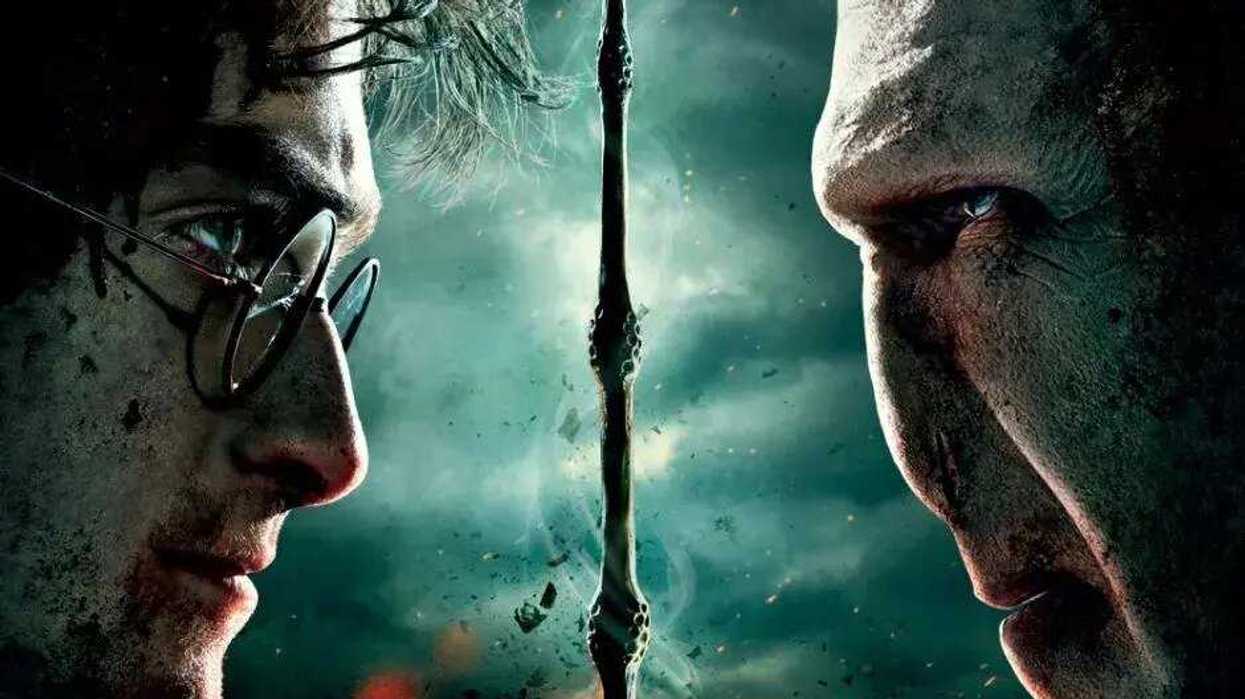
Harry Potter and Lord Voldemort share quite a few traits: both are orphans, both are half-bloods, and both have rare and profound magical abilities. Their differences lie in the choices they make. While Harry chooses love, empathy, and coexistence, Voldemort chooses hatred, fear, and solitary power. Voldemort shows everything Harry has that can make him a terrible evil; Harry simply chooses to suppress that. Voldemort represents the alternate path Harry would have taken had he prioritized ambition over love. This makes Voldemort a quintessential dark reflection of Harry.
Walter White and Gus Fring (Breaking Bad, 2008-2013)
While Walter White is not exactly a benevolent hero, he is the product of his circumstances. He is a typical antihero. Gus Fring, on the other hand, is a ruthless, controlled, respected, feared, untouchable, and emotionally impenetrable psychopath—everything that Walter aspires to be. Gus, also the product of his circumstances, built his drug empire slowly and anonymously, but with great success. He displays calculated, cold professionalism that Walter strives for. But Walter cannot succeed because his path is marred by unchecked ego and emotional outbursts.
There is also a scope to consider one more, and more personal, dark reflection of Walter White—his alter ego, Heisenberg. Where Walter White is a kind and responsible family man and a scholar, Heisenberg is the man blinded by his selfish desire for revenge and ambition.
In either case, Walter becomes a rare example of a protagonist who is not even trying to suppress his dark instincts; he is trying to nourish them.
Conclusion
The main purpose of the dark reflection trope is to remind us that our internal conflicts shape our external world. A villain created from the same bone, flesh, and blood as the hero keeps the hero’s journey grounded in reality and more personal.
The dark reflection also pushes the hero towards clarity. When a hero sees the alternate, darker person he could have been, or still can be, he finally understands which version he needs to choose. That choice is what makes him a hero.
- The Secrets to Writing Unforgettable Villains ›
- Reinterpreting 'The Karate Kid' with Daniel As the Real Villain ›
- What If Spielberg Directed 'Harry Potter'? He Almost Did | No Film ... ›
- Dissecting The Evolution of The Harry Potter Movies' Visual Style ... ›
- Learn Alan Rickman's True Feelings on His 'Harry Potter' Character ... ›
- These 10 Poignant Harry Potter Quotes Will Get You Through The ... ›
- The Definitive Harry Potter Movie Rankings: Don't @ Me Edition | No ... ›
- Harvey Dent’s Warning in ‘The Dark Knight’: The Birth of the Villainous Hero ›