The Calm Before the Storm: Analyzing Don Vito’s Lethal “No” That Ignites ‘The Godfather’
Don Vito Corleone’s calm rejection of Sollozzo’s narcotics proposal quietly triggers the chain of violence that drives the entire story.
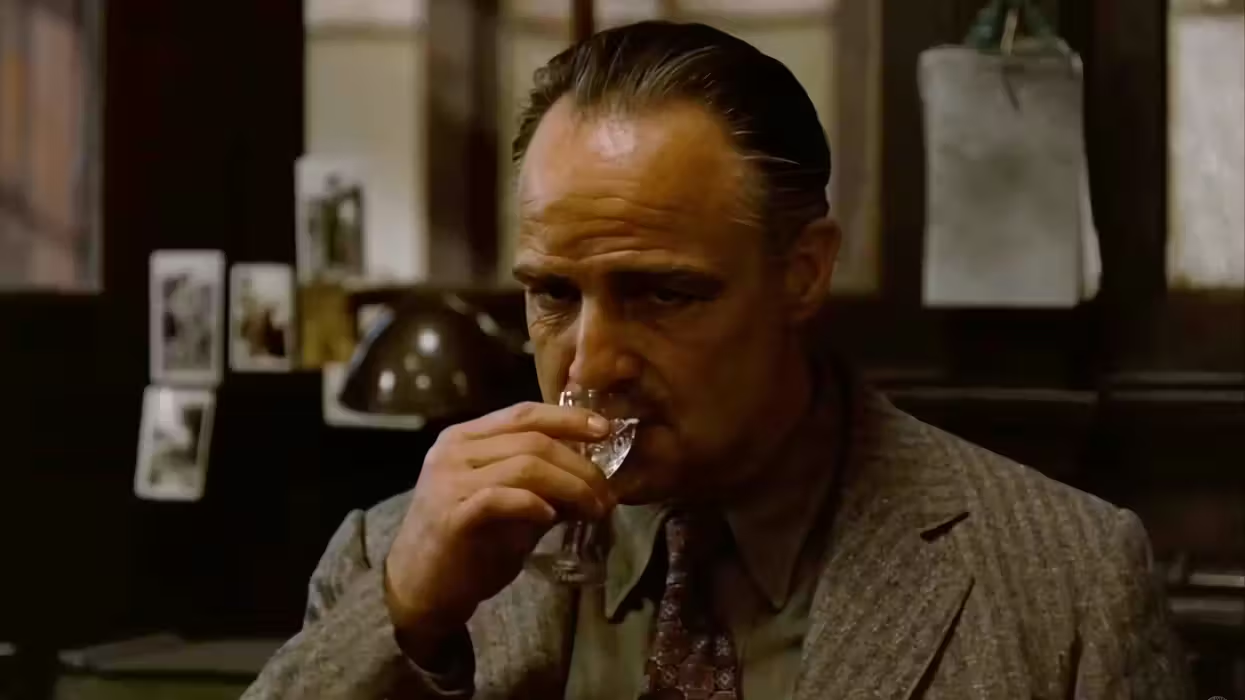
‘The Godfather’ (1972)
In the violent world of crime and mafia, power has a strangely clandestine and subtle way of exploding. Rivalries may start with a handshake and toasts, but when they fully materialize, they may leave behind bullet wounds, lifeless bodies, and shattered dreams. It’s a really strange world.
In The Godfather (1972), there is a moment, a very civil and polite meeting, where a lucrative proposal is made, and then it is politely turned down. That’s all it takes for this epic crime drama to set in motion the events that shape one of the greatest stories ever told.
This single conversation is not among the movie’s iconic scenes; it doesn’t have memorable quotes, and there aren’t many production anecdotes about it. But this is the ultimate “butterfly effect,” which fans out the events that shape the entire story, character arcs, and legends.
And it all starts with a polite “no.”
The Scene
The scene takes place half an hour into the movie, immediately after Don Vito Corleone (Marlon Brando) and Tom Hagen (Robert Duvall) take care of the stubborn Hollywood producer, Jack Woltz (John Marley).
Virgil “The Turk” Sollozzo (Al Lettieri), a drug kingpin, meets Vito and his team for a business proposition. He already has the muscle power from the Tattaglia crime family, but now he is facing some financial problems and also needs Vito’s high-level police/political protection, which the Tattaglias can’t provide. He explains how this deal can make him make $3-4 million annually.
Vito listens to the proposal. He has already taken opinions from Sonny (James Caan) and Tom; they both think it’s the future, and they need to get in. Vito considers all the aspects and then politely declines the offer. His reason: Currently, his business involves dealing in gambling and unions. It’s acceptable to his white-collar friends in the Congress and courts. But a venture into the drug trade might sour his connections.
The meeting ends on a courteous note, and Sollozzo leaves. After he leaves, Vito, intuitively feeling suspicious of Sollozzo, asks Luca Brasi (Lenny Montana) to meet with the Tattaglias and find out more.
- YouTube www.youtube.com
Luca Brasi meets with Bruno Tattaglia (Tony Giorgio), who is already with Sollozzo. They garrote him with a piano wire, and soon after, Vito himself is shot down in public.
- YouTube Great scene form the Godfather movie.
The Sales Pitch from Hell
Why Vito Swiped Left on Narcotics
Don Vito is one of those criminals who strives to bend the law instead of completely breaking it. Casinos, gambling, and alcohol; making money off of these, for him, is the lesser of the two evils. The bigger evil is highly potent drugs, like heroin. He calls it “dirty business.” This is his ethical reason for saying no.
The other reason is pragmatic. His political friends are more than happy to look the other way while he is dealing in these “recreational and naughty” crimes. But they are not likely to do that if he threw “heroin” in the equation. If they sever their ties with him over this, what good is this political clout?
This is one of the instances that prove Vito is shrewd and farsighted. He is willing to let go of a lucrative (but possibly short-lived) business opportunity in favor of longevity.
Why Vito’s “No” is Unacceptable to Sollozzo
Sollozzo has poppy fields in Turkey, processing plants in Italy, and his market is in the U.S. To carry out this multinational operation, he needs political insulation at every step of the way, especially in America. Here, Tattaglia’s manpower is of little to no use. He needs something (someone) substantial, someone who has a reach in the police, in the courts, and in Congress. Influence with the bigwigs.
In the crime sphere, it’s the Corleones who are the wealthiest and the most powerful. Without them, without Vito’s connections, Sollozzo’s narcotics empire is vulnerable to arrests and seizures.
When Vito refuses, he potentially leaves Sollozzo exposed. But, for Sollozzo, the bigger problem is strategic. Let’s say Sollozzo found someone else who could provide him with the protection and money. But the Corleones are still very powerful and influential. And New York is their turf. Who’s to say they won’t block his expansion of the drug trade across New York in the future?
That’s why, when he says “no,” Vito turns himself into a potential obstacle that needs to be removed.
A Series of Unfortunate Events Set in Motion by the “No”
Luca Brasi is the first victim of this rejection, shortly followed by Vito himself, but he survives—barely. His injuries are too severe to completely recuperate from, and he eventually loses his grip on the family. It leaves his older son Sonny’s impulsive behavior unchecked, and he soon becomes the target and dies.
The biggest, and kind of heartbreaking, victim is Vito’s youngest son, Michael (Al Pacino). Once a dreamy-eyed, idealistic war veteran who wanted to build a respectable life with Kay (Diane Keaton), he is pulled into the family’s professional drama. He crosses the Rubicon when he kills Sollozzo and NYPD Captain McCluskey (Sterling Hayden), finally launching a war between the five mafia families to gain control of New York’s crime world.
Now old and frail, Vito strikes a bargain with the feuding crime families, allowing a controlled drug trade in exchange for ending the animosity and not hurting Michael. When Michael returns, he takes over the business operations, and the downfall continues.
Conclusion
This scene is the confluence of Don Vito’s personal code and the ominous, fateful forces that surround him. He chooses his legacy and longevity over a lucrative but potentially dangerous deal, but that doesn’t really play out the way he intended. For what it’s worth, it may have started a mafia war, but it highlighted the moral backbone of The Godfather.
In the end, Vito’s “no” may have been calm and polite, but its resonance was the loudest thing that happened to him.
- The Chilling Montage That Turned ‘The Godfather’ Into a Masterpiece ›
- Breaking Down Michael’s Kiss of Death in 'The Godfather Part II' ›
- ‘The Godfather: Part III’ and Michael’s Most Famous Line ›
- ‘The Godfather’: Michael’s Quiet Threat to Fredo ›
- ‘The Godfather: Part II’: The Coldest Offer Michael Corleone Ever Makes ›
- The Godfather Line That Changed Movie Dialogue Forever ›
- How Closing a Door Rewrote Michael’s Fate in ‘The Godfather’ ›
- The Don Corleone Line That Still Resonates More Than 50 Years Later ›
- The Four Words That Opened The Godfather and Changed Cinema ›