Michael Corleone vs. Walter White: Who’s the Worse Evil?
This article traces both men’s motives, actions, and final descent to uncover who truly embraces villainy.
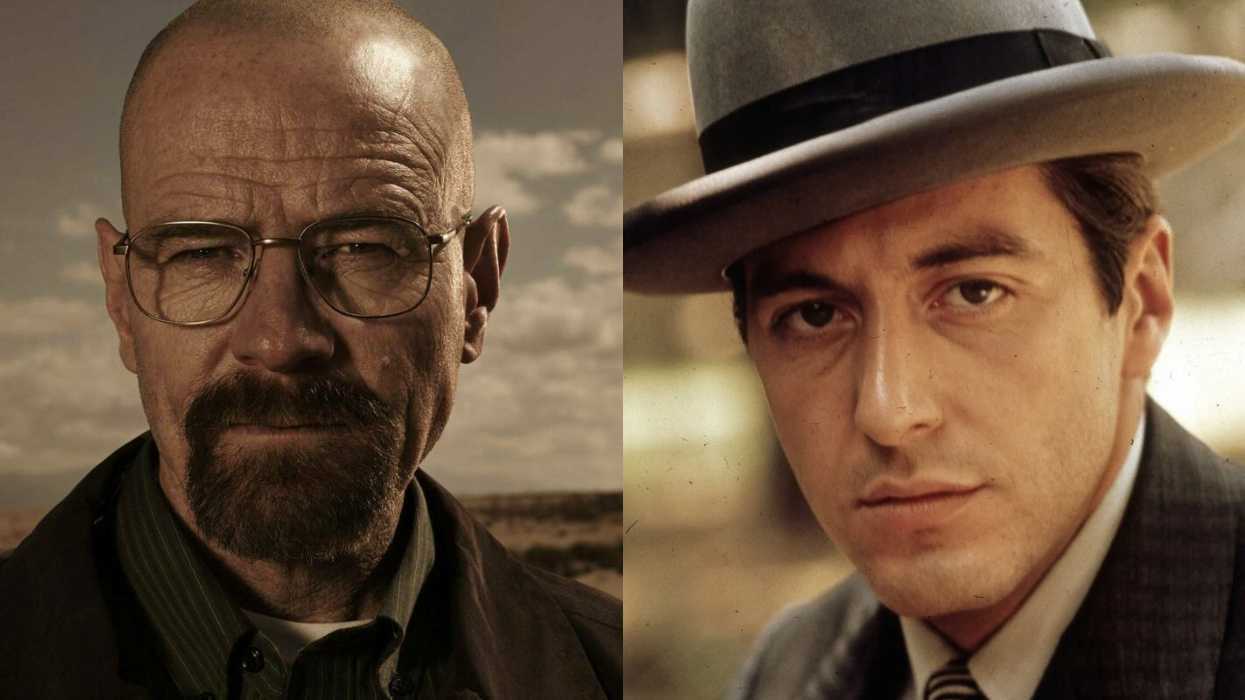
Bryan Cranston in Breaking Bad (2008-2013) | Al Pacino in The Godfather (1972)
The Godfather (1972) introduces Michael Corleone (Al Pacino), a World War II veteran, as the quiet, sensitive son of a mafia boss who wants nothing to do with the family’s influential, criminal background.
Breaking Bad (2008-2013) gives us Walter White (Bryan Cranston), a brilliant scientist who, at 50, works as a high school Chemistry teacher and constantly feels erased from his own life.
Both men embark on their narrative journey with a belief that they have choices, and along the way, start realizing they might not. They are both placed in a place of insecurity (although not the same kind), which starts affecting their decisions. While Michael fears he will become his father, Walter fears becoming nothing at all. How their journeys start looks simple, ordinary, and absolutely harmless.
And yet, behind their unassuming faces, there is tremendous tension they don’t realize, let alone escape. Their journeys start on parallel tracks, but their motives and actions direct them onto their own distinct paths. Their turning points might be different, but their final destination is the same: moral darkness.
The only question that remains is who enters that darkness more willingly.
Michael Corleone: The Beginning
Michael’s Isolation From Family
When The Godfather begins, we see Michael as the cleanest in his family. He is a soldier with a moral high ground. He loves his family, but at the same time, he maintains a safe distance from what it symbolizes. He spells it out for his girlfriend, Kay (Diane Keaton), that he is not his family.
- YouTube www.youtube.com
At this point, he believes everything he says to Kay. And Kay believes him, too. Why wouldn’t she? His words aren’t empty; they are supported by his military service, his medals, and his calm nature.
But this comforting feeling of “safe distance” exists because of the peace around him. And that false sense of security is what makes him so vulnerable to the looming moral crisis that awaits him.
An Attempt on Vito’s Life—and on Michael’s Fate
Whatever physical distance Michael maintains from his family’s business affairs doesn’t apply to his personal dynamic with them. He is a true family man. So, when there is an assassination attempt on his father, Vito’s (Marlon Brando) life, Michael willingly steps into a role he otherwise would never have imagined for himself.
His plan to meet Sollozzo (Al Lettieri) and McCluskey (Sterling Hayden) begins as a step towards securing his family’s safety, but its execution leaves him with a new feeling of satisfaction stemming from revenge. The moment he pulls the trigger on these two shows that Michael is capable of quick and gutsy decisions, something that proves instrumental in his consequent journey.
Michael’s Descent
Protection Transforms Into Control
When Michael starts his foray into the family’s affairs, he claims (as he believes) that his motive is to protect his family. As time passes by, his decisions start losing their gallant “family protection” glow and become more about safeguarding the Michael Corleone brand. More importantly, he continues making decisions even when his family is no longer in any sort of danger. That’s because his decisions are meant to create a suitable atmosphere for his growing power.
Choices That Turn Him Into a Lonely Figure
Throughout the trilogy, Michael makes decisions, such as ordering unrestrained hits on his rivals, creating a wall between himself and Kay, and fueling Fredo’s minimization as a mere liability. These decisions turn him into an efficient but lonely leader. The more powerful he becomes, the lonelier he gets.
Walter White: The Beginning
Walter’s Crisis and His First Big Decision
Walter lives a quiet, uneventful, insidiously numbing life where he and his skills are ruthlessly ignored. Despite having graduated from Caltech, being a part of a Nobel Prize-winning research team, and having founded a research firm, Walter is reduced to working as a Chemistry teacher at a school where he is not respected.
To add insult to injury, he is diagnosed with cancer. He is in a place where he is packing tremendous potential and yet has left no mark, made no difference, hasn’t made his family’s future secure, and now has no time left. All he has is a closing window.
A Dark Ray of Hope
When he accidentally stumbles upon one of his former students, Jesse Pinkman (Aaron Paul), whose meth-cooking lab has just been busted, the “total reject” in Walter sees an opportunity.
Cooking meth turns out to be a big decision that begins to change Walter’s fate right after the first cook. He feels capable and in control again after a long time. And that feeling becomes the fuel behind every decision he takes from this point onwards.
Just like Michael Corleone, Walter explains this newfound act as a duty to his family. And just like it happens with Michael, that explanation soon falls apart. He starts enjoying the commendation and respect (even though it’s from criminals). He relishes the confidence and the feeling of invincibility that comes with it. “Providing for family” reduces from motivation to cover.
Walter’s Descent
Smart Plans That Ignore Morality
Walter was already intelligent. Now he becomes confident and ruthless. He becomes a quick problem-solver. Whenever he faces danger, stepping back becomes a blow to his ego. Every decision he takes is aimed at protecting and strengthening his position, but is also engineered to take him away from his old self. But this emotional cost stops meaning anything to him.
Decisions That Cross Clear Ethical Lines
As his influence grows, so does his lack of empathy. Aside from constantly manipulating Jesse, he lets Jane die and poisons little Brock simply to gain an advantage. Every choice reveals how far he is willing to go for his own benefit. People stop being people for him; they become parts of a strategy.
Michael vs. Walter
Who Had a Clearer Choice in the Beginning
Michael was born and raised in an atmosphere that was defined by violence and all sorts of immoral acts. His initial choices were a product of critical moments where his family’s safety and survival were indeed at stake. He had easy access to the network of resources, infrastructure, and manpower that were essential to his decisions.
Unlike Michael, whose initiative came from danger, Walter’s initiative came from frustration. He had always had to start from scratch. His father died when he was six, and he practically raised himself. He quit the company he started, only to later see it turn into a billion-dollar company. He is a brilliant Chemistry teacher who doesn’t get an ounce of respect. He channels all this frustration into kickstarting his second act, the criminal one.
Who Builds More Harm Through Actions
Both Michael and Walter harm the people who are closest to them, but the source and nature of that harm are different. Michael’s structured decisions are meant to protect his family and family’s legacy, while Walter’s emotional decisions are meant to serve his pride. Michael destroys trust to secure power, and Walter destroys it to secure recognition.
Who Is the “Worse Evil”
Intent Behind Their Actions
They are both ruthless and running behind power and influence, but while Michael’s decisions always remain rooted in responsibility, Walter’s decisions grow from personal satisfaction. When he says to Skyler (Anna Gunn), “I did it for me,” he confirms what his choices had already shown.
Michael sinks deeper and deeper into crime because he is trapped in its structure. Walter sinks because he enjoys power.
The Final Impact on Themselves and Others
Michael’s arc ends with regret and emptiness. In his last moments, he has nothing but memories of everything he cared about but fell apart, and he dies with the same things he lived with—profound emptiness and loneliness.
- YouTube Michael Corleone(1920-1997) R.I.P. (his victims too)...
Walter acknowledges who he has become, but it’s pointless. The damage is already done, and it's permanent. His choices badly affected everyone he cared about, especially his family.
Conclusion
Michael and Walter walk the same road but for different reasons. Michael’s motivation is duty, while Walter’s is ego. Michael started by wanting to protect his family; Walter started by wanting to feel significant.
If their intentions are considered, the answer is clear: Walter White is the darker villain.
- It's Okay to Have a Morally Ambiguous Main Character | No Film ... ›
- Deconstructing a Masterpiece: How Vince Gilligan Wrote 'Breaking ... ›
- 'Breaking Bad' Creators on Developing the Story of Walter White ... ›
- Walter White vs. Daniel Plainview: Two Men Who Destroyed ... ›
- The Godfather Line That Changed Movie Dialogue Forever ›
- Breaking Down Michael’s Kiss of Death in 'The Godfather Part II' ›
- Friends Close, Enemies Closer: The Most Famous Lesson From 'The Godfather' ›
- Michael Corleone’s Wardrobe Was the First Red Flag ›