13 Movies That Reward You for Paying Attention
These films demand focus, patience, and sharp eyes before delivering unforgettable final payoffs.
'Arrival' (2016)
You might consider movie-watching a passive experience. You know, just grab popcorn, lean back, and chill. Of course, if “Netflix and chill” is your intention, then that’s another thing, but all in all, it’s a pretty inactive, non-participative thing to do. Right?
Well, tell that to the movies listed here. Try “chilling” while watching these, and you will have wasted two hours of your life. Well, not wasted-wasted; the movies are pretty cool even if your mind wanders off, but you might find yourself watching the climax and then asking around stupid questions, like what, why, and how. You might get an answer (with an assured frown), but it just won’t be the same. You will most definitely regret not having paid attention to begin with.
These movies are not your regular “popcorn flicks.” They are obviously entertaining, but they are not lighthearted, easy watches. You can’t just “see” and “hear” and expect that you will understand. These movies will treat you like a partner in a high-stakes game. If you wander off, the partnership will be severed; if you stay with it, you will be rewarded with a narrative explosion that will change everything you thought you knew.
The Game of Attention and Reward
How These Films Control Information
In a nutshell, by controlling the flow of information. How do they do it? By using unreliable perspectives, fractured timelines, and delayed context. But don’t think the storylines cheat. These movies have plot structures that are made to drop scattered information and then just wait. In other words, these movies create all the groundwork without your conscious knowledge. So, when the reveal comes, you feel like you had a sense about it, which you did, but in your subconscious.
Why the Endings Feel So Impactful
At the end of these films, you feel like the climax has really landed. And the credit, almost entirely, goes to the accumulated information that’s sitting dormant in your head. The final impact is the result of the teamwork of every visual cue, every line of dialogue, and every minute but strategic decision that came earlier. Obviously, you register these small cues and sets of information only if you are paying attention. If you play your part assiduously, the final impact doesn’t remain just a surprise or shock, but materializes like a realization—like the film clicking into its place rather than explaining itself.
13 Attention-Rewarding Films
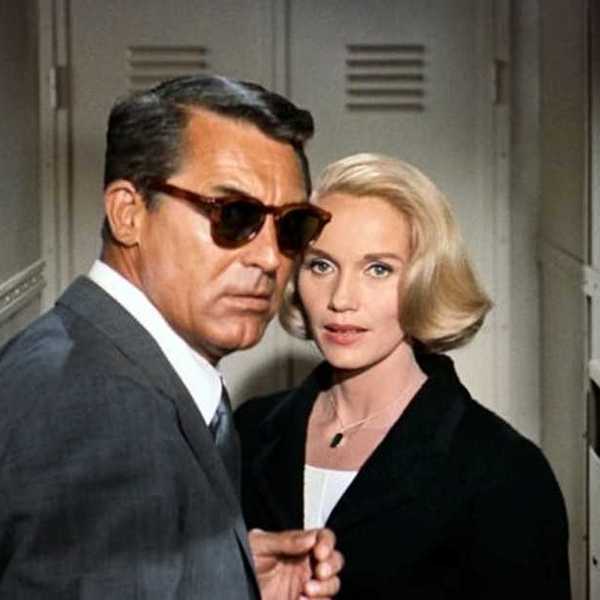
1. Vertigo (1958)
Written by: Alec Coppel and Samuel A. Taylor | Directed by: Alfred Hitchcock
John “Scottie” Ferguson (James Stewart), a San Francisco detective, retires from active duty because of his extreme fear of heights and accompanying vertigo. He reluctantly agrees to freelance when his old college buddy requests him to follow his wife, Madeleine (Kim Novak), who has been exhibiting strange behavior. Scottie quickly gets absorbed into Madeleine’s world and is led down a dark path of mystery, obsession, identity, and tragedy.
Here, we need to follow the color cues and recurring motifs to keep up with Scottie’s mental journey. We also need to be mentally present to experience Hitchcock’s use of innovative camera angles, such as dolly zoom, to experience Scottie’s vertigo and psychological spiral. It indeed makes us feel every ounce of his dizziness. This vertigo provides a narrative shift during the second half.
2. Psycho (1960)
Written by: Joseph Stefano | Directed by: Alfred Hitchcock
Marion Crane (Janet Leigh) embezzles money from her employer and goes on the run, only to end up at the secluded Bates Motel, run by soft-spoken Norman Bates (Anthony Perkins), who lives under the thumb of his overbearing mother.
To enjoy Psycho, you have to undergo Hitchcock’s misdirection, which comes pretty early on in the movie—around 45 minutes into the film, he kills off his female lead. So, establishing that early focus and then recalibrating it is important. Meanwhile, Hitchcock leaves many breadcrumbs for us to follow, such as minute details in the motel rooms and Norman’s stuttering speech. This false sense of security builds up towards the climax, and at the final moment, Hitchcock pulls the rug from under your feet with a jarring reveal.
3. Planet of the Apes (1968)
Written by: Michael Wilson and Rod Serling | Directed by: Franklin J. Schaffner
Astronaut George Taylor (Charlton Heston) crash-lands on another planet where intelligent apes rule over primitive, mute humans. While he is captured and treated like an animal, George must find a way out of this upside-down civilization.
This slow-burning social commentary leaves behind small cues, such as “forbidden zone” and the religious text of the apes, which hint at a deeper history. The final reveal—that he isn’t on another planet but on Earth itself, which humans destroyed with nuclear war and let apes take over—is obviously iconic, but, to fully feel its devastating impact, we need to journey with Taylor and grasp his gradual realization at his own pace.
4. Don’t Look Now (1973)
Written by: Allan Scott and Chris Bryant | Directed by: Nicolas Roeg
Following their daughter’s death by drowning, John Baxter (Donald Sutherland) and his wife, Laura (Julie Christie), travel to Venice, where John has accepted a project to restore an ancient church. Once there, they come across a psychic who claims she can see their daughter and that she is trying to warn them of an impending danger.
Roeg builds suspense and a sense of dread through fractured editing and a recurring motif of the color red. These clues are subconscious visual flashes, and if we are not vigilant, we most likely miss them. The film’s ending is noted for being jarring, and it kind of works only if you have noticed the subtle, non-linear snippets that suggest that John’s psychic abilities are his own worst enemy.
5. Chinatown (1974)
Written by: Robert Towne | Directed by: Roman Polanski
Private investigator, J.J. “Jake” Gittes (Jack Nicholson), is hired to expose an adulterer, but gets caught in the web of deceit, involving the city’s water shortage and the mystery of an illegal land grab. What starts as a simple case spirals into a dark conspiracy.
There is a reason why Chinatown won an Oscar for Best Original Screenplay. In this story of a systemic cover-up, every line of dialogue is an intricate puzzle piece. You are required to follow the flow of money and the family history closely to tie up the links. Only when you immerse yourself from the beginning can you fully experience the devastating final act that underscores the personal betrayal and the untouchability of the corrupt power system.
6. Se7en (1995)
Written by: Andrew Kevin Walker | Directed by: David Fincher
The film follows the soon-to-be-retired detective, William Somerset (Morgan Freeman), and his young, hot-headed partner, David Mills (Brad Pitt), in their hunt for a serial killer who uses the seven deadly sins as his inspiration.
First off, the movie is a procedural, which warrants keen attention from the audience. In addition to that, Fincher's direction depends on the atmospheric elements, and it requires the audience to keep looking into the shadows. The ending doesn’t turn out to be a singular twist, but a predetermined, tragic conclusion for which the entire movie serves as a countdown.
7. The Usual Suspects (1995)
Written by: Christopher McQuarrie | Directed by: Bryan Singer
A deadly explosion takes place aboard a ship, and there is only one survivor, Rover “Verbal” Kint (Kevin Spacey). Kint tells a complex story to a customs agent, in which he details how five criminals were brought together for a heist orchestrated by a master criminal, Keyser Söze.
This film is an ultimate example of an unreliable narrator. When Kint narrates his story, we are essentially in the room with him and the detective. And if we have been doing our job well, a.k.a. paying close attention, we realize that the truth was literally on the office walls the whole time. From this film, budding writers and filmmakers can learn how to construct and manipulate stories to keep the audience distracted and engaged at the same time.
8. The Sixth Sense (1999)
Written by: M. Night Shyamalan | Directed by: M. Night Shyamalan
Child psychologist, Malcolm Crowe (Bruce Willis), helps a nine-year-old Cole Sear (Haley Joel Osment), who has severe social anxiety and suffers from the distressing visions of dead people. As Malcolm works to heal Cole, he struggles with his own failing marriage and past traumas.
The movie’s final twist is lauded as one of the cinematic wonders, but that’s not the film’s only genius. It has the ultimate reveal spread out in front of your eyes the whole time, in every scene. If you are keenly involved, you might notice these clues everywhere: from Malcolm’s lack of interaction with any other characters to the clever use of the color red. It’s a supernatural horror, but it’s still a deeply emotional film that uses its climax to provide a profound closure.
9. Memento (2000)
Written by: Christopher Nolan | Directed by: Christopher Nolan
Leonard Shelby (Guy Pearce), who suffers from short-term memory loss, is searching for his wife’s murderer. All the clues he has are the ones that are tattooed on his body and some Polaroids.
Before Tenet came out in 2020, Memento was as confusing as the movie could get. Nolan essentially tells the story in two timelines: one, moving forward, and the other, moving backward. If you are not 100% focused on the cause and effect of every action, you are not likely to understand what’s happening. And the final twist! The movie really gives another dimension to how rewarding it can be when you realize that the protagonist’s biggest obstacle isn’t his memory, but his own desire for a purpose.
10. Oldboy (2003)
Written by: Hwang Jo-yun, Lim Jun-hyung, and Park Chan-wook | Directed by: Park Chan-wook
Oh Dae-su (Choi Min-sik) is kidnapped, kept in solitary confinement for 15 years, and then released—all without any explanation whatsoever. However, after his release, he is given five days to figure out why this happened to him. This search leads him on a violent path toward a mysterious man named Lee Woo-jin (Yoo Ji-tae).
If you want to experience narrative ruthlessness, this is it. Everything Dae-su does, every meal he eats, and every person he meets, plays a role in the final devastating revelation, which is one of the most shocking endings in cinematic history. If you have been paying close attention to what’s unfolding on the screen, you will definitely be rewarded with a truth that changes the context of the whole film.
11. The Prestige (2006)
Written by: Jonathan Nolan and Christopher Nolan | Directed by: Christopher Nolan
In Victorian London, two magicians, Robert Angier (Hugh Jackman) and Alfred Borden (Christian Bale), engage in a lifelong battle to outdo each other. Their obsession with creating the ultimate illusion leads them onto the path of sabotage, sacrifice, and a search for real magic.
The movie famously reveals in its opening monologue how the trick—and the film—works. You have to look for the “prestige.” There are many elements that need close attention, such as the doubles, the journals, and some recurring dialogue, that ultimately help you solve the mystery even before the characters do it on the screen. If you go well beyond what is expected of you, you might even see how the concept of magic is brilliantly used as a perfect metaphor for filmmaking itself.
12. Shutter Island (2010)
Written by: Laeta Kalogridis | Directed by: Martin Scorsese
U.S. Marshal Teddy Daniels (Leonardo DiCaprio) and his partner, Chuck Aule (Mark Ruffalo), arrive at an asylum for the criminally insane to investigate the disappearance of one of the hospital’s patients. As time passes, Teddy begins to suspect the hospital’s medical staff might be involved in nefarious, unethical experiments on the patients.
In this case, paying close attention pays off in knowing that something is not right with Teddy. You might think there are continuity jerks, which actually turn out to be smoke signals of the big reveal. You will even notice some peculiarities about the characters’ behaviors, which again are deliberate and meant to signal something. Overall, the movie is a tragic study of grief presented as a pulpy thriller.
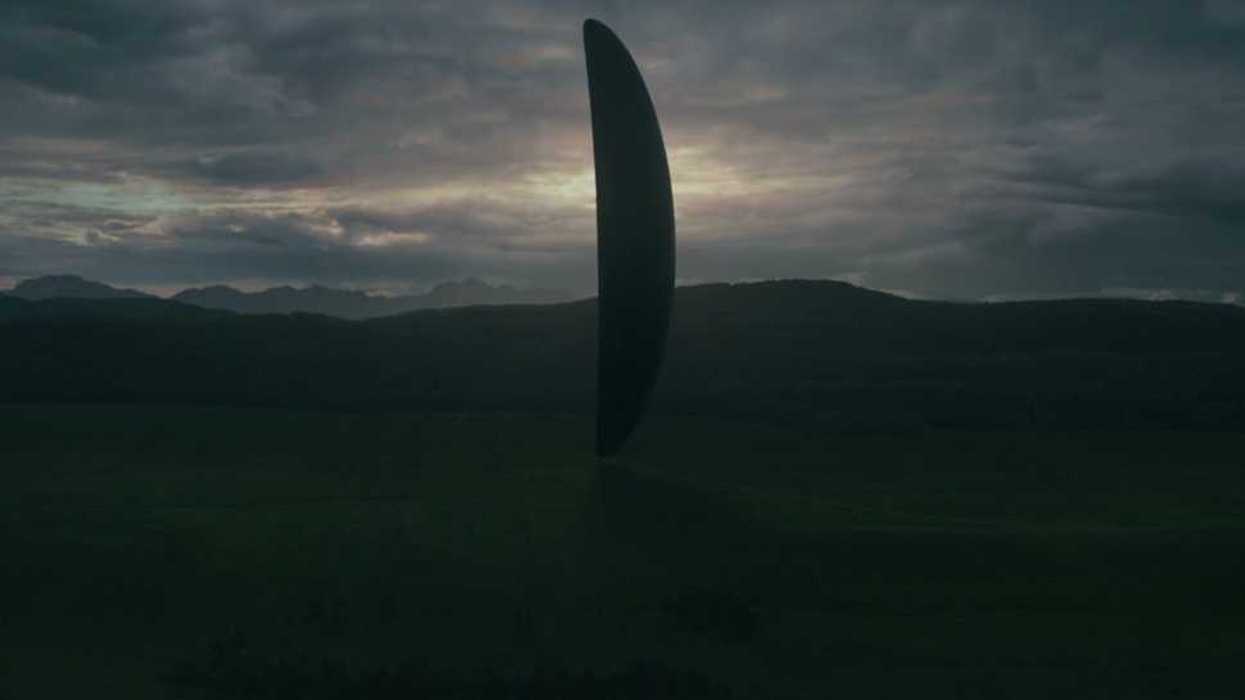
13. Arrival (2016)
Written by: Eric Heisserer | Directed by: Denis Villeneuve
Giant alien spacecrafts land across 12 destinations all over the world, and they have a mysterious message for humanity. The American linguist, Louise Banks (Amy Adams), is tasked with deciphering their complex language. As she learns to communicate, she begins to experience vivid “flashbacks” of her deceased daughter.
This film demands “intellectual” focus, and it doesn’t reward it with a twist in the traditional sense, but a perspective shift regarding time and choice. Quite curiously, you are required to pay attention to the grammatical structure of the alien language. If you manage to do it consistently, you can figure out, along with Louise, that these flashback-like visions are actually premonitions.
- Bet You Didn’t Notice How 'The Prestige' Is Written Like Its Own Magic Trick ›
- 8 Movies That Secretly Reveal Their Endings in the First Scene ›
- The 14 Greatest Movie Endings Ever Filmed ›
- How 'Vertigo' Changed Hollywood (Without Getting Enough Credit) ›
- Narrative Riddles: 8 Complex Films That Will Break Your Brain ›
- 5 Hugh Jackman Movies That Proved He Was More Than Wolverine | No Film School ›