When Silence Speaks Louder Than Bullets: The Genius of Leone’s Opening Sequence
Sergio Leone’s train scene transformed stillness into suspense, proving tension doesn’t need words.
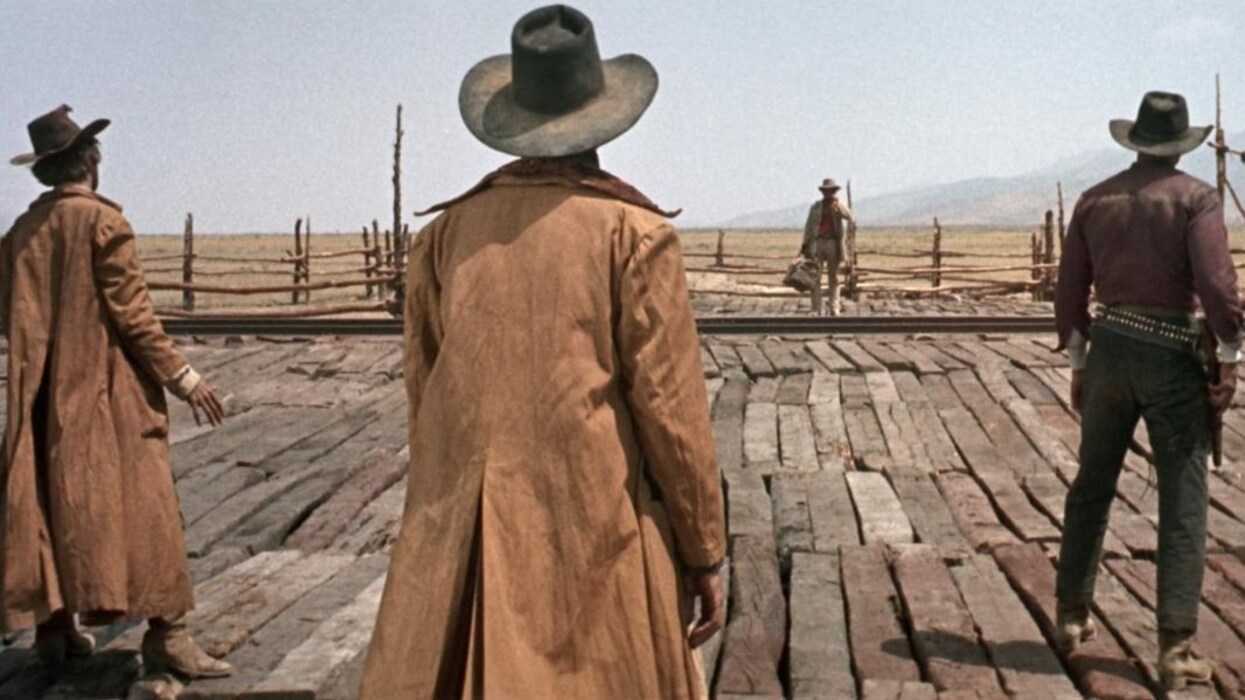
Once Upon a Time in the West (1968)
Three stone-faced gunmen wait at a rustic train station in the middle of nowhere. The sinister quiet surrounding them is broken only by a buzzing fly and some mundane sounds of a lazy day.
That’s all it takes for Sergio Leone’s masterpiece to compress explosive silence and loaded tension inside the agonizing ten minutes. On that sun-scorched platform, nothing happens, but the forewarning that “something is going to” is so thick that the suspense keeps you sitting straight in your chair.
What does it take to transform a simple period of waiting into one of cinema’s most gripping scenes, over and above an opening scene?
Let’s dig deeper and find out how sound, image, and pacing contributed to building a scene where things that don’t happen are just as powerful as the ones that do.
Waiting in the Desert: A Symphony of Suspense
In this scene, Leone weaponizes the absence of two key elements that you cannot hear: musical score and dialogue. Instead, he uses the silence of the moment as a blank canvas and paints with tiny, but amplified, diegetic sounds. As a result, the audience's discomfort is magnified. What are these diegetic sounds?
- Squeaking windmill: A continuous, harsh noise that mirrors the gunmen’s overwrought state of mind.
- Telegraph clatter: The relentless, mechanical clicking that contrasts with the natural silence and heightens the nervous energy.
- Dripping water: A leakage in the ceiling causes water to drip on the man’s hat, one drop at a time, creating a rhythm.
- Buzzing fly: Seemingly a minor detail that quickly escalates into an instrument of torture when a gunman captures it in his pistol barrel.
- Screeching birds: A sudden, jarring cry from off-screen that punctures the tense atmosphere.
- Cracking knuckles: A sharp, loaded sound that shows the impatience, restlessness, and nervous energy of the gunmen.
The loud engine noise and the heavy track rumble of the oncoming train suddenly break this quiet symphony of diegetic sounds. This auditory shock is intermixed with a few more background sounds, such as gun loading and a gunman gulping down water that was accumulated on his hat’s rim, and comes to a dramatic halt with a loud train whistle.
By this point, the audience knows their hunch about “something is coming” is right.
The Unblinking Eye: Cinematography and Character
Leone visually complements the play of sound with a camera that “stares,” and he does that by putting two opposing types of shots against each other: widescreen shots and extreme close-ups.
He begins with wide-screen shots that explore the vastness of the desert. These shots establish the bleakness and emptiness both around and inside the characters. In this geographical immensity, the train station looks like a ragged, forgotten outpost, and the ant-like men, fragile and exposed.
Leone follows up this act with his signature extreme close-ups. The audience is pushed into the close proximity of these unshaven, disheveled men. These shots help the audience feel what these men are feeling. Snaky (Jack Elam), one of the gunmen, is most prominently used as a tool to serve this purpose. It begins with the telegraph clatter, which he angrily snaps.
Then, in one of the most famous visuals from this sequence, a fly starts to crawl on his face. Every time he moves his facial muscles, the audience can grasp the exactness of his mental state, which, in a nutshell, is irritation and impatience.
The Three Horsemen: Introduction Through Archetype
This scene is also an example of how, sometimes, a character is not a character but an archetype. The audience doesn’t know much about these gunmen; they don’t have any backstory. And they don’t need to. Their coarse faces, dusty coats, holstered guns, and cowboy hats tell us everything we need to know about them. Also, in this case, these three archetypes serve as one—a menacing entity waiting for a confrontation.
Crafting Unease: Pacing and Editing
Today, in the era of fast-paced, high-energy action, it’s quite interesting to note how this scene uses lifeless moments to create tension. Leone and Nino Baragli, the editor, through masterful editing, turn every moment of the scene into a mental exercise.
Leone deliberately keeps the action almost static, almost silent, giving the feel of a rustic atmosphere. He compels the audience to go through every moment, every frame, every passing second, and refuses to cut away even when the tension insidiously reaches a breaking point.
This slow but furnace-like pacing shatters with the train's thunderous arrival. It’s a jolt to the 10 minutes of build-up. This violent conclusion to the slow and seething wait predicts that the showdown the audience was unknowingly waiting for is just around the corner.
Turning Patience into Power
This diligent construction of tension creates suspense, but that’s not all that it strives to achieve. Its main intention is to serve as a basis for the scene’s narrative and its genre-defying impact.
Subverting the Western Genre
The scene also famously downplays the classic Western tropes. There is no heroic entrance or immediate shootout. “The wait” is followed by yet another still moment, this time with a funeral undertone—something that says this is a land where men are embroiled in a slow, grinding rhythm of fate.
The Payoff: Arrival and Confrontation
The slow and searing wait is finally compensated through something that is quite a study in minimalist dialogue. When at first, thinking their intended target, Harmonica (Charles Bronson), hasn’t arrived, the gunmen turn to leave. They, however, stop in their tracks when they hear the sound of a harmonica. Their haughty target is challenging them. The power dynamics abruptly change. The dialogue is brief but impactful:
Harmonica
Frank?
Snaky
Frank sent us.
Harmonica
Did you bring a horse for me?
Snaky
Looks like we’re shy one horse.
(The gunslingers laugh.)
Harmonica
You brought two too many.
All this 10-minute-long build-up was to set the stage for the ambush. This iconic waiting wasn’t just waiting. These three were the henchmen of the movie’s main villain, Frank, who had sent them to kill Harmonica, the mysterious protagonist of the film.
Every line is economical, yet charged. The shootout that follows justifies the 10 silent minutes that preceded it. They were not self-indulgent; they were needed to give this moment its earth-shattering impact.
The Wait That Still Lingers
If renowned filmmakers, such as Quentin Tarantino and Denis Villeneuve, have taken something from Sergio Leone, it’s the art of transforming a few minutes of inaction into suspenseful filmmaking. And this scene proves that suspense doesn’t always have to be about action; sometimes it’s more effective when it’s about anticipation.
By making every second agonizing with meticulous attention to detail, Leone managed to create something far more than just suspense. He made waiting violent.
- What Are The Best Western Movies of All Time? | No Film School ›
- Story of the Rise, Fall & Wild Comeback of the Western Genre ›
- 9 Most Brutal Western Movies Ever Made | No Film School ›
- Why Did Sergio Leone Play Music On All His Sets? | No Film School ›
- 'The Mandalorian' Goes Full Western In New Concept Art | No Film ... ›
- What Are Tarantino's Favorite Spaghetti Westerns? | No Film School ›
- 7 Spaghetti Western Trademarks That Define Sergio Leone's Genius ... ›
- How Did the Close-Up Change the Way We View Westerns? | No ... ›
- What Sergio Leone Teaches Us About Bridging Classic and Modern Cinema | No Film School ›
- Top 10 Iconic Western Duels in Movie History ›
- ‘Shane’: The Moral Reasoning Behind a Hero’s Goodbye ›
- Setting the Stage: 5 Greatest Movie Opening Lines Of All Time ›
- 'Once Upon a Time in the West' Line ›
- Film Quote of the Day: One Line From 1968's 'Once Upon a Time in the West' Built the Tension Perfectly | No Film School ›
- Film Quote of the Day: The Oddest Trust Test in 'Once Upon a Time in the West' | No Film School ›