Pacing is one of those intangible writing elements that can be so hard to nail. Basically, you want your story to move well in a clear direction, and not too fast or too slow. So it requires a lot to work—is your character's goal clear? Are they working toward that goal and meeting obstacles?
That's on the page. We're not even talking about how pacing can change on set depending on your actors' performances or later in the edit. This stuff is hard.
In a recent video, writer Brandon McNulty breaks down 12 mistakes that weaken stories, drain tension, and cause readers to stop reading or audiences to start scrolling for distractions. Some are structural, some are editorial. The good news is that all of them are fixable. Here's what to avoid.
- YouTube www.youtube.com
The False Start
Your opening speed clashing with the overall story pace is McNulty's first problem.
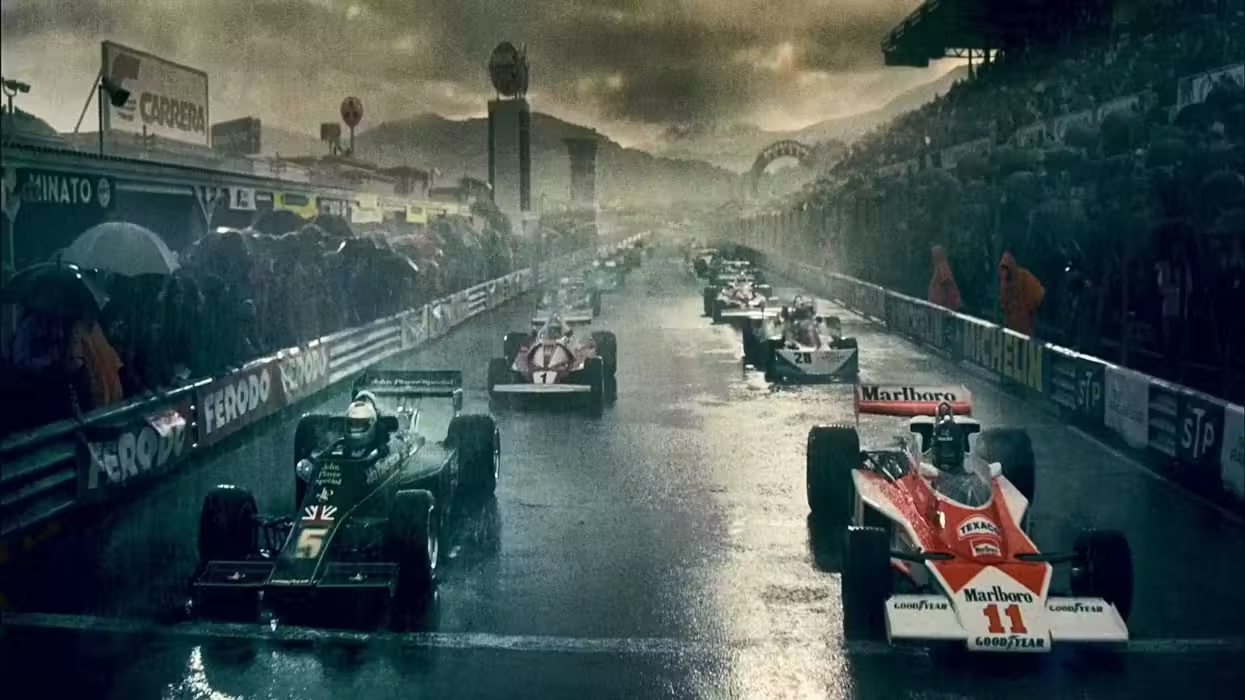
"If the opening feels like Daytona and the rest of your story feels like just like a steady walk in the park, you're in trouble," he says.
This doesn't mean you can't have a cold open or a fast-paced action sequence off the bat. You can start with a set piece like a James Bond film, sure, but then you don't want the rest to feel like a Jane Austen chamber piece. You set expectations at the beginning, and the audience wants the story to honor them. Our guide to first pages walks through exactly how to grab readers without burning out your story's real pace.
Gas and Brake Pacing
This one feels similar, but it continues throughout your screenplay.
"You don't want to bounce back and forth. You don't want it flipping between 10 and zero all the time. Instead, we want a healthy spectrum of pacing," he says.
This is the mistake of operating only at extremes. First, you have full intensity, then a standstill. Wash, rinse, repeat. McNulty cites The Mandalorian movie as a painful example, and unfortunately, it does have some pacing problems. Tons of action up top, then a really long, slow sequence. It ends up feeling episodic because of this.
Celtx's breakdown of pacing talks about rhythm and variation as the tools.
Too Many Short Scenes
Scrolling feeds and shortening attention spans might make you think that we need to make scenes shorter, too. Not necessarily.
There was a trend a few years back where everyone was writing really long, meandering, dialogue-laden scenes. Talky just to be talky. So I personally like short scenes. They help a story move quickly and have energy. But, again, you need variation.
"If everything is fast, nothing is fast," McNulty says. "A million little scenes" can be just as exhausting as one really long one.
Mike Kuciak at Script Magazine explains that density on the page kills momentum just as much as it does in structure.
 Run Lola Run Credit: Sony Pictures Classics
Scenes Where Nothing Changes
McNulty references Robert McKee's Story on this one.
"Every scene should start with one emotional charge and then change over the course of the scene. So it might change from positive to negative or negative to positive."
A scene where characters argue in circles, find nothing, or make no progress kills your momentum. Not to mention it's kind of boring. Something must shift. Our scene structure guide covers what makes scenes land.
Too Many Characters and Plotlines
We get it, you're trying to make sure you have enough story in your story, and you think that adding new characters or subplots can be a way to do it. But extra characters can end up feeling like noise and distractions, especially if whatever they're doing doesn't have any relevance to your theme or protagonist's journey.
In three-act structure, your setup has to be economical.
Missing the Structural Spine
Speaking of three acts, your structure is a skeleton. If it's missing, the whole thing feels aimless and falls apart. Viewers usually expect your story to hold together and feel familiar in some way. Otherwise, you're creating an arthouse project that will likely frustrate your everyday audience member.
"Beginnings should feel like beginnings. They're typically going to be slow ... Then in the middle, things escalate ... And finally, the end gives us a thrilling confrontation," McNulty says.
Obviously, that's an extremely simple take on basic structure, and you have beats within those you're trying to hit, too—the inciting incident, the midpoint reversal, the low point, etc.
Our story elements guide breaks down how tension mirrors structure.
The "Fuse" Problem (Missing Questions)
McNulty says, "Fuses are essentially questions that you raise that create curiosity before they are eventually answered. Whenever you raise a question in a story, you're lighting a fuse that creates tension and mystery until the answer arrives."
You need long fuses (big questions), medium fuses (scene questions), and short fuses (beat questions) "burning at all times."
Your inciting incident is one such fuse. It's a question that launches momentum.
 Fight Club Credit: 20th Century Studios
No Consequences
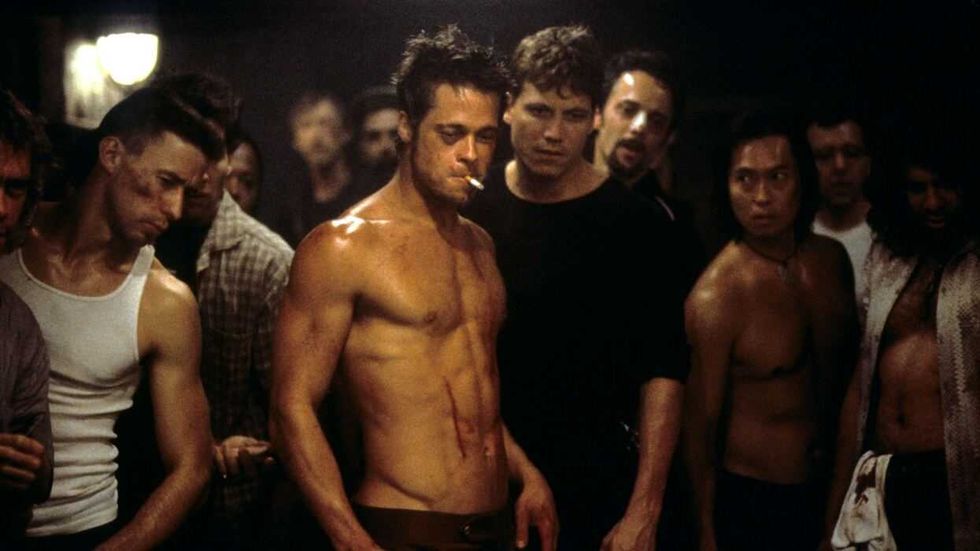
Similar to an issue of a scene changing nothing, scenes should have consequences for your character. If a fight doesn't hurt or an argument doesn't reach a breaking point, then "audiences have nothing to dread."
Our article on Act Three explains why consequences ripple through endings. Without them, the future flattens, and readers disengage.
Repeat Beats
This is another one you can run into as you're trying to reach a page count. Varying speed isn't enough. Look at where your characters are and what they're doing.
Is it the same thing over and over? Give them some variety in plot and location.
Leaving Travel Scenes In
Travel (moving your characters around) is often filler. Dialogue in transit can work, but only if it's essential.
"Oftentimes, you're better off just jumping right to the destination and having the conversation there," McNulty says.
Our "Start Late, Leave Early" guide digs into economic storytelling along these lines. Travel, if it's included, should be absolutely necessary for your characters.
Endless Flashbacks
Oof, this is a big one. Flashbacks are often relied upon as a cheat code. You get character backstory, and you add pages. But a resulting problem is often that you take the audience away from the action they've started to care about to go backward.
We've got tips for writing flashbacks that matter.
Don't Start Early or End Late
We've already said it, but this is one of the most important pacing tips you should remember. You should start late and leave early. Keep things moving.
McNulty says, "You don't want to be the guy who shows up 30 minutes early and is just standing around making awkward small talk with the host. And likewise, you also don't want to be the creep who lingers for an hour after the party is over."
For a recent example of this principle in action, check out The Chair Company.
- '3:10 to Yuma' Screenwriter Derek Haas on the Importance of the Big Idea and Pacing in Screenplays ›
- Lessons From The 'Project Hail Mary' Script ›
- 'The Chair Company' Demonstrates This Simple Writing Rule in Every Scene ›
- 10 Things That Will Help Improve the Pacing of Your Scenes ›
- 5 Best Paced Movies of All Time | No Film School ›
- Screenwriting Advice: Feed the Audience Every 5 Minutes | No Film School ›
- 5 Novel-Writing Tricks That Will Make Your Screenplay Better | No Film School ›