Primal Fear Ending Explained: How One Line Rewrote the Hollywood Courtroom Thriller
The article examines why the twist exposes a darker psychological game than the one audiences expected.
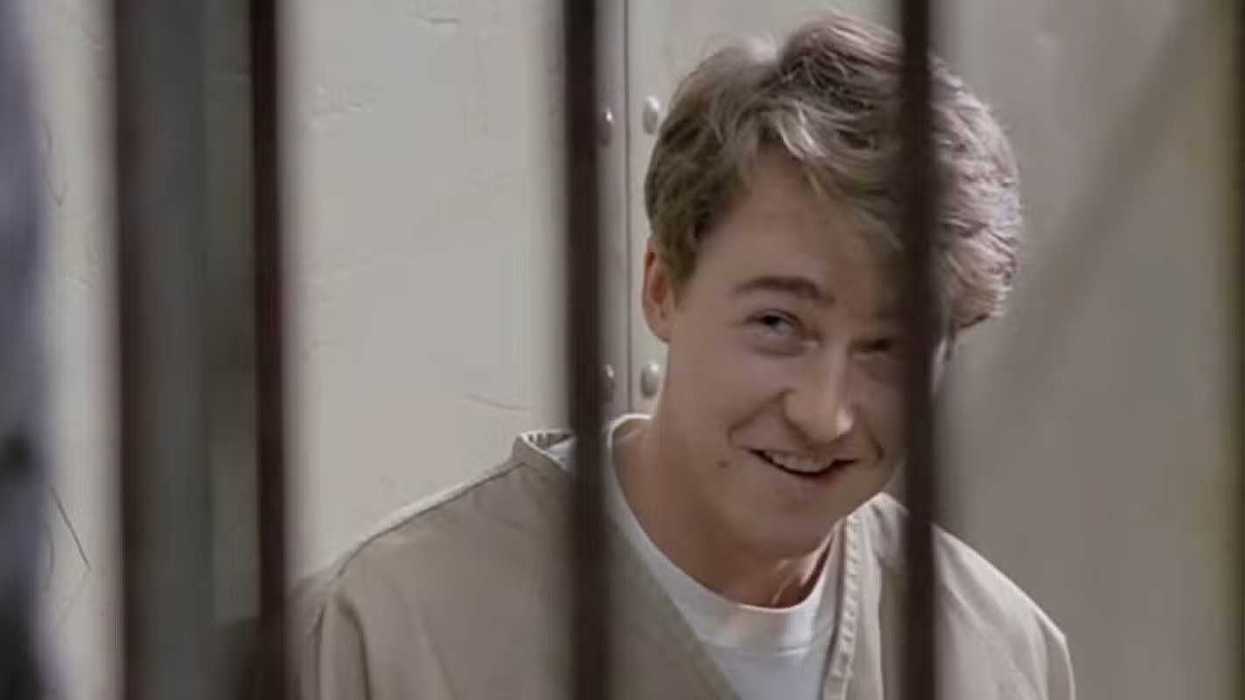
Primal Fear (1996)
Some movie twists shake you, some shock you. The one in Primal Fear (1996) first freezes you, and when you begin to recover, it shocks you again. And when the second shock settles in, you begin to feel a little heartache that stems from a betrayal.
The courtroom thriller has just concluded. The dust has settled. And just when you are feeling good about the likable, victimized protagonist having received justice, he reveals something that turns the whole narrative upside down, and another chaos erupts in your mind: he was never the affable guy whom you grew to sympathize with? He never had the childlike innocence that prompted you to root for him?
This reveal is quiet and quick, but the paralyzing aftereffect is what lingers. The story you thought was a crime drama, just like that, turns into a psychological rumination on how easily your sympathy can be turned into a weapon.
The Scene
Aaron Stampler (Edward Norton), a meek, stuttering 19-year-old altar boy, is charged with murder. While the state attorney seeks the death penalty for him, Aaron’s case is taken by a smug and conceited defense lawyer, Martin Vail (Richard Gere). Martin learns that Aaron suffers from amnesia and dissociative identity disorder, as a result of which his domineering alter ego, Roy, was created. Roy claims he emerged as a psychological response (defense mechanism) to the years of abuse Aaron suffered. Aaron doesn’t remember any events that took place while Roy is in control, which is why he cannot explain why he was found at the murder site in a bloodied state.
The story follows an investigation into the crime, Martin’s defense, and the emotional trauma that Aaron goes through. In the end, Martin successfully proves Aaron’s affliction to the court, evading any serious penalty, instead earning him psychiatric treatment and likely an early release.
When Martin later meets Aaron in his cell to congratulate him, Aaron slips out a memory detail he couldn’t possibly have remembered since it was something that happened when “Roy” was in charge. This revelation tears down the wall of pretense that Aaron had built to fool everyone. It obviously shocks Martin, but you can imagine what a blow it must be to a vain, egotistical lawyer who takes pride in his sharp legal acumen. When he dejectedly asks Aaron if there ever was Roy for real, Aaron says:
“There never was an Aaron.”
The Setup Behind the Line
Aaron, Not Roy, As a Constructed Persona
We are introduced to Aaron as an innocent victim in need of protection, and Roy as the protective alter ego. Aaron is meek and shy, whereas Roy comes across as someone who has seen the world and knows how to deal with it. As humans, we want to believe this empowering narrative: the powerful protecting the weak. Therefore, as an audience, we are immediately sold.
So, every time Aaron stutters or displays body language that indicates he is someone who is not in control of his life, he is using this behavior (consistent with fear and trauma) as a shield. We are so deeply convinced that Aaron is the real one and Roy is the manufactured one that we don’t even consider the possibility that it could be the other way around. And that’s why the line hits.
Film’s Use of Vulnerability to Mask Intent
Aaron’s softness is his (or Roy’s) strongest weapon. He uses it to lower other people’s defenses. His stutter, his hesitation, and his scared expressions immediately make you sympathetic towards him, manipulating you into believing everything he says. Unknown to the viewers and the characters alike, this vulnerability is a tool that conceals his real motives.
For example, the scene in which he breaks down during questioning makes him credible. And this built-up credibility is what makes the ultimate reveal so cold and cruel.
Early Cues the Audience Misses
There are several moments scattered throughout the early narrative that hint at this brewing betrayal. But since they pass quietly, the audience fails to notice. For example, he reacts (as Aaron, not Roy) a bit too quickly during the video playback. He displays anger that doesn’t match Aaron’s timid nature. He also slips in some details about Archbishop Rushman (Stanley Anderson) that he shouldn’t know. Sometimes his stutter disappears even when Roy hasn’t taken over. These significant but inconspicuous contradictions make sense only when you have seen the bigger picture.
Edward Norton’s Performance
The biting sting of the scene can easily be attributed to Norton’s performance. The ease with which he shifts from vulnerable to overbearing makes the character appear organic, and his delivery effortless. The way he stiffens his posture, settles his voice, and sharpens his eyes with a deranged twinkle makes him appear ominously calm, rather than looking forced. These nuanced behavioral shifts give the ultimate reveal a sharp edge, which cuts through our expectations and hearts alike.
The key to a good performance is not to oversell the moment. Norton perfectly achieves this by delivering the line with restraint and letting its jab land by itself. This also highlights how much control Roy had from the start.
Conclusion
While it’s not a rule, the quote “There never was an Aaron” still serves as a warning that outward appearances may sometimes be a ploy to distract you from a terrible truth. The quieter and more humane the tone, the more lethal the paradox it can hide.
The line stays with us forever because of the fine ingredients it is made of: twisted psyche, basic human nature, narrative timing, and Edward Norton’s performance. It also shows us how a single powerful line can topple the entire narrative in one instant.
- What Is Misdirection in Writing? Definition & Examples ›
- 7 Scenes That Were Hiding Clues Long Before You Noticed | No ... ›
- These Are 8 Movie Endings That You Never Saw Coming | No Film ... ›
- The Final Line That Made ‘Fight Club’ Immortal ›
- Whodunits Done Right: 14 Best Detective Movies That’ll Keep You Guessing ›
- The Verdict's In: 9 Best Courtroom Films That Deliver Justice | No ... ›
- Watch: How Horror Cinematography Taps into Our Primal Fears | No ... ›
- How Leonardo DiCaprio Was Almost In 'Primal Fear' | No Film School ›
- Born 57 Years Ago, the Actor Who Made His Film Debut With a Performance That Shocked Hollywood | No Film School ›