The Godfather: Michael vs. Vincent — Two Paths to Power
This article traces how Michael and Vincent inherit, resist, and ultimately embrace the violent responsibilities of becoming a Don.
The Godfather Trilogy (1972-1990)
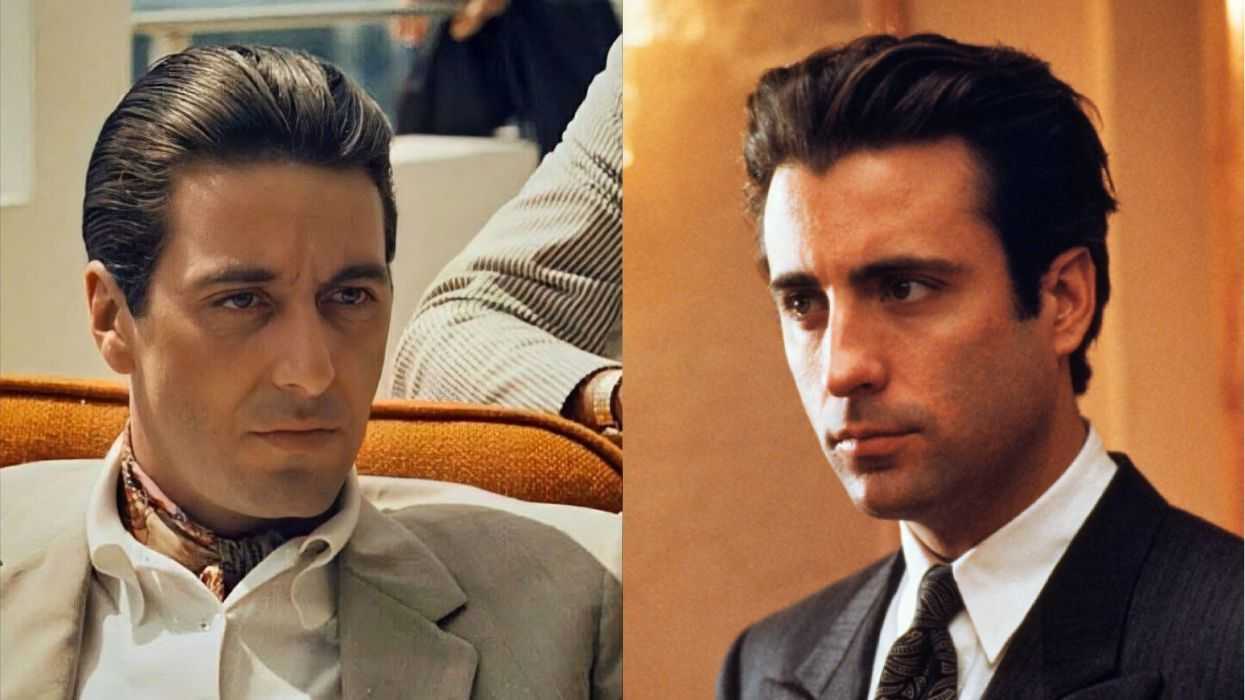
Power can be a prize or a punishment, depending on how you see it. In the Corleone saga, Michael Corleone (Al Pacino) and Vincent Mancini (Andy Garcia) represent two opposite viewpoints.
Michael was born into the family but lived like an outsider for most of his youth. He wasn’t proud of his family name, i.e., until he took on as the Don, albeit reluctantly. Vincent, on the other hand, being Sonny’s (James Caan) illegitimate child, was born an outsider and always strived to be a Corleone. While one kept running away from the family name and everything it represented, the other kept fighting to be worthy of it.
The Godfather trilogy gives us two very different character arcs: Michael, the reluctant prince who was compelled to kill his soul, and Vincent, the eager street urchin, who fervently sought to exchange his heart in favor of the crown. Both men are smart and have sharp instincts, but while Michael is calculating, Vincent is temperamental.
Their different personalities also reflect in their leadership styles, ultimately define their legacies, and they both pay the price for it.
The Reluctant Son vs. The Illegitimate Heir
The War Hero’s Burden
For Michael, his family name wasn’t a legacy; it was a liability. It was an unwanted part of his life that he couldn’t just shake off. So, when he returns as a war hero, he uses his civic duty as a balancing act against his family duty. You can see this in the first scene, i.e., at Connie’s (Talia Shire) wedding. He is not wearing a suit like everyone else, nor is he sitting with everyone else. He maintains his distance from the family, physically as well as emotionally. And as if that’s not enough, he spells it out for his girlfriend, Kay (Diane Keaton): “That’s my family, Kay. That’s not me.”
So, there is no doubt that when the time came, he agreed to be a part of his “family activities,” not out of ambition or as a part of his heritage, and not even because he had a change of heart. It was because his “son’s honor” compelled him in the context of an assassination attempt on his father, Vito (Marlon Brando), and his family being in danger. From that moment onwards, every step he took towards power was a step away from the legitimate life he craved. His rise was tragic because it was a surrender.
The Bastard’s Hunger
Vincent was born right in the midst of the chaos that Michael tried to escape and maintain a distance from. His pain was exactly the opposite of Michael’s: he couldn’t be an integral part of the Corleone family because he was born as Sonny’s “bastard.” Still, he tried to thrive on the periphery, always dreaming of being a Corleone someday. When his time came, he didn’t need persuading or dealing with a moral dilemma; it was a straight-out and clear-cut “yes.” While the family business was a curse for Michael, it was a proud birthright for Vincent.
Their Individual Paths to Becoming the Don
Michael’s Calculated Rise From Moral Dilemma and Uncertainty
Michael’s entry into the crime world begins with reluctance and ideological conflict, but when he gets on board, he takes it very seriously. He brings to the table what his older brothers couldn’t: caution, calculation, and willingness to do what others won’t. He displays shrewd foresight, daring gumption, and cold ruthlessness in his very first act: orchestrating the massacre of the heads of all other rival crime families while he unaffectedly attends his nephew’s baptism. This act ensures his family’s safety as well as its sole dominance over New York’s crime world. It also symbolically proves that he can balance relentless business operations while being a family man.
Vincent’s Gradual Ascent Through Longing and Loyalty
The key to Vincent’s rise within the Corleone circle is his fierce attempt to protect Michael from the rivals. It wins him Michael’s immediate trust and mentorship. His youthful spirit also shows phenomenal promise in tackling threats that the older generation is too tired to deal with. He isn’t calculated or restrained like Michael, but Michael still chooses to mentor him because he senses a similar drive beneath the surface.
Vincent, on his part, proves that he, too, can learn, adapt, and be ruthless. However, he also distinguishes himself from Michael by not being emotionally distant. His ascent is reactive and volatile, but also necessary for the survival of the Corleones.
Leadership: Ice in the Veins vs. Fire in the Blood
Michael, the Chess Player
Michael is an effective boss, but his leadership is marked by isolation and silence. He has a cerebral approach to handling the business operations. He is in it to play a long game, which involves, more often than not, keeping even his closest allies in the dark. His motto is simple: don’t let others know what you are thinking. He has the same restrained approach towards violence. It’s like a surgical tool for him, used only when truly necessary, and if you must use it, use it with precision and without passion.
This kind of calculation is very effective, but only in the professional sense. On a personal level, it leaves Michael as a lonely figure.
Vincent, the Brawler
Vincent is truly his father’s son. Like Sonny, he is a hothead. When it comes to anger, his first impulse is to bite back immediately. His instincts arise from emotions rather than strategy. Unlike Michael, who uses violence only for order, Vincent uses it for anything between honor and revenge—and he doesn’t need permission for it. While Michael plots his moves ten steps ahead, Vincent is “spontaneous” about it.
Unlike Michael, he is visibly connected with people. While this makes him affable and magnetic, it’s also a professional risk. His leadership is less tactical and more protective, even personal. Like Vito, Vincent also stabilizes the family through warmth, but unlike Vito’s cunning restraint, he exposes emotional gaps that enemies can exploit.
Michael’s mentorship pays off in this regard. He teaches Vincent that being a Don is more than having a finger on the trigger. It’s about discipline, patience, and waiting for the unmissable shot.
Impact on the People Around Them
Michael’s actions are driven by paranoia, which spreads paranoia among his subordinates. It keeps his inner circle shrinking all the time. In a tragic irony, even though he believes every sacrifice is necessary, each one pushes him further away from his family that he is trying to save. His isolation and megalomania reduce his relationships to mere transactions.
Vincent is a magnetic person. He draws people in and influences them. His embracive spirit makes people feel included. It creates loyalty rather than fear. His relationships are also more stable because he leads them with emotional honesty. Yes, he sure is volatile, but he makes it up by showing compassion and empathy that Michael cannot.
In the end, Michael’s cool, strategic leadership results in about the same level of stability that Vincent’s warm but volatile approach delivers.
Conclusion
Michael’s arc is a testament to the cost of power when morality slowly collapses under pressure. His style of exerting control also serves as a cautionary tale of how it can isolate you and how misguided leadership can hollow you out from the inside.
Vincent is a symbol of that external force that can help a family rebuild itself. He stands in as a possibility rather than decay. But his explosiveness also poses a danger to the family’s existence.
Together, their stories show the Corleone legacy shifting from inevitability to reinvention.
- When Hollywood Lost the Plot: 10 Pointless Movie Subplots That Wasted Everyone’s Time ›
- 'The Godfather III' is Getting Recut by Francis Ford Coppola | No Film ... ›
- How Did 'The Godfather: Part III' Make Coppola Feel Like a ... ›
- The Godfather Line That Changed Movie Dialogue Forever ›
- How Closing a Door Rewrote Michael’s Fate in ‘The Godfather’ ›
- Breaking Down Michael’s Kiss of Death in 'The Godfather Part II' ›
- Friends Close, Enemies Closer: The Most Famous Lesson From 'The Godfather' ›
- Michael Corleone vs. Walter White: Who’s the Worse Evil? ›
- Michael Corleone’s Wardrobe Was the First Red Flag ›
- Vito and Michael Corleone’s 3 Defining Scenes in The Godfather ›
- The Story Behind the “Act Like a Man” Slap in ‘The Godfather’ ›
- The Power Shift: Analyzing the Michael Corleone vs. Moe Greene Showdown in ‘The Godfather’ ›