The Great “Wyatt Earp” Showdown: A Tale of Two Westerns
Two competing visions of the same frontier legend collided at the box office—one became a fan favorite and the other bit the dust.
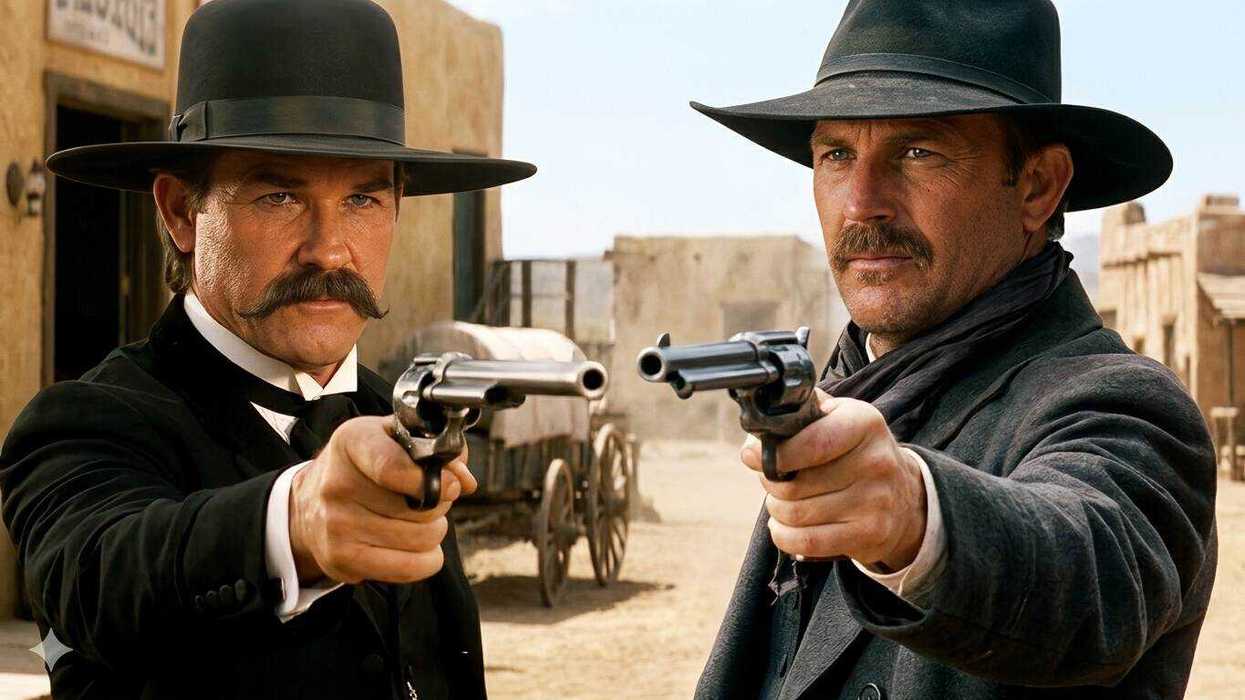
‘Tombstone’ (1993) and ‘Wyatt Earp’ (1994)
Hollywood usually doesn’t tell the same story twice within a few months of each other. That’s like walking on landmines of market confusion, audience fatigue, and creative overlap; you never know which step will blow up the entire production.
But it happened in the early ‘90s. The legend of Wyatt Earp and the gunfight at the O.K. Corral became the ultimate cinematic battleground. Two movie studios, two directors, and two sets of stars stood against each other in a high-stakes standoff.
One film leaned into energy and personality. It aimed for a punchy, stylized, and quote-heavy ensemble piece, prioritizing the “cool” factor over chronology. The other one chased scale and legacy. It gave the audience a three-hour-plus historical biography that tracked every decade of the protagonist’s life. Two narrative visions and two creative philosophies clashed, and the box office resolved that conflict, yielding two distinct results.
Don’t condense this whole affair into a simple tale of success vs. defeat; it’s a lesson in how filmmaking choices shape audience response and how two versions of the same story can end up living two completely different lives. If you do that, you will be able to understand why accuracy often loses to charisma. While the production of Wyatt Earp (1994) struggled under its own weight, Tombstone (1993) captured lightning in a bottle. Let’s see why that happened.
One Story, Two Films, Two Intentions
What Tombstone Set Out to Do
Tombstone had outlined hard boundaries regarding what it wanted to show and what it didn’t want to show. Having employed such sharp focus, coupled with high energy, it built its narrative around only key moments, memorable characters, and quick escalation—everything that an average moviegoer looks for. It used historical facts as a framework instead of as a rulebook. It played around it creatively.
George P. Cosmatos created an engaging rhythm and a personality, and that’s what lured the audience in. Even today, when you watch the film, the scenes feel immediate. The director avoided a self-indulgent narrative, so the story doesn’t linger more than necessary.
What Wyatt Earp Aimed For
Wyatt Earp does everything that Tombstone avoided. Its objective is to provide a complete portrait of the protagonist, so the narrative stretches across years. And since the narrative doesn’t revolve only around the highlights of Earp’s professional—read “eventful”—life, it strives to give a complete picture of the “man,” instead of just the “lawman.” This approach translates to a serious and reflective tone. It values detail and continuity over momentum. So, the story, all in all, feels heavy. It unfolds slowly, expecting the audience to go along patiently.
The Outcome
Tombstone runs like a fast, relentless freight train. It takes no unnecessary stops at minor stations, halting only at momentous events. It almost has a comic book aesthetic; it peeks only at the spectacular events that the protagonist is known for. These events are already carrying the audience’s curiosity; the film capitalizes on that. Westerns—the genre that thrives on quick action and sudden violence—are better off if they don’t have an epic scope. That “biopic bloat” can kill modern Westerns.
In contrast, Wyatt Earp suffers from an identity crisis. The director, Lawrence Kasdan, tried to create a sprawling, Dickensian life story spanning decades. It’s clear he was passionate about the project. But this internalized passion carries the risk of losing touch with practical and pragmatic aspects. That’s what happened here. The 190-minute runtime required a certain amount of patience, which the ‘90s audience simply didn’t have. By the time the narrative reaches the climax (the gunfight at the O.K. Corral), most viewers are already exhausted and bored because of the seemingly mundane details that came before, such as Earp’s childhood, his several marriages, etc. Wyatt Earp is a historical legend and incites curiosity because of his high-stakes, gunslinging feats, not his personal life. There was too much history and very little heat. That disconnect proved fatal.
Craft Choices
Writing, Pacing, and Narrative Grip
As I mentioned before, Tombstone had mapped out its narrative structure, tone, and overall vibe with an explicit intent. Dialogues are sharp, scenes are concise, and conflicts arrive early. The director had a good understanding of attention spans, so he designed the structure to keep the viewers on their toes.
Wyatt Earp didn’t think this through. It took its sweet time, sometimes a bit too much. Long stretches of narrative without strong action or movement can start to feel dreary. When that happens, viewers find it hard to stay engaged. It had its story building (slowly), but not always progressing.
Visual Language and Production Design
Tombstone relies on tighter framing and stylized staging to create a sense of immediacy. The impressive production design created locations that felt real and as if they were actually inhabited by real people.
Wyatt Earp leans into the scale. Wide shots and detailed sets create a sense of authenticity, but they also create distance. The visuals are impressive, but do they pull the viewers closer? That’s debated.
Casting Chemistry and Performance Energy
Charisma vs. Stoicism
The whole ensemble cast of Tombstone shines, and Kurt Russell brings to the table the emotional heartbeat rooted in pure, old-school movie star charisma. He plays Wyatt Earp with the required authority, but he also balances it with vulnerability. This makes his character’s every decision feel weighty. And Russell’s energy spreads. His portrayal doesn’t give the audience a documentary-like feel. He simply gives them what they came for: the almost mythical lawman.
While Kurt Russell goes for playful magnetism, mystique, and force of personality, Kevin Costner opts for heavy, unyielding imperturbability. Keeping up with the film’s overall tonal treatment, he plays Earp with a brooding, stern realism. Now, strictly from a factual point of view, Costner’s Earp could be more plausible than Russell’s. However, realistic or not, it creates an emotional distance.
To put it in perspective, compare a doctoral research thesis with a fiery speech with emotions and spark; both have different purposes and different audiences. In a cinema hall, Russell’s performance gave excitement, warmth, and wit, while Costner’s performance felt like a solemn historical reenactment.
The “Doc Holliday” Factor
Kurt Russell’s Wyatt Earp may be the main ingredient of the recipe, but the secret sauce that gives it its distinct flavor is Val Kilmer’s “terminally loyal” Doc Holliday. Kilmer brought an unexpected, sweating, shivering, witty energy to his character that stole almost every scene that he was in.
His portrayal is defined by chaotic, theatrical brilliance. He could be spinning a tin cup to mock a gunslinger or delivering stone-cold lines with a Southern drawl; Kilmer’s Holliday feels both tragic and incredibly fun to watch.
Winning the Release Date Race
Both the movies were released six months apart, with Tombstone gaining the advantage of hitting the screens first. Unforgiven (1992) had been released 14 months earlier; it was a critical and commercial success, it won Oscars, and it pretty much revived the Western genre. The audience was curious and excited for another Western to spread the magic. It was Tombstone who had the first dibs on that opportunity.
The studio marketed it as a high-octane action flick, which instantly broadened its appeal beyond just history buffs. There was no other Western running alongside it. It had six months of exclusive access to the Western fans. All these opportune circumstances reflected well on the box office.
On the other hand, by the time Wyatt Earp was released, the cultural conversation had already moved on. Considering the success Tombstone enjoyed, Wyatt Earp ended up looking like an expensive afterthought.
Conclusion
One important takeaway from this early ‘90s showdown is that movies are about feelings, not just facts. Facts rule in documentaries, while movies need a hero people can vibe with. The makers of Tombstone understood it and gave the viewers a hero (two heroes) they could quote at a bar. The Wyatt Earp team, on the other hand, gave the audience a “subject” to be studied in classrooms—and paid a hefty price for this miscalculation at the box office.
The bottom line is that the Western genre thrives if seen through the lens of spectacles rather than realism, and its success depends on what captures the true spirit of the American West.
- Story of the Rise, Fall & Wild Comeback of the Western Genre ›
- The 13 Best Westerns of the ‘90s: Ranked ›
- 12 Deadliest Gunslingers in Western Cinema ›
- Walking Over Your Grave: Doc Holliday’s Deadliest Line in 'Tombstone' ›
- The Psychological Brilliance Behind Doc Holliday’s Iconic “I Have Two Guns” Response ›
- Decoding Doc Holliday’s “Terminal” Loyalty in ‘Tombstone’ ›