8 Directors Who Recovered From Legendary Flops
They were eventually released from director jail.
‘John Carter’ (2012)
Director jail isn’t an impenetrable fortress, as it turns out. A massive critical or commercial flop can effectively end a filmmaker’s career, as happened with Roberto Benigni (after 2002’s Pinocchio), Elaine May (after 1987’s Ishtar), and Martin Brest (after 2003’s Gigli). However, some seem to have found a “get out of jail free” card, as evidenced by these eight directors, whose careers recovered after legendary flops, even if it sometimes took years to do so.
1. Jon Turteltaub
After making his feature debut in 1988, Jon Turteltaub helmed a series of increasingly notable movies throughout the 1990s, including 3 Ninjas and While You Were Sleeping. However, the 1999 Anthony Hopkins thriller Instinct threatened to derail his career. While movies often need to earn back two and a half times their budgets, it earned just over half of its $60 million price tag, ultimately losing a reported $63 million.
However, Turteltaub was able to get back on his feet more or less immediately. While his next movie, the 2000 Bruce Willis vehicle The Kid, only did OK, the director returned after four years with the franchise-spawning megahit National Treasure, later doing the same thing in 2018 with The Meg.
2. Henry Selick
After climbing to the top of the family entertainment world with The Nightmare Before Christmas and James and the Giant Peach, stop-motion director Henry Selick made a big swing with the live-action Brendan Fraser comedy Monkeybone, which debuted in 2001. The movie was an abject failure, earning just $7.6 million against its $75 million budget.
It took eight years for his next feature to hit theaters. But that was the instant favorite Coraline, which became the third highest-grossing stop-motion movie of all time (behind Wallace & Gromit: The Curse of the Were-Rabbit and Chicken Run). While Selick still takes long hiatuses between movies (a natural side-effect of working in stop-motion), he also helmed the well-regarded 2022 feature Wendell & Wild.
3. Peter Farrelly
Another 2001 flop was the live-action-animation hybrid Osmosis Jones, which grossed $14 million against its $70 million budget. The movie could have led to a tailspin for the directors of the live-action segments, brothers Bobby and Peter Farrelly (who were at the time best known for Dumb and Dumber and There's Something About Mary).
However, they were lucky enough to score another major hit in 2001 with the Jack Black comedy Shallow Hal (which wrapped production two months before the premiere of Osmosis Jones). After helming more comedy movies with his brother, Peter Farrelly broke off on his own to direct movies including the streaming hit Ricky Stanicky and the Best Picture winner Green Book.
4. Kathryn Bigelow
The 2002 submarine thriller K-19: The Widowmaker nearly sank the prospects of director Kathryn Bigelow (Near Dark, Point Break) when it lost $67 million in theaters. She played her cards well, however, returning after six years with the more tightly budgeted The Hurt Locker (which cost $15 million - a sixth of The Widowmaker’s price tag). In addition to becoming a box office success, The Hurt Locker won six Oscars, including Best Picture, allowing her to set her career on a new path that included her follow-up Zero Dark Thirty.
5. Andrew Stanton
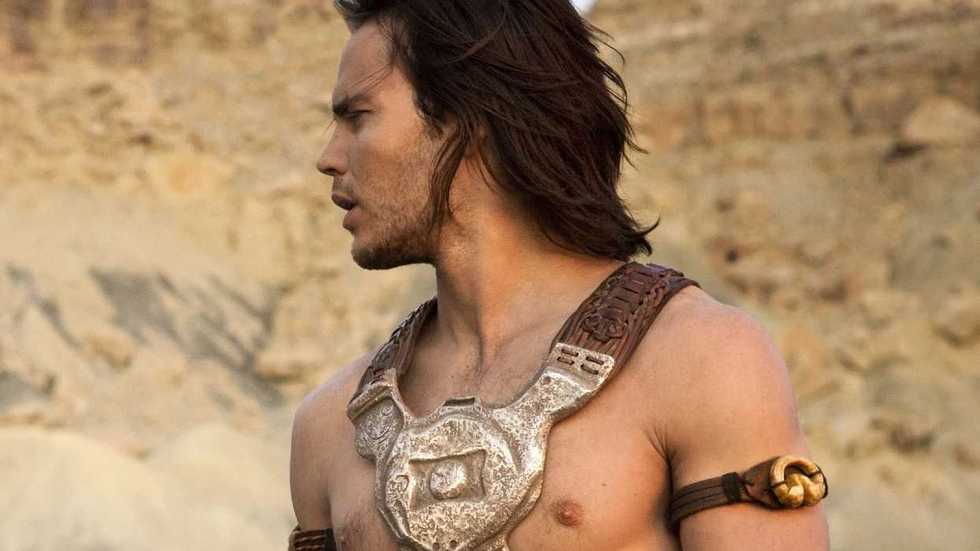
2012’s John Carter is one of the most notorious flops in history. The wannabe blockbuster cost more than $300 million, making it one of the most expensive movies ever up to that point. It matched that record by becoming one of the biggest box office bombs ever, losing more than $100 million in the process.
Luckily, director Andrew Stanton had a doozy of a fallback plan. Having helmed Finding Nemo and WALL-E, he could return to Pixar with his tail between his legs. His next feature, 2016’s Finding Dory, was a billion-dollar hit. He actually had another billion-dollar movie in theaters earlier this year, just for good measure: Toy Story 5.
6. Guy Ritchie
Guy Ritchie is best known for snappy crime movies like Snatch and Lock, Stock and Two Smoking Barrels, but he began to expand his repertoire with movies like the whodunit period piece Sherlock Holmes and its sequel. However, it seems that he follows his interests far enough down the rabbit hole that general audiences didn’t follow him. He had two bombs in a row, with 2015’s The Man from U.N.C.L.E. and 2017’s King Arthur: Legend of the Sword collectively losing hundreds of millions.
However, he knew how to make “one for them,” helming Disney’s 2019 live-action remake of Aladdin, which made more than $1 billion. Since then, he has helmed seven movies with two more in post-production. This includes 2019’s The Gentlemen, which has since spawned a successful spinoff series on Netflix.
7. Christopher Nolan
Christopher Nolan is a box office juggernaut, but the decision to release his heady sci-fi epic Tenet into theaters in August 2020, during the height of the COVID-19 pandemic, proved financially disastrous. Even though the movie easily became the fifth highest-grossing movie of that year, it lost somewhere between $50 and $100 million.
However, perhaps given the fact that pandemic releases can’t be judged by the same yardstick as other flops, he returned to theaters soon afterward with 2023’s Oppenheimer. While a $100 million biopic about a physicist easily could have been another bomb, Nolan’s reputation and double features with Barbie helped propel the movie to $983 million worldwide. His next movie, 2026’s The Odyssey, kept the ball rolling by becoming Nolan’s biggest feature ever and the 14th highest-grossing movie in history at the time of writing.
8. James Gunn
Another pandemic-era flop that could have been catastrophic was 2021’s The Suicide Squad, which was helmed by Guardians of the Galaxy director James Gunn. The $185 million movie, which debuted day-and-date on HBO Max, lost a whopping $119 million in theaters. However, Gunn went on to helm the popular two-season Suicide Squad spinoff series Peacemaker, become the co-CEO and co-chairman of DC Studios (along with The Suicide Squad producer Peter Safran), and direct the 2025 hit Superman. Not too shabby, if you ask me!
So who are your favorite directors on this list, and are there any you’d like to add? Sound off in the comments below!