More Than a Threat: The "No-Nonsense" Irony of the "3 Coffins" Gag in ‘A Fistful of Dollars’
Why the Man with No Name’s first interaction in A Fistful of Dollars (1964) remains a perfect example of storytelling through lethal confidence.
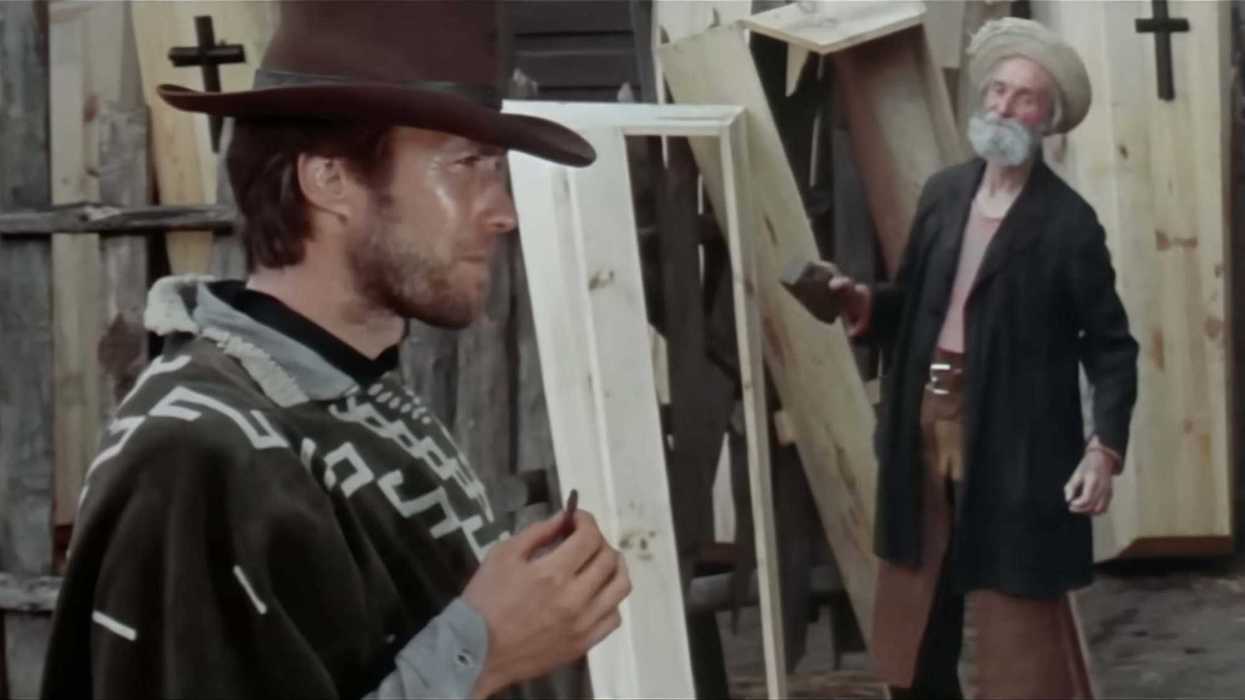
‘A Fistful of Dollars’ (1964)
A hero walking into a troubled, belligerent town is not an alien premise in Western movies. But when he walks in and auditions for the role of the town’s apex predator, with a tinge of dry humor, that stands out.
That’s pretty much how the first scene in A Fistful of Dollars (1964) unfolds. A Man with No Name (Clint Eastwood)—let’s call him “Joe,” as the coffin maker Piripero (Joseph Egger) casually does—enters the town of San Miguel. It’s a town split between two powerhouses, the Rojo brothers and the town sheriff, John Baxter’s family, both vying to gain total control.
Joe was told this town could be a place to make some money, which is why he is here—to test the town’s climate, establish his dominance, and map out the power structure for his future financial gain. So far, there is nothing heroic about him; he is driven by self-interest and a cold, pragmatic approach to make money.
But what we are focusing on here is how brilliantly he bypasses the typical tough guy posturing; he doesn’t shout or scowl. Instead, he deploys an unusual weapon, his dry wit, to “announce” that his opponents are already dead. That’s a crazy level of confidence, and it’s terrifyingly calm. And that’s why it stands the test of time after over 60 years.
- YouTube www.youtube.com
The Scripting of Fatal Wit
The Mathematics of Death
Ever seen a clerk doing inventory? That’s the vibe Joe creates by reducing the high-stakes moment to a mere administrative or logistical mundanity. He doesn’t say “a couple of coffins” or “some coffins"; he clearly mentions “three” coffins. That’s how certain he is about the result and chill about the risk.
What’s more, he doesn’t display such grandstanding to his actual adversaries. For him, they are dead meat already; there is no use or purpose in creating an impression for them. Also, ideally, he shouldn’t bother about the mortuary care for the people he is about to kill. That’s not how killers work. Then why does he ask the carpenter to make three coffins?
The answer lies in his primary motive: to establish his dominance among the townspeople. That’s what matters to him. What he is about to do is not revenge or protest; it’s simply a demonstration of how lethal he is. Everyone who is watching is his audience/interviewer, and this “show” is for them. The moment he says these words, the power dynamic shifts in his favor.
Subverting the Bully Dynamic
Now, it may not seem very unusual, but think of 1964. In a four-against-one combat, usually the group of four would hold all the cards. Sergio Leone flips the script on this one and makes Joe the one who sets the terms of engagement. And he does it with a deadpan expression, which turns their harassment into a joke. That’s a serious psychological game. He refuses to play the victim, and the gunmen are forced to react to his narrative. Even this is a kind of dominance, a conversational type.
Direction and Visual Prowess
Framing the Outsider as Center
Joe is an outsider and is surrounded, yet he never seems cornered. That’s because Leone frames him cleanly, often isolating him in medium shots while the gang crowds the frame. This visual equation is subtle, but it makes the point. While Joe looks composed, the bullies appear scattered, all over the frame. The characters’ framing is indicative of their mental states. We may not actively notice this contrast, but we subconsciously perceive it, and as a result, we commit to the drama.
Similarly, Leone also employs his signature extreme close-ups. These capture a level of stillness that unnerves the viewer. The bullies laugh and move, but Joe remains frozen like a statue. This visual contrast tells us that the man who moves the least and looks resolute is the one holding all the power and control. Joe’s face becomes a landscape of impending doom.
Editing That Lets Silence Speak
In a bit of an unusual style for a dramatic scene, Leone slows the rhythm instead of accelerating it. You expect a cut to arrive, but it comes a fraction of a second later, forcing you to sit in the tension until it arrives. Meanwhile, the faces shift from amusement to uncertainty and confusion.
The pause after the coffin line is important; there is neither a music cue nor any rush to action. It creates a breathing space which allows you to settle. From here on, the moment rises in intensity until the point where guns are drawn. And the result? Well, you already had guessed it. This peculiar edit pattern makes the violence seem less like a surprise and more like a conclusion already reached. Leone later perfected this silence game in the opening scene of Once Upon a Time in the West (1968).
Acting with Minimalist Energy
The Slow, the Steady, and the Cigar
Observe how Eastwood leans on a pole or the way he adjusts his poncho; it’s a lesson in functional movement. No gesture is random. It’s deliberate and slow so as to suggest that he has all the time in the world, and there is no escape. His lips constantly hold on to his cigar, which serves as a rhythmic pacing device. How? By showing that he is relaxed enough to smoke (and keep smoking without a break) while his opponents start spitting and scoffing nervously. It also shows that “indulging in a recreational habit” is more important for Joe than worrying about four dunces.
Vocal Delivery
Like most of Eastwood’s cinematic characters, Joe’s strength is vested in the economy of his words and sound. Eastwood retains his low, gravelly pitch regardless of who he is talking to. He never raises his voice to match the screeching hooligans. In fact, when they do so, he shuts up and lets them carry their clownish act. Regardless of how many fiery speeches and fervent chest-thumping get your attention, ultimately, it’s the “quiet strength” that you gravitate to. That’s what happens here. It’s sparse, but when he speaks, you lean in and listen.
Conclusion
The “three coffins” sequence is effective because of its psychological warfare and impeccable cinematic timing. It doesn’t depend on action and instead introduces the protagonist by showing him dominate his surroundings through sheer force of will and a dark sense of irony. By the time this sequence is over, viewers know exactly who Joe is and what to expect from him. It sets the stage for the rest of the movie. This ultimate “don’t blink” scene is also noted as a blueprint for how to introduce a legendary hero.
- Story of the Rise, Fall & Wild Comeback of the Western Genre ›
- 10 Best Westerns of the 1970s: Ranked ›
- Why Clint Eastwood Cut the Original Final Scene of ‘Unforgiven’ ›
- “Dying Ain’t Much of a Living”: The Meaning Behind the Gritty Philosophy of 'The Outlaw Josey Wales ›
- The Line That Made Clint Eastwood a Legend ›
- Clint Eastwood’s Top 10 Must-Watch Directorial Hits | No Film School ›
- The Coldest Line Clint Eastwood Ever Delivered in ‘A Fistful of Dollars’ ›
- 12 Lines That Made Clint Eastwood a Legend ›