The Foot Massage Power Play: Why Jules and Vincent’s Debate in 'Pulp Fiction' Was Never About Feet
An exploration of how a seemingly trivial argument over a “foot massage” serves as a high-stakes test of loyalty and professional boundaries.
‘Pulp Fiction’ (1994)
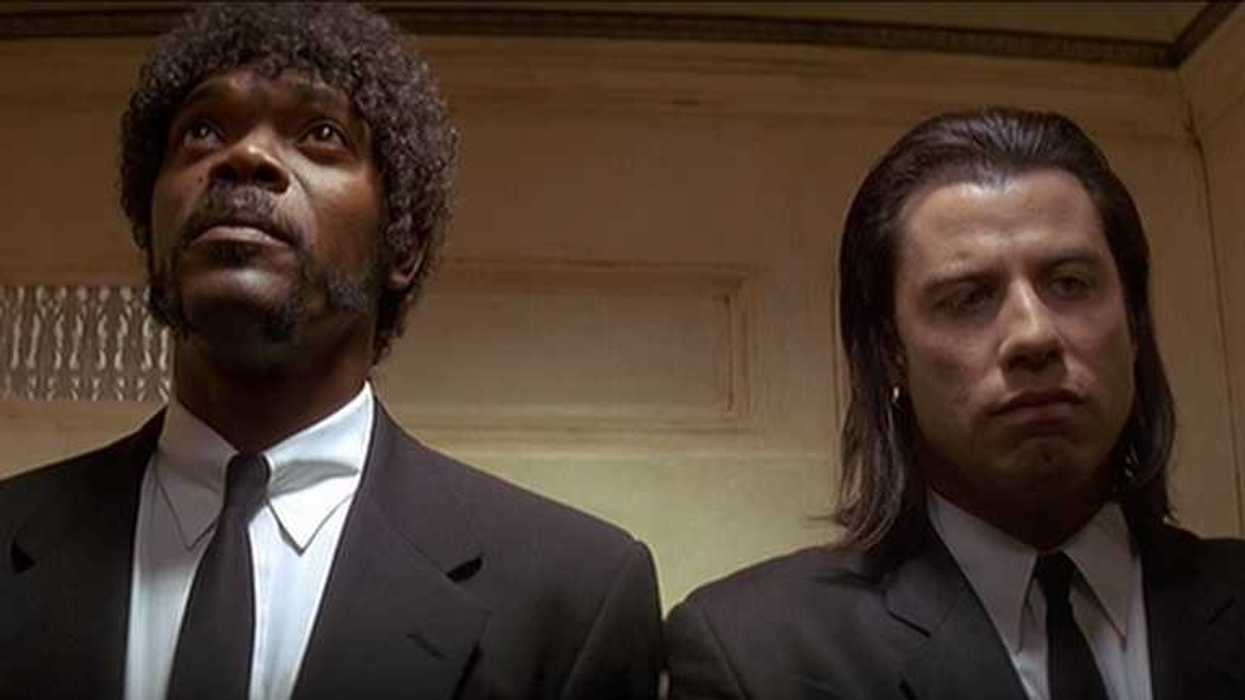
This scene is one of the reasons why Pulp Fiction (1994) is such a twisty, volatile game of suddenly changing auras and energies. I mean, look at it. At one moment, you are cruising through L.A. in a classic Chevy, goofing about the French names for Quarter Pounders, and the next, you are arguing over the moral footprint of giving someone else’s woman a foot massage. And all this while you are on your way to a “cleanup” job. You blink an eye, and the vibe shifts.
As it may seem at first, this random debate isn’t really an idle conversation. This is an exchange written with purpose and is a shining example of the exercise of cinematic tension and character establishment. Within the movie’s world, this is where the casual meets lethal.
It’s funny too, of course. I mean, between them, this pair is a funny mix of philosophical and reflective, but also intimidating and brutal. They are cool and slick, but also sloppy and reckless. And they banter endlessly. They are meant to be funny from time to time. But underneath all that mischief lies a deep dive into the unwritten rules of the underworld.
This is a moment where the “bro” code meets the “boss” code. And the results are anything but chill.
Scene
Jules Winnfield (Samuel L. Jackson) and Vincent Vega (John Travolta), two henchmen working for a dangerous crime boss, Marsellus Wallace (Ving Rhames), are driving down the L.A. street. Their task is to retrieve a certain briefcase and eliminate a target. On their way, they float from one random topic to another. The topic of Marsellus’ wife, Mia (Uma Thurman), comes up.
Jules informs Vincent that Marsellus had one of their associates beaten up and thrown from a fourth-floor window, causing him to develop a permanent speech impairment—all because he dared to give Mia a foot massage.
From here on, the two men express their contrasting views on the intimate nature and the moral implications of giving a foot massage. Jules thinks that a foot massage is ultimately just a massage, and it’s not a big deal. Vincent thinks a foot massage is never an innocent and harmless act, and it always has sexual undertones. During their discussion, they try to make their cases with examples and theories.
The Great “Foot Massage” Debate
Jules: The “Innocent Touch” Philosophy
For Jules, a foot massage is just a nothingburger, a friendly gesture at best. And since you are actually servicing someone, he even goes so far as insinuating that it’s charitable. He reasons by recalling the foot massages he gave to his mother. The moment he brings his mother into his reasoning, he makes it clear that he is perhaps the kind of person who lacks the nuances of erotica in romance. For him, a massage is just “pressing pressure points” and nothing else, let alone something titillating. And that’s why, for him, Marsellus’ punishment was a massive, unjust, and unduly violent overreaction.
Vincent: Sensuous Reality Check
Vincent is more in touch with the intricacies and subtleties of romance. So, Jules’ reasoning doesn’t land with him. For him, a foot massage is a deeply intimate act. He puts it “in the same ballpark” as actual sex. For clarity, it’s safe to assume he thinks that giving a foot massage is a part of foreplay. He makes it clear that a man has no reason to go around touching the feet of his madcap, vicious boss’s wife unless he is actively looking for trouble. He agrees that a foot massage may not be the actual act of sex itself, but he also insists that it’s definitely the indication that you want to go in that direction. It involves intimacy, which makes it a breach of respect.
The Socratic Method in a Suit
The Socratic method is a form of cooperative argumentative dialogue that uses a question-and-answer technique to stimulate critical thinking, uncover underlying beliefs, and expose logical contradictions.
Breaking Down the “Mother” Defense
When Jules says he gave foot massages to his mother all the time, and it meant nothing, he is thinking that, by adding his “mother” to the conversation, he is neutralizing or disarming Vincent’s point. But Vincent uses his logic against him. He asks him if he would give a foot massage to a man. According to Jules’ logic, if a foot massage is such an innocent and charitable act of “pressing pressure points” and nothing else, then it shouldn’t matter who he is giving a foot massage to. But no, it rattles him—on two levels; firstly, he gets uncomfortable by the hypothesis of the act of a foot massage between him and another man, and secondly, his argument is getting crushed.
Ultimately, Jules admits to “seeing his point.” Vincent has managed to make Jules admit that he won't touch another man’s feet—because there is indeed some level of sexual intimacy involved.
The Sanctity of the Boss’s Territory
Their debate finally shifts from the “massage” to the “message.” What are the professional and ethical boundaries around this subject? They live in the vicious world of criminals and violence. The finesse and astuteness of the civilized world don’t apply here. In this world, perception is reality. And Vincent, the more worldly person between the two, is aware of it.
He doesn’t negate Jules’ theory that a foot massage can be an innocent, harmless act. His point is that it doesn’t matter what you think it is, or even what it actually is; what matters is what it looks like. For a territorial, hot-tempered criminal like Marsellus, touching his wife’s feet is an encroachment on his domain. Vincent sees it as a test of loyalty. Mia’s feet, or any body part for that matter, are as good as Marsellus’ private sovereign land. They must treat this boss’s territory as sacred ground and steer clear of it.
Conclusion
The “foot massage” argument is one of the many witty banters between Jules and Vincent, but also, like all of them, it is not just that. This sequence is a clever look at how we define boundaries and loyalties. You can choose to side with either Jules’ literalism or Vincent’s street smarts; either way, it’s a minefield in the unstable and impulsive world of Pulp Fiction.
- 10 Iconic Quotes from Quentin Tarantino Movies ›
- Unpacking the Dark Legacy Behind the Gold Watch in 'Pulp Fiction' ›
- What’s in Pulp Fiction’s Briefcase? Nothing and Everything ›
- The Meaning Behind Pulp Fiction’s “Royale with Cheese” ›
- Ezekiel 25:17: The Pulp Fiction Scene That Turned Samuel L. Jackson Into a Legend ›
- Everyone Misunderstands the Hand-Drawn Joke in 'Pulp Fiction' ›
- The Wolf’s Goodbye in 'Pulp Fiction': One of The Coolest Exits Ever Written ›
- Striding into Legend: 10 Most Iconic Walks in Cinema History ›
- ‘Pulp Fiction’: The “5-Dollar Shake” Scene’s Secret Weapon ›