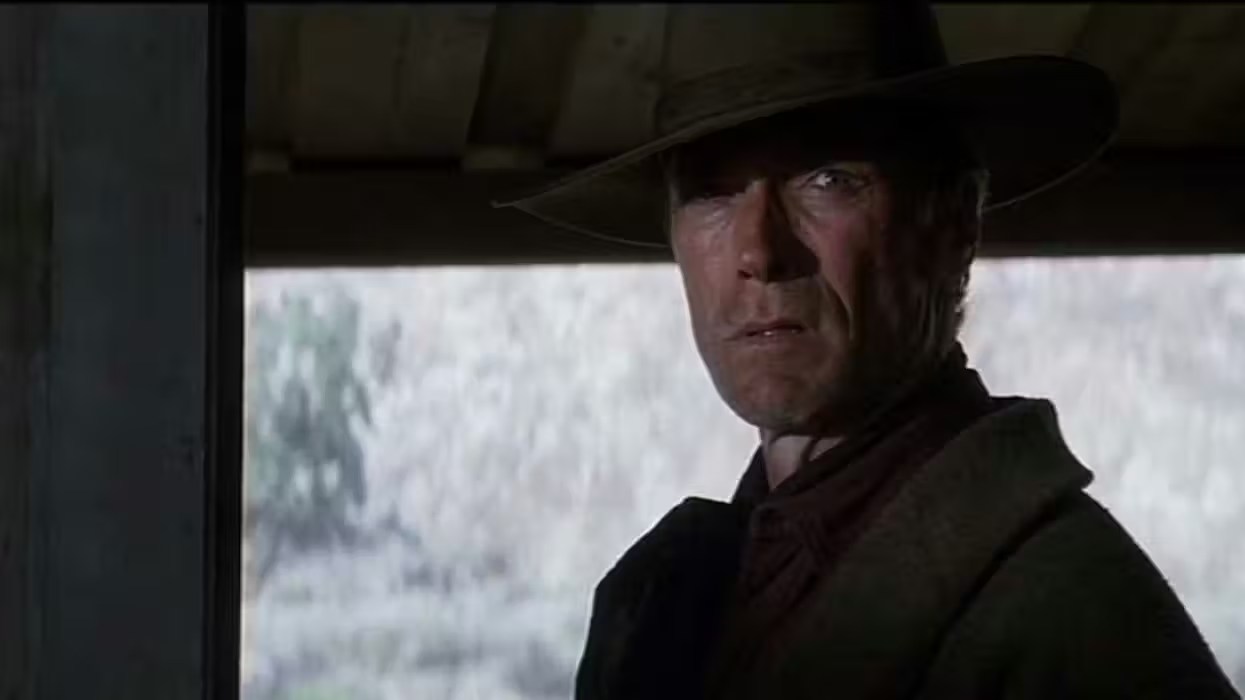
Clint Eastwood’s 1992 masterpiece, Unforgiven, defines an era of the old Western genre. It is a story centered on two former outlaws who share a horrifying past of crimes and have become simple farmers. But an offer to make a quick buck tempts them back for a brief stint. On the opposite end is a sheriff who uses his power to suit his own needs.
Unforgiven is the ultimate deconstructed Western, which can be noticed in how every character holds a certain degree of evil within them. The deaths are brutal, and the power abuse makes you uncomfortable.
Moreover, it dismantles the Western genre’s foundational myths through dialogue by revealing the gap between the gunfighter legend and the painful reality. It serves to challenge the preconceived notions some of us may have about the characters we find in the traditional Westerns.
8 Unforgiven Quotes Demystifying the Western Genre
1. “Deserves’ got nothing to do with it.”
When William Munny (Clint Eastwood) stands over Little Bill Daggett (Gene Hackman) in the saloon, pointing his rifle toward him, Daggett gasps and says, “I don’t deserve this… to die like this…” William calmly replies with, “Deserves’ got nothing to do with it.”
Traditional Westerns have largely played with the idea that the wicked are punished and the good triumph. Munny’s saying is cold and realistic. The quote removes the basic foundation of the logic that death exists within the moral framework of life. Sometimes, terrible things happen, and no philosophy can justify them. In the scene, the sheriff must have thought that law and order entitle him to survive, but Munny proves him otherwise.
2. “It’s a hell of a thing to kill a man.”
As the inexperienced Schofield kid (Jaimz Woolvett) commits his first killing, he goes through a genuine psychological trauma—he stammers and cries. Then, Munny responds to him with this line, “It’s a hell of a thing to kill a man. You take away all he’s got and all he’s ever gonna have.”
This line completely shatters the old Westerns’ stylized depiction of murder and death. It all seems exhilarating and skillful. A hero comes riding a horse, a mission in his eyes, music in the background, guns in holsters, a standoff, and quick draws. However, the line understands that killing someone is a loss more than a victory. When Munny utters the line, the movie slows down for us to digest the meaning. Suddenly, violence feels less exciting and more tragic.
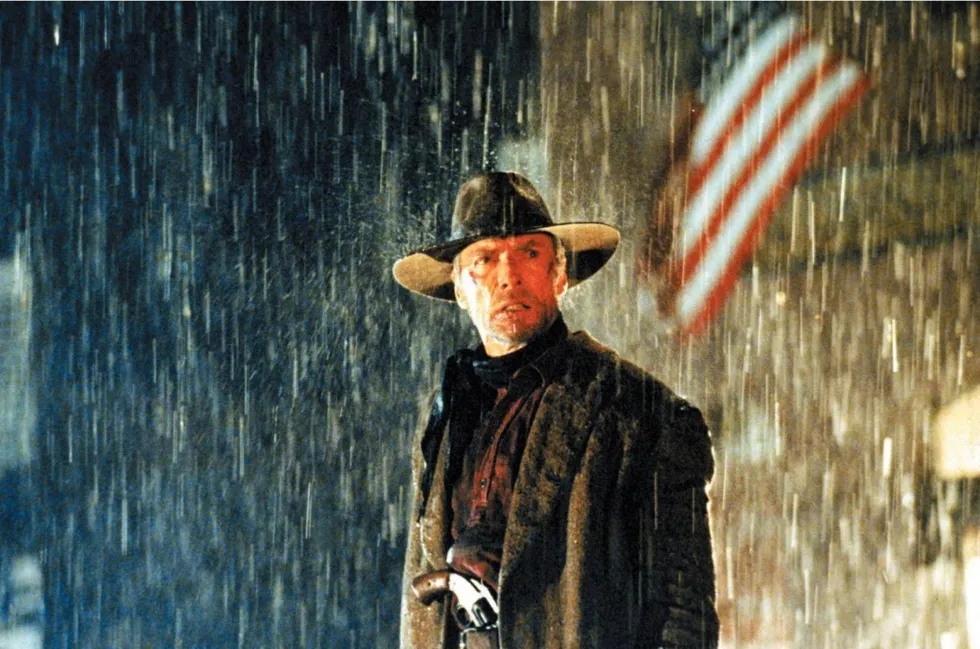 'Unforgiven' (1992)Credit: Warner Bros.
3. “I’ve killed women and children. I’ve killed everything that walks or crawls.”
During their final face-off, Munny starts things off by shooting the owner. Little Bill Deggett tries to suggest he follow some moral code as he killed an unarmed man. To which Munny replies with this brutal line, “I’ve killed women and children. I’ve killed everything that walks or crawls. And I’m here to kill you, Little Bill, for what you did to Ned.”
Munny deconstructs the exhausted Western framework of an anti-hero gunslinger, who is rough but has principles. This line reveals Munny’s muddy past filled with monstrosity. He wasn’t some Robin Hood-type outlaw, but a man who did terrible things in the past, which makes him more human and far more disturbing than dangerous.
4. “We’ve all got it coming, kid.”
This is one of my favorite scenes in the movie, which subtly challenges the Western genre’s moral conformity. When the kid looks for assurance from Munny by saying, “Well, I guess they had it coming,” Munny responds, “We’ve all got it coming, kid.”
Munny suggests that every person has evil in them, up to a certain degree, of course. He refuses to believe the idea that in life, some people deserve to die and some people to live. Everybody is morally compromised at some point in their lives. The weight of this philosophy increases with every killing, and by the end, even Munny knows that his day will come.
5. “Like I was saying, you don’t look no meaner-than-hell, cold-blooded, damn killer.”
Early in the movie, the Schofield Kid brags about his false reputation and bravado. Later, when he realizes that Munny is no longer what the legends say, he delivers this line to him. Munny replies with, “Maybe I ain’t.” And the Kid continues to persuade him for the job.
His line proves that a legend and reality cannot coexist at the same time. And possibly the legends were lies. The kid had made an entirely different image of Munny in his mind based on stories and myths, but sometimes, the actual William Munny struggles to mount a horse. It deconstructs the visual of a mythic Western hero who is still as skilled as he was in his hunting days.
6. “I do not like assassins or men of low character.”
In the movie, Little Bill Deggett genuinely believes that he is morally superior to others. When talking to W.W. Beauchamp (Saul Rubinek), he says, “I do not like assassins or men of low character.” Yet he is the one who has been beating English Bob (Richard Harris), torturing Ned (Morgan Freeman), and putting his corpse on display to showcase his power.
By positioning the sheriff as just another bully in a lawless land, Unforgiven breaks the Western stereotype of an honest, dutiful lawman. Sometimes, the most violent and evil man is the one protecting people from such wrongdoing.
 'Unforgiven' (1992)Credit: Warner Bros.
7. “Any man I see out there, I’m gonna kill him.”
Most Western movies operate on the fact that the hero or the anti-hero fights for justice or revenge. But when Munny says this after massacring the saloon, “Any man I see out there, I’m gonna kill him,” it is a blunt threat to the face, spoken in rage.
At this point, Munny has transformed into his old self—a terrifying and stone-cold monster. His actions might have originated from grief and revenge for Ned, but his anger engulfs everything that stands between his goal. There is no reason or justification for it. The movie doesn’t end with an honorable showdown between men, but with the frightening, uncontrollable wrath of a man.
8. “Lucky, I guess, but I’ve always been lucky when it comes to killing folks.”
For a long time, we have been shown that a gunslinger with lightning-fast draw skills, better aim, or mental clarity wins the battle. However, while explaining to W.W. Beauchamp how he survived the saloon shootout, Munny replies, “Luck, I guess, but I’ve always been lucky when it comes to killing folks.”
Munny’s perception of luck and how it becomes the predominant factor in deciding a man’s fate in a showdown derails the Western genre’s hero trope. The heroes don’t survive because they drew their guns first, but simply because they weren’t the ones who got shot first. Even in the film, we see Munny miss shots and kill people because of their own mistakes. Munny was simply brave enough, and more than that, lucky to survive until the end.
Summing It Up
Which of these quotes did you feel was spot-on in demystifying Western tropes?
Let us know in the comments.
- This Brutal Line From ‘Unforgiven’ Is One of the Most Honest Moments in Cinema History ›
- The Shot In ‘Unforgiven’ That Changed the Western Genre Forever ›
- How 'Unforgiven' Ended The Western Genre (For A Hot Minute) ›
- 'Unforgiven' Does This One Goofy Small Thing That's Completely Genius ›
- 'Unforgiven' 25 Years Later: 5 Ways Eastwood Masterfully Deconstructed the Western ›
- Why Clint Eastwood Cut the Original Final Scene of ‘Unforgiven’ ›
- The Quiet Truth Hidden In An Iconic ‘Unforgiven’ Line ›
- The Brutal ‘Unforgiven’ Scene That Completely Destroys English Bob ›
- 6 Lessons from the 6 Films Clint Eastwood Loves Most ›
- A Man Called Horse Western ›
- Film Quote of the Day: The 1992 'Unforgiven' Line That Perfectly Captures Little Bill's Hypocrisy | No Film School ›