The Secret Behind the Iconic “Walken Pause” in ‘Pulp Fiction’
Christopher Walken’s peculiar, and now iconic, delivery was actually the result of the actor struggling to recall his scripted lines.
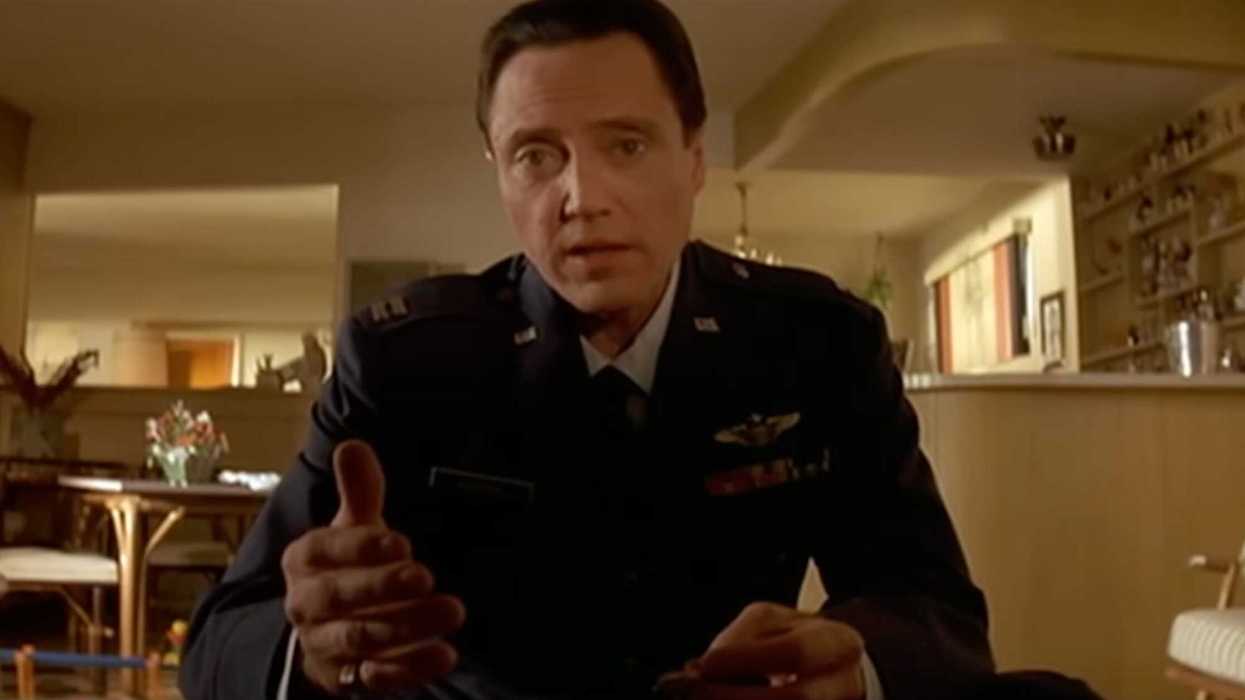
'Pulp Fiction' (1994)
Usually, when actors forget their dialogue, they call “cut” and ask for a line. There’s nothing wrong with it. It’s not “frowned upon” or anything. Especially if you are an actor of Christopher Walken’s stature, the production unit will be more than happy to feed you lines. (If you are of Marlon Brando’s stature, they will even make people stand silly and slap a paper (with dialogue on it) on their forehead for you to read.)
But Walken has earned his distinctive reputation, not because he walks the line like an obedient, unimaginative bloke, but because he carves out his own way. There are many aspects that give his performances the “Walken style.” For example, his vocal cadence, rhythmic phrasing, the balance of menace and humor, controlled physicality, commitment to “The Strange,” and cold charisma. But perhaps the most recognized aspect is sudden, surprising pauses. Using them, he has a way of turning silence into a character in itself.
But Pulp Fiction (1994) was another story. In his cameo appearance as Captain Koons, all he had was one “Gold Watch” monologue, in which he narrates a long, bizarre journey of a family heirloom to a young Butch Coolidge (Chandler Lindauer). While filming, Walken seemed to take more than usual pauses during his delivery. These pauses were jagged and bewildering. At first, everyone thought he was improvising in real time or trying a different strategy.
As it turned out, his strategy was to try to remember the lines he had forgotten and, while at it, turn his frantic effort into performance itself.
The Make-Up of the Captain Koons Monologue
When the Script Goes Blank
It was just one scene, one monologue, but it was over four minutes long, and Walken had to deliver this massive amount of dialogue in one sitting. While filming, he hit several walls when the words just didn’t come. Rather than panicking (more like ”getting distracted"; he is not a socially inept writer to panic. Ahem!), he used those moments of forgetfulness to stare intensely at the young actor. He created an emotional moment, an emotional reaction, out of it.
Brando used to do something like this. He routinely struggled (sometimes refused) to memorize his lines. But in his case, he resorted to having dialogue written all around him so he could just read rather than having to memorize.
In this scene, from Last Tango in Paris (1972), he delivers a long, mournful monologue at his wife’s wake. You can spot him multiple times staring at the wall opposite him. That looks like a soulful performance, but it’s actually him reading his lines.
Back to Walken. Walken’s recurrent pauses and intense stares created a natural tension that indeed felt like a soldier struggling with heavy, emotional memories rather than an actor forgetting a script.
Brando and Walken both display the signs of a good actor: turning weaknesses into strengths.
Tarantino: Capitalising on the Unexpected Momentum
Quentin Tarantino relies heavily on dialogue for cinematic impact. Dialogue in his movies is carefully written and curated to give away not only facts and information but also character psyche, internal world/conflict, and even clues to other plot points in the story. He expects precise dialogue delivery from his actors. But even he recognized the magic in Walken’s hesitation. The monologue’s rhythm was uninterrupted, kinda patchy, but it was working in ways he had not anticipated. This awkward, realistic “humanness” worked like bait and hooked the audience.
The Walken Cadence: Accident or Identity
Rhythms of the Queens Streets
As I said before, Walken has a habit of adding sudden pauses during dialogue delivery—whether or not he remembers his lines. He credits this unusual cadence to his Queens upbringing. As a young man, he lived among several neighbors who spoke English as a second language. While speaking, they would frequently take pauses to remember the correct word. This created a staccato rhythm that Walken later deliberately adopted.
In simple words, removing punctuation from his script allowed him to find a “sound” that felt more real than standard acting.
A Career Built on the “Walken Pause”
Pulp Fiction wasn’t the first movie for the pauses. This scene wasn’t how he accidentally discovered his technique. Long before 1994, Walken was using this “rhythmic hesitation” in movies like The Deer Hunter (1978). His background in musical comedy allowed him to focus on the beat of the dialogue rather than its grammar. He simply treats dialogue like music.
It’s a coincidence that in Pulp Fiction, this style collided with a genuine memory lapse. But hey, all’s well that ends well.
Conclusion
This Walken case proves that in cinema, like everything else, perfection comes from the raw, most unpolished moments. A good actor simply knows how to work around those imperfections. Walken could have let his difficulty turn the shoot into a frustrating day for all, but he chose to make it a memorable performance.
“Slaying it” doesn’t always mean flawless. Sometimes, it just means having the gall to let the silence become your wingman and buy you some time while you remember your next line.
- 10 Iconic Quotes from Quentin Tarantino Movies ›
- Unpacking the Dark Legacy Behind the Gold Watch in 'Pulp Fiction' ›
- The Meaning Behind Pulp Fiction’s “Royale with Cheese” ›
- Everyone Misunderstands the Hand-Drawn Joke in 'Pulp Fiction' ›
- The Wolf’s Goodbye in 'Pulp Fiction': One of The Coolest Exits Ever Written ›
- Clocks and Katanas: Breaking Down the Iconic Basement Sequence in 'Pulp Fiction' ›
- The Wallet Test: How the Final Scene of ‘Pulp Fiction’ Flipped the Script ›
- You can be my wingman anytime. ›