13 Iconic Silhouette Shots in Cinema History
These visual compositions prove how powerful light and shadows can be in visual storytelling.
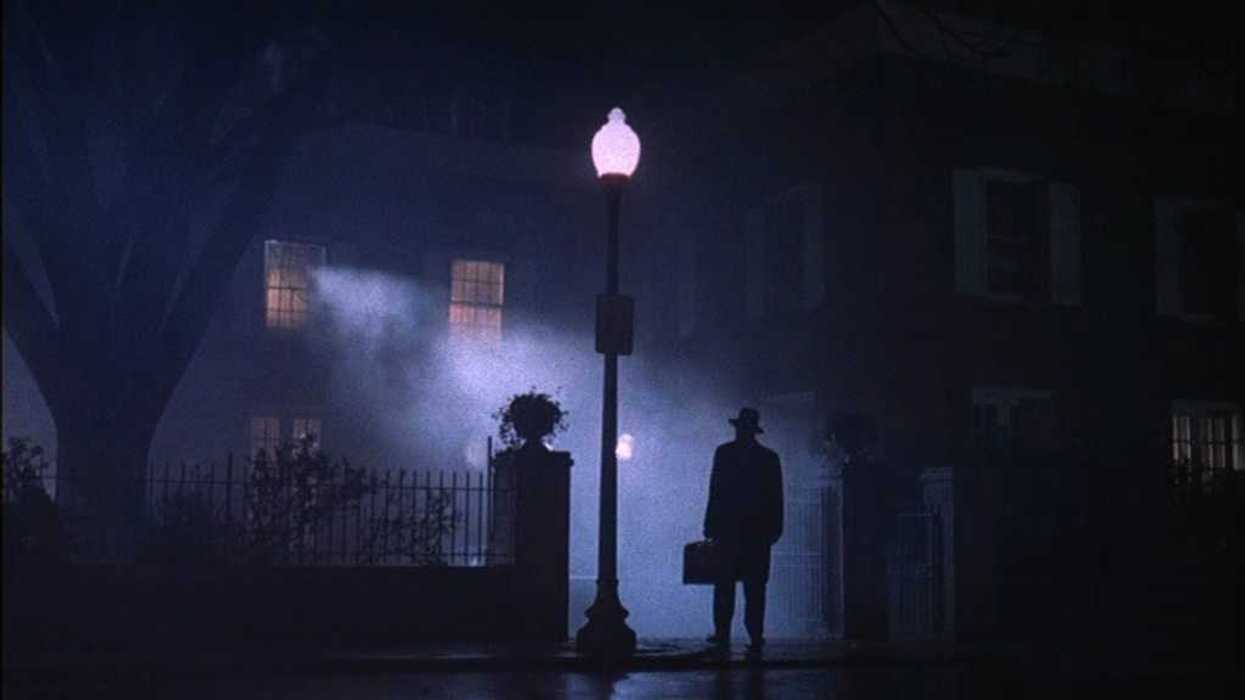
‘The Exorcist’ (1973)
The visual of a human has value because of the emotions and feelings that come from it. Be it laughter, tears, grimaces, love, or whatever it may be, it gives that visual some meaning.
The nostalgia on Dorothy’s face when she sings “Somewhere Over the Rainbow,” the deranged mental breakdown of Jack Torrance as he says, “Here’s Johnny!”, Hannibal Lecter’s creepy smile, and Jack Sparrow’s eccentricity: these are the emotional payoffs of perfect human visuals.
This applies to inanimate renditions, too. The Mona Lisa is a great example of it. It’s been over 500 years, and her mysterious smile still draws millions to museums.
But what if you take away these intricacies and nuances? What’s left? Nothing?
Unlikely. If that were true, the idea of a silhouette wouldn’t have caught on. It’s based on the philosophy of stripping a character down to the bare minimum, just the outline, to be precise; no other details, no distractions. Just the visual intent.
And yet, instead of blocking your understanding, it redirects you to read the visual differently. It’s like when you are blindfolded: you learn to use your other senses, past experiences, and existing knowledge to comprehend and interpret. Similarly, with silhouettes, since you lose other details, you instead focus on the shape, the posture, and the surrounding environment.
Let’s call it “playing with the negative space.” Filmmakers have made creative use of this little game of lights and shadows. And by doing this, they transform simple farmers into eternal icons.
Let’s dive into some of these iconic silhouettes that continue to captivate us and define the look of cinema itself.
The Mechanics of a Silhouette Shot
Light, Contrast, and Clarity
At the heart of any silhouette is contrast. The composition is simple: you put a subject against a bright background, making the subject appear darker. This instantly makes the subject’s outline readable. The composition may be simple, but the execution isn’t. To make such shots stand out and give them more meaning, a cinematographer usually has to control the exposure and avoid details bleeding through. As a result, what you get is clean, bold imagery that grabs attention without any clutter.
Storytelling Through Absence
Like I said before, once the complex, nuanced details are removed, all you are left with is the outline, the posture, the scale, and the movement. So, that’s what you focus on. You don’t see the subject’s face, but you can still spot if it is feeling powerful, lonely, threatened, or threatening. All this, without a single word or an expression. Yes, silhouettes create a sort of emotional distance, but it doesn’t take away clarity. You don’t have to guess what the subject is going through or what matters; the frame tells you exactly where to look and how to interpret.
Mastering Light: 13 Greatest Silhouette Moments in Cinema
1. The shadow of Count Orlok climbing the staircase (Nosferatu, 1922)
Cinematography by: Fritz Arno Wagner | Directed by: F. W. Murnau
This is the most iconic, defining shot of the 1922 movie. Even before the character appears on the screen, you see his creeping shadow climbing the staircase. This silhouette gives the feel that Orlok is someone—or something—unnatural, almost detached from his body. Remember, this is more than a century-old movie; back then, cinema rarely looked this bold. What’s impressive is that the visual still holds up as pure visual horror.
2. Scarlett O’Hara against the bright orange sky (Gone With the Wind, 1939)
Cinematography by: Ernest Haller | Directed by: Victor Fleming
In this famous “I’ll never be hungry again” monologue, Scarlett’s (Vivian Leigh) face is almost never visible, even in the close-up shots. Against the blazing sky and the burning Atlanta around her, she is reduced to a striking outline. And yet, the imposing contrast captures her determination and turns the visual into something enduring.
3. Ethan Edwards framed in the doorway (The Searchers, 1956)
Cinematography by: Winton C. Hoch | Directed by: John Ford
In this iconic shot, the doorway frames Ethan Edwards (John Wayne) as a less-than-decipherable, almost dark figure against the desert light. This contrast subtly highlights his isolation from the world he can never be a part of. He is merely a ghostly outline in the world of families and relationships. This is a masterful composition that defines Ethan’s place without spelling it out.
4. The “Mother” in the shower scene (Psycho, 1960)
Cinematography by: John L. Russell | Directed by: Alfred Hitchcock
The scene appears in the movie when the audience is not aware of the killer’s identity. All we see is a silhouette appearing through the curtain. But that silhouette, and the lack of any other details, is so baffling and unsettling that the scene instantly becomes iconic. Since we don’t see the face, we focus on the act. The narrative is deliberate, controlled, and precise, and that’s why it’s deeply effective.
5. Father Merrin arriving under the streetlamp (The Exorcist, 1973)
Cinematography by: Owen Roizman | Directed by: William Friedkin
The car enters the frame, and a figure, Father Merrin (Max von Sydow), gets down and stands beneath the street lamp, surrounded by darkness, chill, and fog. The visual looks tremendously mysterious and yet grounded. This silhouette sets the tone immediately. It builds the anticipation for the drama that later unfolds. All this, without a single spoken word.
6. The twin suns with Luke Skywalker on the horizon (Star Wars: Episode IV – A New Hope, 1977)
Cinematography by: Gilbert Taylor | Directed by: George Lucas
In what is Luke Skywalker’s (Mark Hamill) first appearance on the screen, his silhouette is revealed against the vast horizon of a desert planet called Tatooine and its two gigantic twin suns. The frame’s scale makes him look insignificant yet hopeful. Pretty simple composition, but George Lucas manages to perfectly define Luke’s longing in one clean image.
7. The children silhouetted against the bright light (Close Encounters of the Third Kind, 1977)
Cinematography by: Vilmos Zsigmond | Directed by: Steven Spielberg
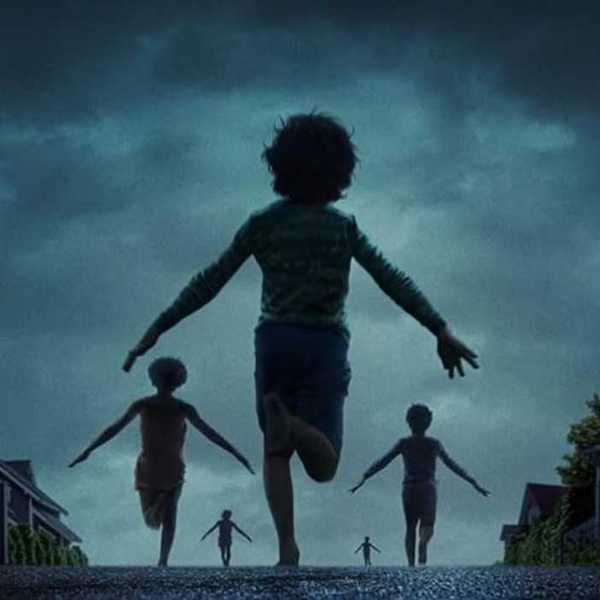
In this scene, in this particular shot, light comes off as a character in itself. The children’s figures appear in a blinding source of light, and suddenly, there is a sense of awe. The contrast makes you feel curious but also unsettled and scared. The visuals aren’t very complex, and yet, you feel like the familiar domestic space has become outworldly.
8. Helicopters flying against the setting sun (Apocalypse Now, 1979)
Cinematography by: Vittorio Storaro | Directed by: Francis Ford Coppola
The scene is ominous. There’s going to be an aerial attack on a coastal village. Innocent people are going to die. This vibe is foreshadowed by the rows of machines against the vibrant sky. It’s an interesting, albeit terrifying, image. These sinister silhouettes highlight the power and mechanical nature of war. Also, if you notice, the formation makes the fleet look like a singular, unstoppable force moving toward inevitable destruction.
9. The flying bicycle against the moon (E.T. the Extra-Terrestrial, 1982)
Cinematography by: Allen Daviau | Directed by: Steven Spielberg
This shot needs no introduction. This one is pure art. It transforms a childhood memory into something magical. You see a dark silhouette of a child on a bicycle against the bright (and majestically huge) moon, and you can feel a simple bike ride ascending to an act of liberation and pure, unadulterated wonder.
10. Simba and Mufasa on Pride Rock against the rising sun (The Lion King, 1994)
Cinematography by: Animation Team | Directed by: Roger Allers and Rob Minkoff
This Lion King moment defines the weight of legacy. We see Mufasa (voiced by James Earl Jones) and little Simba (voiced by Jonathan Taylor Thomas) against the vast expanse of the Pride Lands and the glowing sky. The visual subconsciously emphasizes the importance of the path ahead. In this moment, Mufasa is passing on his wisdom to his son, but even without his words, you understand the idea of growth and the passing of responsibility between generations.
11. Leonidas’s army pushing the Persians down from the cliff (300, 2006)
Cinematography by: Larry Fong | Directed by: Zack Snyder
This movie version of a graphic novel is literally the fireworks of cinematography and color palette. Keeping in line with the tone and vibe of a graphic novel, the contrast is not only intentional but also extreme. By silhouetting the soldiers, both the Spartans and the Persians, against the harsh light, the film creates an abstract, heroic vibe. The composition focuses on their physical form and synchronized movement, which makes you aware of the legendary feat of strength.
12. Batman standing atop Sears Tower (The Dark Knight, 2008)
Cinematography by: Wally Pfister | Directed by: Christopher Nolan
This silhouette creates an almost logo-like identity for the movie. It also creates an imagery of a protector watching over the city. Without you realizing it, it imbues Batman’s godlike status. The dark skyline with multiple skyscrapers also maintains the idea of an urban guardian. This is an absolutely clutter-free and sharp image that tells you everything you need to know about what Batman does.
13. James Bond opening sequence (Various James Bond movies)
Cinematography by: Various | Directed by: Various
One of the most iconic and recognizable movie openings, this gun barrel sequence reduces James Bond to a silhouette and instantly makes him a brand. Everything you see, the shape, posture, and his motion, defines who Bond is. Aside from minor variations, this introduction is consistent across all Bond films and remains a bold and highly effective way to set the tone, both for the movie and for the character and his missions.