10 Most Controversial Movie Takes by Quentin Tarantino
From defending taboo topics to dismantling sacred film opinions, these 10 takes show why Quentin Tarantino thrives on provocation.
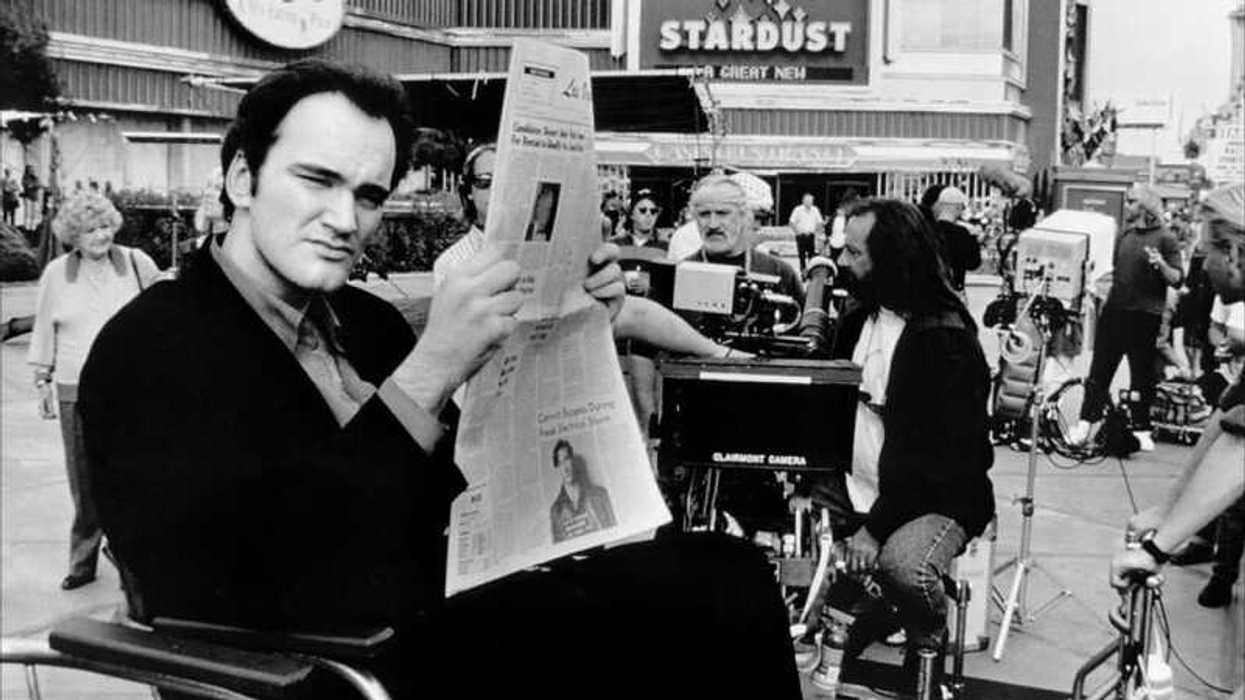
Quentin Tarantino
Cinema is a medium of expression. So, naturally, you would expect ideal filmmakers to be intuitive, insightful, and unafraid to express their opinions. This attitude is to (good, meaningful) cinema what water is to life—essential.
But even the excess of essential things can be detrimental. Drinking excess water might cause hyponatremia, brain swelling, and nausea. Similarly, not having a leash (of humility, conscience, finesse, sensitivity, grace, and kindness) on what and how you express your opinions can mar a good filmmaker’s reputation.
Let me clear one thing before I bite into the centerpiece of this article: Quentin Tarantino ranks way high on the list of filmmakers who satisfy the hungry cinema lover in me. Amidst the spread of mostly packaged, processed, snacky, junk cinema, his films carry the definitive “gourmet” tag. His films are a product of a very original and unique vision—as he puts it, “I didn’t go to a film school; I went to films.” He didn’t have high-profile mentors serving as stepping stones; his exploration of cinema started when he worked as an usher at an adult movie theater and then at a video store. Even then, as a virtual nobody, he was known for his vast film knowledge and movie recommendations. It’s safe to say that he was always a gifted filmmaker.
So, it’s kind of a bummer to acknowledge that your favorite filmmaker sometimes (more often than you would like) acts like an asshole. His excessive self-importance, prickly and arrogant interview presence, harsher-than-necessary criticisms of other artists, tactless verbal jabs, and persistently combative and confrontational attitude—I think it puts a dent in his flattering cinematic achievements. If the world-class auteurs, such as Martin Scorsese and Steven Spielberg, can build a reputation for being respectful and approachable, Tarantino should too—ideally.
But instead, he has managed to amass a long legacy of controversial opinions and behavioral traits. While most directors play it safe with PR-friendly quotes, Tarantino leans into the skid. Whatever his takes are, they are rarely lukewarm. They are, in fact, designed to burn.
These are some of the “gems,” where Tarantino proves his tongue is as sharp as a Hattori Hanzo.
10 Provocative Movie Takes from Quentin Tarantino
1. Aggressive defense of racial slurs in films
Over the years, Tarantino has become as well-known for the rampant usage of racial slurs (especially the N-word) in his movies as for the fervent defense of his “artistic right” to use them. “As a writer, I have the right to do any damn thing I have the talent to achieve,” he said. Rosanna Arquette, who played Jody in Pulp Fiction (1994), called him out for this, saying that it’s not artistic; it’s simply racist and creepy. Tarantino fired back, saying her comments show a “lack of class and honor.” Spike Lee has been a vocal critic of this Tarantino habit for years. Tarantino simply doubles down on his practice by referring to the pushback as a fundamental misunderstanding of his artistic intent. Throughout his career, he has consistently refused to sanitize his dialogue for modern sensibilities or political correctness.
2. Defending excessive violence in his movies
In a viral YouTube video of a 2023 press junket, a veteran film critic, Jan Wahl, asked why he shows so much unnecessary graphic violence in his movies. Tarantino, in his characteristic style, snapped, saying (of course, sarcastically), “Because it’s so much fun, Jan. Get it?” This lackadaisical attitude created a massive rift with those who see media as a powerful social influencer, especially pertaining to its effects on kids. Critics, citing real-world tragedies, claim that he uses blood and gore like a “color palette” and call him out for being reckless and irresponsible. Tarantino, however, without deviating from his position, simply says that if they can’t handle the heat, don’t watch his movies.
3. Calling Paul Dano the weakest link in There Will Be Blood
Originally, in an interview with Brent Easton Ellis and in subsequent 2024-2025 podcast discussions, Tarantino lambasted Paul Dano, calling him the weakest actor in the world. He even went so far as to callously call Dano “weak sauce” and “the limpest dick in the world.” Completely unnecessary, right? Actually, downright cruel. Industry figures like Matt Reeves and Ethan Hawke publicly defended Dano, citing the immense pressure of standing against the industry Goliath like Daniel Day-Lewis. The personal nature of Tarantino’s critique prompted a fervent backlash.
4. Defending Roman Polanski, calling the child a “party girl”
Roman Polanski has been a controversial figure since the ‘70s, thanks to his status as a convicted sex offender (of a 13-year-old child, no less) and a fugitive. Any kind of association with him is morally wrong and professionally unwise. But that didn’t stop Tarantino from standing up for the man. In a 2003 interview with Howard Stern, he tried to create a “justifiable” demarcation between rape and “statutory rape.” Like that wasn’t enough, he even referred to Polanski’s underage victim, Samantha Gailey, who was 13 at the time of her rape, as a “party girl.” Eventually, in 2018, during the heyday of the “Me Too” movement, he apologized for Polanski’s defense. However, his initial willingness to minimize such a crime remains a dark cloud over his legacy.
5. Unapologetic embrace of exploitation cinema influences
I have made this strange observation. Sometimes, geniuses tend to like what others consider complete trash in their respective fields. For example, Voltaire, the Enlightenment philosopher and a cerebral satirist, enjoyed reading cheap romances. Howard Hughes, a brilliant inventor and aircraft designer, was obsessed with B-movies. And then there is Tarantino, a world-class filmmaker, who cites the “raw energy” of grindhouse movies as inspiration. But critics don’t see it that way; they see his “fetish” for Black culture and female suffering. They see the wealthy filmmaker who uses such things as “cool” points without facing the real-world consequences. For Tarantino, he is paying homage to these movies; for others, he is playing with the trauma of marginalized groups.
6. The “Marvelization” of Hollywood
Tarantino, in what can be seen as an agreement with Martin Scorsese’s views on superhero movies, thinks that Marvel movies are not auteur-driven cinema; they are just corporate spectacle. Now, there is equal room for those who agree as well as those who don’t. However, Tarantino goes a step ahead and dismisses the “star” status of actors who play superheroes. He says, “Thor and Captain America are the stars, not Chris Hemsworth and Chris Evans.” Agreed, he isn’t personally attacking any actors (like he did Paul Dano in a previous section, or George Clooney in the next one), but his dismissal of their star power feels unwarranted and, to be honest, not quite true.
7. “George Clooney is not a movie star.”
In an August 2024 interview with GQ, he dethroned a Hollywood biggie, George Clooney, from his “movie star” position—albeit only in the “Tarantino” world. In the real world, Clooney has over 40 years in the industry, over $3 billion in total box office gross, two Oscars, an A-list reputation, and a heartthrob status that some even compare to Cary Grant. Now, one can argue that Clooney falls in the paradoxical world, much like Ryan Gosling, where you know he is a star; it’s just that you struggle to understand “why exactly.” It’s the same as not understanding why the Kardashians are celebrities, but not being able to say they aren’t. Tarantino doesn’t experience that dilemma; he just takes away the crown and calls it a day.
(P.S.: Excuse me for the Kardashian comparison. I am not stating similarities, simply drawing parallels.)
8. “Selma deserved an Emmy, not an Oscar.”
In a 2015 interview with Bret Easton Ellis for The New York Times, the topic of discussion was Ava DuVernay being snubbed at the 2015 Oscars for Best Director and the movie not winning Best Picture. Tarantino said that Ava DuVernay did a “really good job,” but then also remarked that the film deserved an Emmy, not an Oscar. In today's world, where one must always be vigilant of interpretations around several sensitive subjects, such as race and gender, this comment was interpreted as a patronizing swipe at a major work by a Black female director. By saying that it deserved an Emmy, Tarantino reduced a major motion picture made by a minority to a television movie. You might wonder, “What’s wrong with a television movie?” What’s wrong is that Tarantino doesn’t have a very high opinion of made-for-television movies. He says, “The TV stuff doesn’t have a payoff.” He later backtracked on this comment, saying he hadn’t actually seen the movie. In my opinion, that makes it even worse.
9. Bruce Lee’s portrayal in Once Upon a Time in Hollywood
If you have seen Once Upon a Time in Hollywood, you must know the scene with Bruce Lee (Mike Moh). In that scene, Lee can be seen bragging about himself and coming off as arrogant. Tarantino defended this portrayal by claiming—in addition to claiming his “creative liberty”—that Bruce Lee was indeed arrogant in real life. This didn’t sit well with Bruce Lee’s daughter, Shannon Lee, who called her father’s depiction a “caricature.” The Chinese censor board demanded changes, which Tarantino refused. As a result, the movie was never released in China. Tarantino asserted—just as he did around the objections over his use of racial slurs—that as an artist, he had the right to interpret historical figures however he saw fit for his narrative. This position alienated fans who see Bruce Lee as a global hero.
10. His handling of Uma Thurman on the sets of Kill Bill
Now, this isn’t his opinion or a take on something; it’s included in the list from the point of view of his on-set ethics. For a particular scene, he pressured Uma Thurman to drive the car herself for a stunt, despite her reservations. He assured her the road was safe, even though it was tested only in the opposite direction. It led to the crash and left Thurman with lifelong injuries. This incident sheds light on his working protocol and on-set decorum. He eventually apologized to Thurman and expressed deep regret, but the harm was already done, both to Thurman’s health and their relationship. The incident sparked debate, some mocking his “visionary director” label as a polite term for a reckless boss who ignores safety.
- 10 Iconic Quotes from Quentin Tarantino Movies ›
- Everyone Misunderstands the Hand-Drawn Joke in 'Pulp Fiction' ›
- The Wallet Test: How the Final Scene of ‘Pulp Fiction’ Flipped the Script ›
- The Improvised Scene That Defined ‘Reservoir Dogs’ ›
- Analyzing the ‘Reservoir Dogs’ "You Shoot Me in a Dream..." Threat That Sounds Like a Joke ›
- ‘Reservoir Dogs’: The Slow-Mo Walk That Defined Cool ›
- 10 Best Quentin Tarantino Characters: Ranked ›