‘The Godfather’: Michael’s Quiet Threat to Fredo
Michael’s subtle but brutal declaration to Fredo foreshadows tragedy and dominance within the Corleone family.
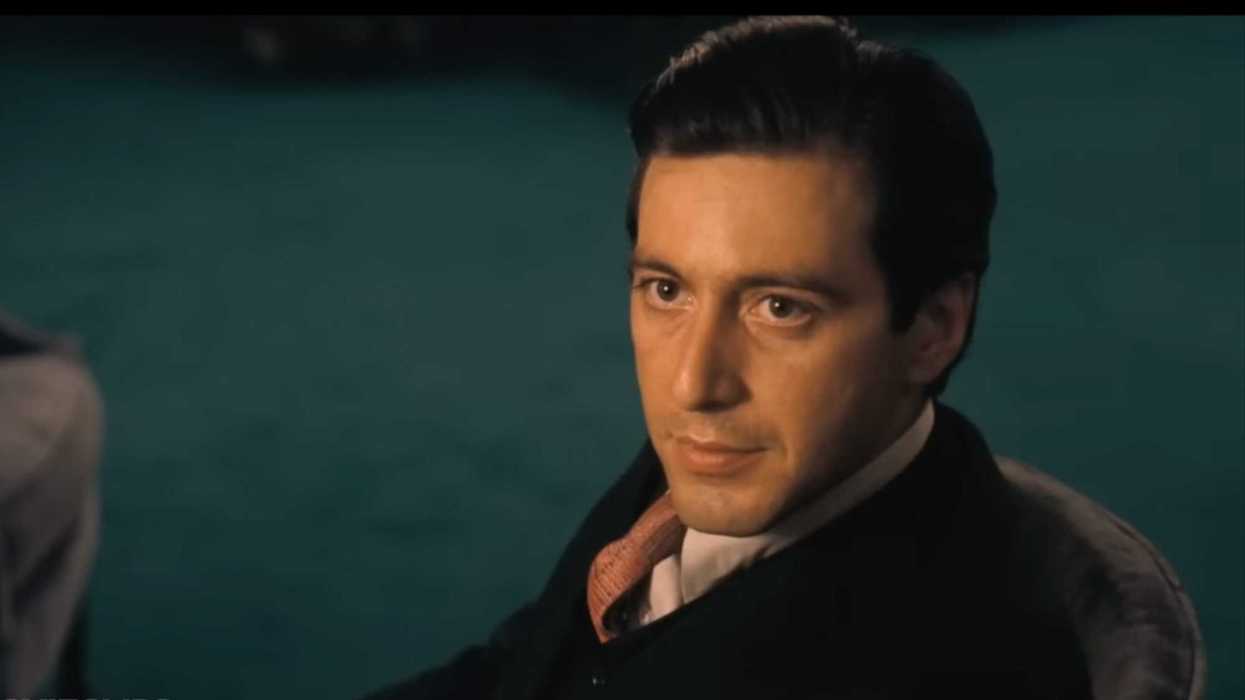
The Godfather (1972)
Imagine yourself in an important business meeting with a sleazy shark, and your older, kinda lame, brother is putting you on the spot because of his lack of understanding, and just pure lameness.
That’s what is happening to Michael Corleone (Al Pacino) in his meeting with Moe Greene (Alex Rocco). And to Michael’s frustration, his older brother, Fredo (John Cazale), seems to have misplaced his spine somewhere and is acting like Moe’s PR/lapdog.
If you know Michael, you can imagine how strongly he must feel about Fredo’s behavior. This might be one of the moments in The Godfather (1972) that is instrumental in instigating Michael’s transformation from an idealistic war hero to a cold, calculating crime boss. Perhaps, this is the informal end to the warm family dinners and shared secrets.
The backdrop of this scene is Michael attempting to forcibly buy out Moe’s stakes in the family’s Las Vegas casino business. But under the surface, this is Michael setting a new set of standards and rules for loyalty that are not negotiable.
The Scene That Changes the Power Equation
A little background. The Corleones provided the initial funding and essentially own the financial stakes in the Las Vegas casinos, but Moe Greene technically runs them. He is influential in that sense. The Corleones, however, see him as a frontman who skimmed profits. Michael also cannot tolerate the fact that Moe once slapped Fredo—a Corleone—in public. For him, disrespect to one Corleone is disrespect to all Corleones. And that’s unforgivable.
In this scene, Michael meets Moe at the latter’s hotel in Las Vegas. He offers to buy him out of the casino business, which Moe takes as an offense. Fredo recognizes Moe’s influential status in the LA circle and sees him as a mentor who can help him build his own business. For this, he is willing to overlook his demeaning treatment of him.
After Michael strongarms Moe and insults him, Moe storms out. Fredo, nervous about losing his edge, rebukes Michael. Michael, calmly but somberly, reminds him that as a Corleone, his loyalty must be with the family.
The unsaid or implied part: “...or else the consequences won't be good.”
How Fredo, as the Fault Line, Shapes the Power Shift
It’s ironic, but at the root of Fredo’s deferential demeanor (towards Moe) is his desire for respect. Within his family, he is sidelined, and his younger brother is chosen over him. He doesn’t have much say in the family or business affairs. He wants to feel important and wants to have something that is his own. And since everyone in his family ignores him, he sees an outsider like Moe as his instrument to make that happen. But Fredo is not smart or perceptive enough to understand that Moe is actually using him as a patsy against his own family. Michael sees that and acts on this instinct.
Michael even understands Fredo’s state of mind and his desire for respect. He also knows that his desperation has made him insecure. Fredo might see Michael as his younger brother, but Michael has to establish his authority. And this prompts him to give Fredo a veiled threat.
Setting the Tone for the Rest of the Corleone Story
Michael’s Direct Communication
A lot has happened preceding this scene; there was an attempt on Vito’s (Marlon Brando) life, leaving him bedridden, Sonny (James Caan) was violently assassinated, Michael’s dream of a normal life was shattered when he had to take over as the Godfather, and the Corleone family’s future is in great jeopardy. Michael is new to the business, and he is surrounded by vicious, corrupt people. A regular person would have had a hard time controlling emotions and temper.
But Michael shows phenomenal strength and restraint. He doesn’t yell, he doesn’t throw a tantrum, and he doesn’t use violence as a first response. But he also doesn’t leave things ambiguous. He says what he wants in clear terms; the undertone (threat) is implied through his cold tone. He doesn’t explain himself in monologues. He is precise, and he is authoritative.
This is the scene where Michael establishes his leadership style and how he intends to carry out his business.
An Ultimatum for the Ages
The exact wording of the line is, “Fredo, you’re my older brother, and I love you. But don’t ever take sides with anyone against the family again. Ever.” Michael says it while holding an unbroken stare at Fredo, and even though he says it in a flat tone, each word, each pause is loaded with explosives.
In the scene, the line is aimed at Fredo, but Fredo’s name (and his contextual relationship with Michael) is replaceable. It applies to everyone. This line haunts the family (and everyone in the family’s circuit) for years.
Conclusion
This line is a turning point in several ways. It establishes Michael’s hold over the family and the business. It highlights the cracks in relationships, especially the growing distance between the brothers. In this regard, the line foreshadows the ultimate breaking point between Michael and Fredo.
All in all, this is Michael’s cold declaration that “anyone” who puts the family business on the line is a liability.
- Bet You Didn’t Notice 'The Godfather' Uses Oranges as a Death Signal ›
- The Godfather’s Cat: A Furry Accident That Made Film History ›
- The Godfather Line That Changed Movie Dialogue Forever ›
- Vito Corleone vs. Marsellus Wallace: Loyalty vs. Fear ›
- How Closing a Door Rewrote Michael’s Fate in ‘The Godfather’ ›
- Friends Close, Enemies Closer: The Most Famous Lesson From 'The Godfather' ›
- The Godfather: Michael vs. Vincent — Two Paths to Power ›
- Michael Corleone vs. Walter White: Who’s the Worse Evil? ›
- Michael Corleone’s Wardrobe Was the First Red Flag ›
- Vito and Michael Corleone’s 3 Defining Scenes in The Godfather ›
- Breaking Down Michael’s Kiss of Death in 'The Godfather Part II' ›
- 'The Godfather' Has a Secret Third Lead (And It’s Not Who You Think) ›
- The Chilling Montage That Turned ‘The Godfather’ Into a Masterpiece ›
- The Story Behind the “Act Like a Man” Slap in ‘The Godfather’ ›
- The Power Shift: Analyzing the Michael Corleone vs. Moe Greene Showdown in ‘The Godfather’ ›
- The Calm Before the Storm: Analyzing Don Vito’s Lethal “No” That Ignites ‘The Godfather’ ›
- The Naive Kay Argument: The Moment Michael Corleone Became "Untouchable" ›
- “They Didn't Want Me”: Al Pacino Thought He Would Be Fired From One of the Greatest Movies Ever Made ›