Hollywood, or rather any film industry in general, often prioritizes trends over substance. And that’s where Paul Schrader’s unique voice sets him apart. Instead of choosing to tell stories about giants and legends, he opts to focus on those who don’t fit in—the black sheep and the outsiders. People who are stuck inside their own heads. Sufferers who are trying to make sense of their guilt, faith, or anything that they can’t name.
His films, both the ones he wrote and the ones he directed, bridge the gap between the gritty, restless energy of the ‘70s and the profound, introspective focus of modern indie cinema. Isolation and turbulence often serve as the thematic elements in his movies. They are not always an easy watch. You may not find easy answers and comforting solutions in his films. You will have to work for the final payoff. You will have to enter into his characters’ psyches and explore the uncomfortable corners of the human experience. And once you do, you might meet a man on the edge or experience a slow burn of spiritual longing. Either way, you will be stuck with the film for a long time.
Before we get to the best of Paul Schrader, let’s acquaint ourselves with his legacy and style.
Paul Schrader: The Writer
Before he started crafting his unique characters and stories, he excelled at conceiving them. While doing so, he also defined the intellectual pulse of the ‘70s. His first notable feat was Martin Scorsese’s Taxi Driver (1976). It’s a gold standard of a character-driven script. With Travis Bickle, he created the “man in a room” archetype—an isolated protagonist stuck in the confines of his own crumbling psyche, experiencing a state of existential stasis.
His further collaboration with Scorsese produced some of the most celebrated scripts in Hollywood history, such as Raging Bull (1980), The Last Temptation of Christ (1988), and Bringing Out the Dead (1999). All these scripts show Schrader’s unique ability to blend raw, visceral conflict with deep, theological questioning. I think the way he writes his scripts, his dialogues are less of a dialogue and more of a tracing of the internal geometry of his characters’ suffering.
 Paul SchraderCredit: Creative Commons Licenses
Paul Schrader: The Director
Schrader’s direction mirrors his writing: controlled, deliberate, and with a clear-cut focus on the internal conflict rather than on spectacle. These are some of the defining qualities of his directorial style:
- Minimalist storytelling: Narratives are stripped down to the bare essentials, and unnecessary plot threads are avoided.
- Transcendental style: The influence of directors, such as Carl Theodor Dreyer, Robert Bresson, and Yasujirō Ozu, is obvious, especially in terms of sidestepping emotional manipulation in favor of more objective and meditative awareness of the sacred.
- The Man in the Room: His protagonists are solitary and live in claustrophobic environments. Their physical spaces often mirror their mental captivity and existential stagnation.
- Use of voiceovers and diaries: Spoken or written reflections are often used to reveal mental states.
- Surface aesthetics: His quasi-documentary approach often highlights the banal details of daily life. It creates a sense of reality and leads to a decisive, often spiritual, climax.
- Static camera compositions: He deliberately keeps the camera static, prompting the viewers to focus more on the character movements and the space.
- Controlled pacing: A deliberately slow pace allows the tension and discomfort to manifest.
- Controlled color palettes: Very precise and muted color schemes establish a cold and dull atmosphere, matching the psyche of the characters inhabiting it.
- Exploration of faith and guilt: Morality and spirituality often drive the characters’ motivations and decisions.
- Urban isolation as a visual motif: The cities might be crowded but still feel empty and detached.
- Abrupt, emotionally charged endings: His films often end without full resolution. It leaves scope for the viewer’s interpretation.
10 Best Movies Directed by Paul Schrader
10. The Comfort of Strangers (1990)
Written by: Harold Pinter | Directed by: Paul Schrader
A young couple, Mary (Natasha Richardson) and Colin (Rupert Everett), vacationing in Venice, come across an enigmatic, seductive man, Robert (Christopher Walken), and get entangled in his twisted reality. Schrader uses the labyrinthine architecture of Venice to build an inescapable, dreamlike setting. The film explores the crushing weight of power dynamics and decadence and creates psychological horror through atmosphere rather than jump scares.
9. Auto Focus (2002)
Written by: Michael Gerbosi | Directed by: Paul Schrader
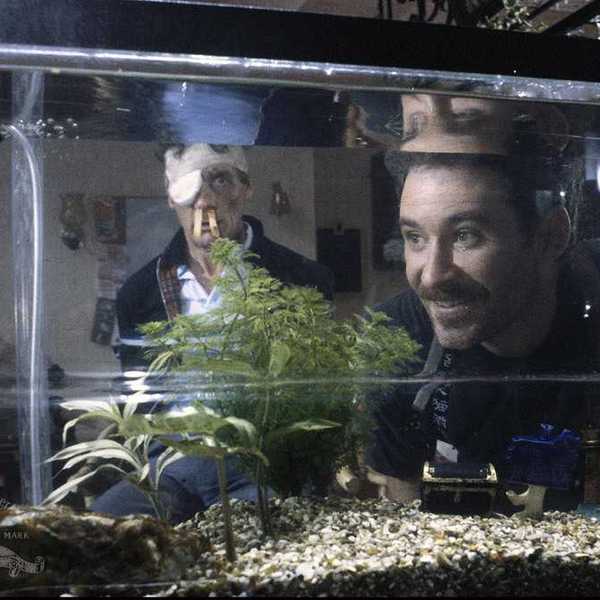
The movie is a dark, biographical tracing of Bob Crane (Greg Kinnear), a successful sitcom actor, whose friendship with John Henry Carpenter (Willem Dafoe) sends him on a downward spiral into a life of sexual addiction. The movie avoids sensationalism and instead captures Bob’s gradual loss of control. This measured approach and focus on the performance reflect Schrader’s interest in flawed characters.
8. Affliction (1997)
Written by: Paul Schrader | Directed by: Paul Schrader
The film follows Wade Whitehouse (Nick Nolte), a small-town sheriff, who investigates a mysterious hunting accident while grappling with the shadows of his abusive father, Glen (James Coburn). One thing you can learn from this movie is its tone. Schrader uses snowy, desolate landscapes to reflect Wade’s emotional numbness. Affliction is one of Schrader’s deeply personal and bleakest character studies.
7. Oh, Canada (2024)
Written by: Paul Schrader | Directed by: Paul Schrader
An aging and terminally ill filmmaker, Leonard Fife (Richard Gere), reflects on his past, moral failures, and the elusive nature of truth, while confronting memory and regret. To capture the fragility of memory, Schrader uses a non-linear narrative, which unfolds through reflection rather than action. As his latest release to date, the film indicates his continued interest in introspection and morality, especially through a fragmented structure to mirror the protagonist’s mental state.
6. The Walker (2007)
Written by: Paul Schrader | Directed by: Paul Schrader
Carter Page III (Woody Harrelson), a refined socialite, navigates the elite circle of Washington, D.C., until his life is thrown into turmoil by a political scandal involving a murder. The film maintains a stiff and formal veneer of the political class to capture the emptiness it hides beneath, and as for the character, it focuses on identity and secrecy. Its measured tone and emphasis on dialogue are indicative of Schrader’s preference for subtle storytelling over drama and spectacle.
5. The Card Counter (2021)
Written by: Paul Schrader | Directed by: Paul Schrader
William Tell, a.k.a. PFC William Tillich, an ex-military interrogator and currently a gambler, tries to live a life of quiet penance until he is pulled onto a path of revenge. Here, Schrader meticulously uses casino life to explore the heavy weight of past trauma, guilt, and the difficulty in finding genuine redemption. The focus chiefly remains on Tell’s internal conflict as he deals with it in a world that neither forgets nor forgives.
4. American Gigolo (1980)
Written by: Paul Schrader | Directed by: Paul Schrader
Julian Kaye (Richard Gere), a high-end male escort in L.A., lives a carefully curated life until he becomes the prime suspect in a murder case. This film is a good example of blending style with character study. It captures the neon-soaked, sleek style of the ‘70s and '80s and uses that precise visual language to contrast Julian’s vanity with his unraveling reality of desperation. This film is one of the defining neo-noir films of the decade.
3. Blue Collar (1978)
Written by: Paul Schrader, Leonard Schrader | Directed by: Paul Schrader
Three Detroit auto workers, Zeke (Richard Pryor), Jerry (Harvey Keitel), and Smokey (Yaphet Kotto), plan a robbery at their own local union headquarters but unknowingly get caught up in a web of corporate corruption. Schrader uses a raw, gritty aesthetic to capture the exploitation of the working class. He also balances social commentary with character dynamics, creating tension through conflict and distrust. The film is noted for its grounded narrative and sharp look at the systemic issues.
2. First Reformed (2017)
Written by: Paul Schrader | Directed by: Paul Schrader
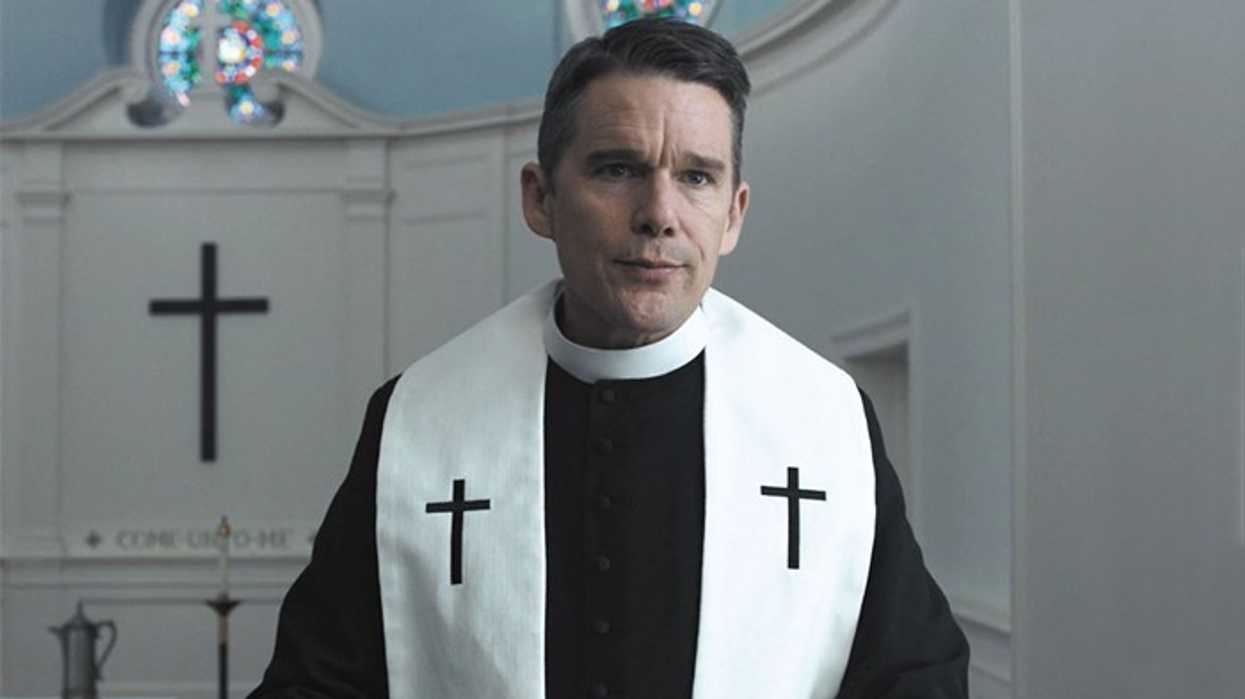
A tortured minister, Reverend Toller (Ethan Hawke), faces a crisis of faith when he meets a radicalized environmentalist, Michael Mensana (Philip Ettinger). For this, Schrader leans into a transcendental style and uses narrow aspect ratios and static compositions with a clear focus on Toller’s internal agony. As a result, the movie gives us a piercing look at the interesting blend of religious hope and climate despair.
1. Mishima: A Life in Four Chapters (1985)
Written by: Paul Schrader, Leonard Schrader, Chieko Schrader | Directed by: Paul Schrader
This biopic explores the life and death of a controversial Japanese writer, Yukio Mishima (Ken Ogata), by blending his past with the enactments of his literary works. Schrader definitively separates different chapters, or timelines, of Mishima’s life with the use of vibrant, stylized visuals. It creates a complex, mosaic portrayal of a man who was obsessed with the fusion of art and action. Mishima is Schrader’s most ambitious, audacious, and visually striking work that brings together deep, poignant themes and precise filmmaking techniques.
- 'Taxi Driver' Screenwriter Paul Schrader Weighs in on the Netflix Debate | No Film School ›
- Paul Schrader on How to Make Your Words Turn into Images | No Film School ›
- 6 Tips From Paul Schrader on How to Turn Personal Agony into Award-Winning Scripts | No Film School ›
- Paul Schrader On How He and Hollywood Have Changed | No Film School ›
- 8 Best Wolfgang Petersen Movies, Ranked ›